
If you’ve ever searched for freelance writing tips late at night, chances are you weren’t just browsing.
You were frustrated.
Maybe clients weren’t replying.
Maybe your income felt random.
Maybe you were switching WordPress, SEO, deadlines, and now WordPress AI writing tools without a clear system.
That’s not a motivation problem. It’s a structural problem.
Most freelance writers don’t struggle because they can’t write. They struggle because no one shows them how all the pieces fit together, like skills, clients, workflow, pricing, and tools.
This guide brings everything under one roof. You’ll learn how freelance writing actually works in practice, what to focus on at each stage, and how to build a writing career that doesn’t burn you out.
What Are Freelance Writing Tips?
Freelance writing tips are practical strategies that help independent writers improve their skills, attract and retain clients, manage workflows, use tools effectively, and earn consistent income through blogging, content writing, and digital publishing.
In simple terms, freelance writing tips are lessons learned from real-world experience, showing you what to do, what to avoid, and how to move faster without guessing.
All Essential Freelance Writing Tips
Below are all essential freelance writing tips grouped under one core framework so you can see how everything connects, from starting out to scaling up.
1. Understand What Freelance Writing Really Is
Before worrying about rates, tools, or clients, it’s important to understand what freelance writing actually means in today’s market. Freelance writing is not about being creative on demand; it’s about solving communication problems for businesses.
Clients don’t hire writers to “sound good.” They hire writers to explain ideas clearly, attract the right audience, and support specific goals.
Common types of freelance writing work include:
- Blog posts and SEO articles that attract organic traffic
- Website content that explains products or services
- Ghostwritten articles for founders and professionals
- Technical or niche writing that requires accuracy
Once you see freelance writing as a service business, not just a writing task, your decisions become much clearer.
2. Start without Waiting for “Permission”
Many aspiring writers delay starting because they think they’re “not ready yet.” They wait for confidence, certifications, or permission from someone else.
In reality, clients rarely ask about degrees. What they care about is whether you can do the job reliably.
What actually matters when starting out:
- Writing clearly and logically
- Following briefs and instructions
- Communicating professionally
- Meeting deadlines
You can build credibility by creating:
- Sample blog posts
- Mock client projects
- Educational content on your own website
A simple WordPress site or Medium profile with solid writing samples is often enough to get your first opportunities.
3. Choose a Niche (Even If It’s Not Perfect)
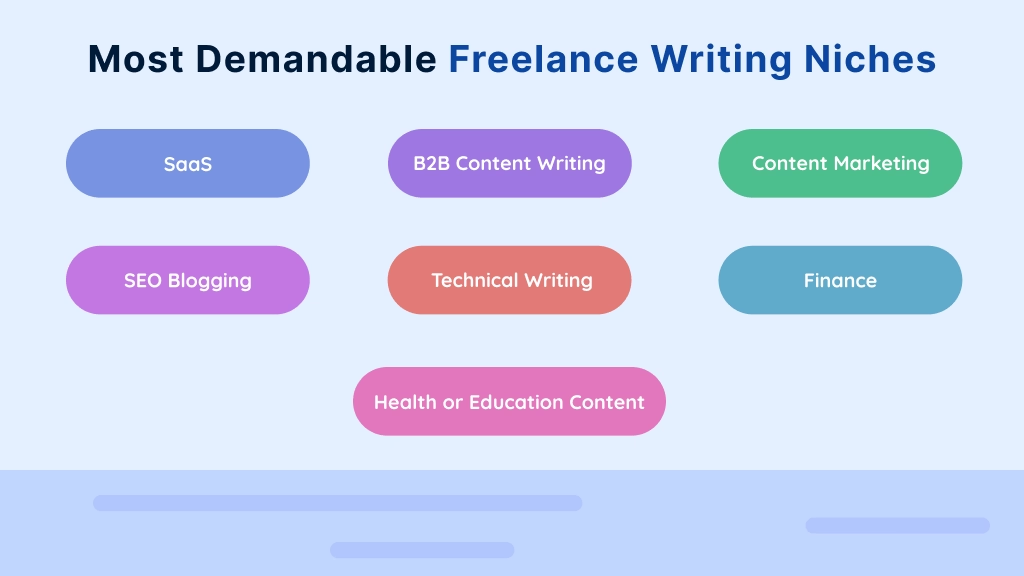
Without a niche, you compete with everyone. With a niche, clients can immediately understand where you fit.
Choosing a niche doesn’t limit you; it gives your work direction. It helps you attract better clients and write with more confidence.
Examples of common freelance writing niches include:
- SaaS and B2B content writing
- Content marketing and SEO blogging
- Technical or product-focused writing
- Finance, health, or education content
Your first niche doesn’t have to be permanent. It just needs to be clear enough to get you hired.
4. Learn the Skills Clients Actually Pay For
Strong writing alone is no longer enough. Clients expect freelance writers to understand how content fits into a bigger picture.
Skills that consistently increase your value include:
- SEO fundamentals (search intent, headings, structure)
- Research and fact-checking
- Editing for clarity and readability
- Explaining complex topics simply
Writers who understand both writing and purpose are easier to work with and easier to pay well.
5. Build a Simple, Repeatable Writing Workflow
Professional writers don’t wait to “feel inspired.” They follow a process that works even on bad days.
A repeatable workflow reduces mental effort and improves consistency. It also makes deadlines far less stressful.
A simple but effective writing workflow includes
- Researching the topic and audience
- Creating a clear outline
- Drafting without overthinking
- Editing for clarity and accuracy
- Optimizing and delivering
Some writers use AI-assisted tools during research or outlining to save time, but final decisions, structure, and voice always remain human.
6. Use Tools to Support Your Work (Not Replace It)
Tools are meant to reduce friction, not replace judgment. The most effective freelance writers use a small, reliable tool stack and learn it well.
Common tools writers rely on include:
- WordPress for publishing and portfolios (use WriteRush to automate the entire process from topic analysis to publishing inside WordPress)
- Grammar and clarity checkers
- Note-taking or project management apps
- SEO plugins for structure and optimization
AI writing tools can assist with brainstorming or rewriting, but the writer’s role is still to think critically, verify information, and shape the message.
7. Find Clients in More Than One Place

Relying on one platform or one client creates unnecessary risk. Sustainable freelance writing careers are built on multiple income sources.
Most writers combine:
- Job boards or freelance marketplaces
- LinkedIn networking and visibility
- Referrals from satisfied clients
- Their own blog or content presence
The more visible and consistent you are, the less time you spend chasing work.
8. Learn How to Pitch Without Sounding Generic
Pitching is not about convincing someone you’re talented; it’s about showing relevance.
Strong pitches respect the client’s time and focus on outcomes, not ego.
Effective pitches usually:
- Reference the client’s business or content
- Explain how you can help them specifically
- Include relevant writing samples
Short, thoughtful pitches almost always outperform long, generic ones.
9. Charge for Value, Not Just Time
Pricing is one of the hardest parts of freelance writing, especially early on. Many writers undercharge because they’re afraid of losing work.
Common pricing models include:
- Per word (common for beginners)
- Per project (better for efficiency)
- Monthly retainers (most stable)
As your skills grow, pricing by project or package helps you earn more without working more hours.
10. Improve Productivity Without Burning Out
Productivity isn’t about working longer; it’s about working with clarity.
Writers who last long-term focus on sustainability, not constant hustle.
Ways to improve productivity without burnout include:
- Outlining before drafting
- Reducing decision fatigue
- Protecting focused writing time
- Using templates and systems
Burnout usually comes from chaos and uncertainty, not the workload itself.
11. Productize Your Freelance Writing Services
Productized services turn freelance writing into a system instead of a series of one-off projects.
This approach makes your work easier to sell and easier to manage.
Examples of productized services:
- Monthly blog content packages
- SEO article bundles
- Content updates or audits
Clear packages create clearer expectations for both you and your clients.
12. Specialize to Earn More
Generalists often struggle to stand out. Specialists are easier to trust.
As you gain experience, focusing on specific industries or content types helps you:
- Charge higher rates
- Work faster
- Attract better clients
Specialization compounds your income over time.
13. Shift From Writer to Strategist
Over time, clients may start asking for more than writing. They’ll want guidance.
This shift happens when you help with:
- Content planning
- SEO improvements
- Editorial direction
Strategic input increases your value and turns short-term gigs into long-term partnerships.
14. Avoid These Common Freelance Writing Mistakes
Many writers struggle not because they lack skill, but because they repeat avoidable mistakes.
Common pitfalls include:
- Competing only on price
- Saying yes to every project
- Ignoring SEO and structure
- Letting tools replace thinking
- Treating freelancing casually
Treat freelance writing like a business, and it will pay you like one.
Final Thoughts
Successful freelance writers don’t get ahead by writing more words; they get ahead by making better decisions. They learn how to think strategically about their work, plan their time with intention, and build workflows that support consistency instead of burnout.
When you bring together strong writing and SEO skills, simple but reliable systems, and a repeatable workflow that fits your life, everything starts to feel more manageable. Clients become easier to work with, deadlines feel less stressful, and productivity improves without working longer hours. Thoughtful use of tools, whether for organization, editing, or publishing on WordPress, further removes friction from your process instead of adding complexity.
This is where real momentum comes from. Instead of constantly chasing the next gig, you begin building a freelance writing career that compounds over time. And that’s the real difference between collecting scattered freelance writing tips and creating a sustainable, long-term path as a professional writer.
Frequently Asked Questions (FAQs)
What are the most important freelance writing tips for beginners?
The most important freelance writing tips for beginners are to focus on clear writing fundamentals, choose a simple niche, create writing samples early, and stay consistent. Learning basic SEO and professional communication also helps beginners get hired faster.
How can I improve my freelance writing skills quickly?
You can improve freelance writing skills by writing regularly, studying high-performing blog content, practicing editing, and learning how SEO writing works. Reviewing feedback and rewriting content for clarity accelerates progress.
Do freelance writers need to know SEO to succeed?
Yes, SEO knowledge is important because many clients want content that ranks in search engines. Understanding search intent, headings, and structure makes freelance writers more valuable to businesses.
How do freelance writers find clients consistently?
Freelance writers find clients through job platforms, LinkedIn networking, referrals, and their own blogs or WordPress websites. Using multiple channels reduces income instability.
How much should a freelance writer charge?
Freelance writing rates vary by experience and niche, but common models include per-word, per-project, and monthly retainers. Project-based pricing often leads to better income and less burnout over time.
Is freelance writing still worth it with AI tools available?
Yes, freelance writing is still worth it because clients value human judgment, expertise, and voice. Writers who use AI as a support tool can work faster without sacrificing quality.
What tools do freelance writers actually need?
Most freelance writers only need essential tools like a writing editor, basic SEO tools, and a WordPress site for publishing or portfolios. Simpler tool stacks improve productivity and focus.
How long does it take to get the first freelance writing client?
Many freelance writers get their first client within a few weeks to a few months. Consistent pitching, strong samples, and clear positioning shorten the timeline.
Can bloggers become freelance writers?
Yes, bloggers transition well into freelance writing because they understand content creation and audience engagement. Learning how to write for client goals and different brand voices is key.
What mistakes should freelance writers avoid early on?
Freelance writers should avoid undercharging, taking every project, ignoring SEO, and relying on one client. Treating freelance writing like a business helps build long-term stability.
This page was last edited on 19 February 2026, at 9:43 am