You’ve been working on your blog for hours, writing content that you know is good, but somehow, the traffic is just not there. Your leads are stagnant, and your conversion rates are disappointing. You’ve read all the guides on SEO, but something still feels off.
So, what’s the missing piece?
It’s not the lack of effort on your part; it’s the lack of understanding about where your audience truly is in their buyer’s journey.
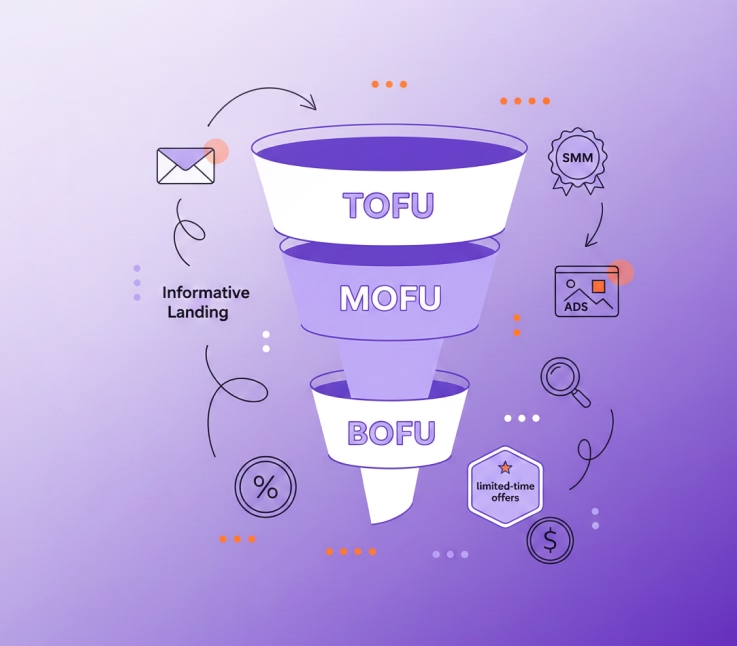
Are they just discovering their problem (TOFU)?
Or are they actively comparing solutions (MOFU)?
Maybe they’re already ready to make a decision (BOFU)?
Without the right content tailored to each stage, you’re essentially shooting in the dark.
In today’s digital landscape, businesses need to effectively nurture leads through every stage of the customer journey. The key to achieving this is creating the right content for each stage of your marketing funnel: TOFU (Top of Funnel), MOFU (Middle of Funnel), and BOFU (Bottom of Funnel). But how do you craft AI-powered content that engages and converts potential customers at every stage?
In this blog, we’ll break down how to create compelling, AI-driven content for each part of the funnel and optimize your marketing strategy for maximum results.
What Are TOFU, MOFU, and BOFU?
A content funnel is a marketing model that guides potential customers through the stages of their buyer’s journey: TOFU, MOFU, and BOFU. Each stage requires different types of content to move the prospect closer to conversion.
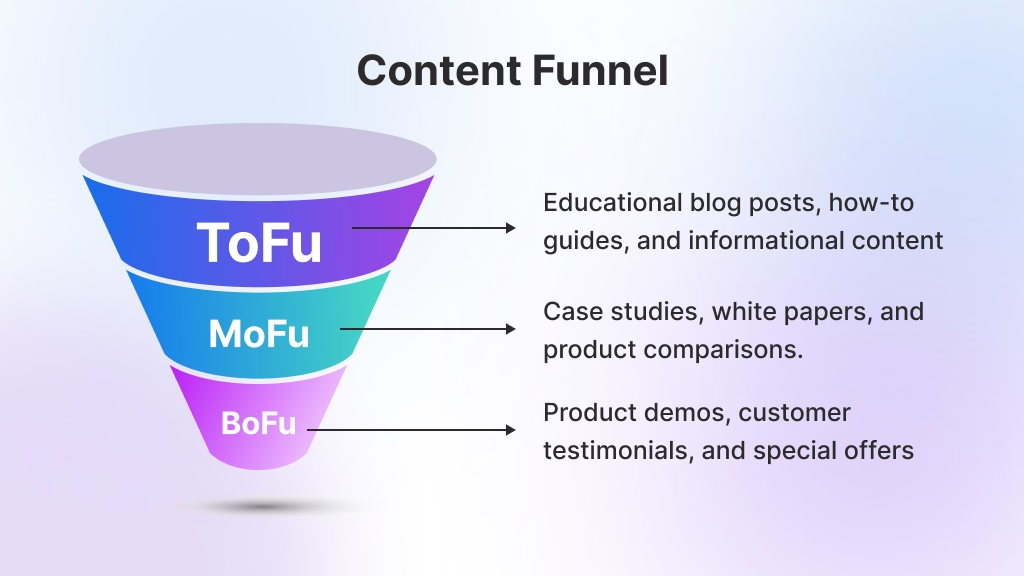
- TOFU (Top of Funnel): At this stage, prospects are becoming aware of their problem. Educational blog posts, how-to guides, and informational content attract them with valuable insights and solutions.
- MOFU (Middle of Funnel): Prospects are now evaluating their options. Content like case studies, white papers, and product comparisons helps nurture leads and present your solution as a viable option.
- BOFU (Bottom of Funnel): The final stage, where prospects are ready to decide. Product demos, customer testimonials, and special offers are designed to convert leads into customers.
AI-powered tools, like Generative AI, Natural Language Processing (NLP), and Content Automation, streamline the creation of funnel-specific content, improving lead nurturing and boosting conversion rates.
Creating TOFU Content: Attracting and Educating Your Audience
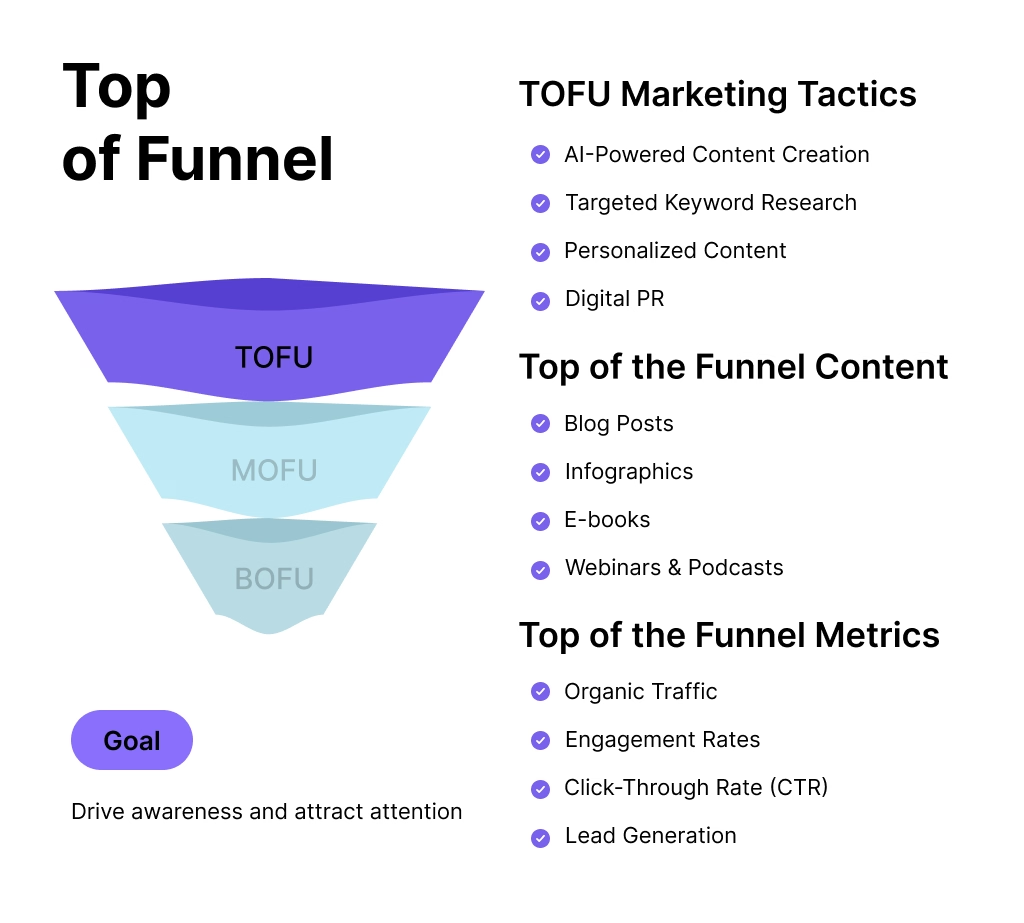
At the very top of the funnel, your primary goal is to drive awareness and attract attention. TOFU (Top of Funnel) content is aimed at reaching a broad audience who may not even know they have a problem or need a solution yet.
Here, you’re not pushing for a sale, but creating informational content that educates and engages people early in their buyer’s journey. AI-powered content plays a crucial role in maximizing efficiency, ensuring SEO optimization, and scaling your content production efforts, all while addressing the needs of your target audience.
Let’s break down how TOFU marketing tactics, TOFU content, and TOFU metrics work, and how AI can be a game-changer in optimizing this crucial stage of the funnel.
TOFU Marketing Tactics
The TOFU stage is all about attracting potential leads and capturing their attention by offering valuable, educational content that answers their questions. Here are some essential TOFU marketing tactics you can leverage with AI to improve visibility and engagement:
1. AI-Powered Content Creation
AI content tools, such as Generative AI and Natural Language Processing (NLP), help marketers rapidly generate high-quality content that answers key questions. By automating the process, AI ensures that your content aligns with search intent and provides meaningful value, keeping the user engaged and encouraging them to explore more. For example, AI can generate long-form blog posts, summaries, or even product overviews to introduce potential customers to your brand.
AI Tool Example: Using tools like WriteRush or ChatGPT for idea generation and content drafting can save time while maintaining high standards of content quality and relevance.
2. Targeted Keyword Research
AI tools excel at identifying high-volume, low-competition keywords that are crucial for driving organic traffic. Instead of relying on manual keyword research, AI algorithms analyze data and suggest keywords based on what your target audience is searching for in real-time.
AI Tool Example: Platforms like SEMrush or Moz use AI to offer keyword recommendations based on current trends, helping you optimize your content for maximum search visibility.
3. Personalized Content
With AI, you can personalize the user experience even at the TOFU stage. By analyzing user behavior and interactions with your content, AI tools can suggest additional resources or content upgrades, such as related blog posts or guides, based on what interests your readers most.
AI Tool Example: AI can personalize blog recommendations based on the topics a reader has engaged with, keeping them on your site longer and improving user engagement.
4. Content Distribution
AI-driven marketing tools can assist in the strategic distribution of TOFU content across multiple channels. Whether it’s through social media, email newsletters, or paid ads, AI helps ensure that your content reaches the right audience at the right time.
AI Tool Example: AI platforms like HubSpot or Buffer can automatically schedule and optimize posts based on user behavior data, ensuring your TOFU content reaches the widest possible audience.
5. Digital PR
Digital PR is an effective tactic for building brand awareness and increasing credibility. By securing coverage on high-authority websites, blogs, and news outlets, you can introduce your brand to a wider audience that may not yet be aware of your product or service. AI tools can help by identifying key media outlets and influencers in your industry, automating outreach efforts, and even crafting compelling pitches that resonate with journalists and bloggers.
AI for Digital PR: Tools like BuzzSumo or Prowly can analyze trending topics, track competitor media coverage, and suggest relevant journalists to target for PR outreach. These tools can also help automate the process of sending personalized pitches and tracking engagement.
6. Paid Social Media
Paid social media campaigns are another great way to capture attention at the TOFU stage. Platforms like Facebook, Instagram, LinkedIn, and Twitter allow you to target specific demographics, ensuring your content reaches the right audience. AI can optimize your ads by testing different creatives, adjusting bids in real-time, and ensuring that your ads are being shown to the most likely converters.
AI for Paid Social Media: AI-powered tools like Facebook Ads Manager or Google Ads use machine learning to automatically adjust campaigns based on performance, helping you reach more people with less manual intervention.
7. Influencer Marketing
Partnering with influencers can expand your reach and help establish credibility for your brand. Influencers at the TOFU stage can introduce your brand to their audience through blog posts, social media mentions, or video content. AI-driven platforms help identify the right influencers by analyzing engagement rates, audience demographics, and content performance. This ensures that your influencer partnerships are both effective and cost-efficient.
AI for Influencer Marketing: Platforms like Upfluence or Influencity use AI to analyze influencer profiles and match you with those whose audience aligns best with your target market. These platforms can also automate outreach and provide performance metrics to track the success of influencer campaigns.
Top of the Funnel Content
Now that we’ve explored some strategies for TOFU marketing, let’s dive deeper into the TOFU content that works best in capturing attention and driving engagement. TOFU content must be educational and informational, designed to introduce your audience to the challenges they may face and offer general solutions without being too sales-driven.
Here are some key content types for the Top of Funnel (TOFU) stage and how AI can enhance their creation:
- Blog Posts: Informative articles, optimized for SEO, that attract potential customers with valuable insights and help establish your brand’s credibility.
- Infographics: Visually engaging graphics that simplify complex data, grab attention, and increase brand visibility and awareness.
- E-books: In-depth, downloadable content offering valuable insights or solutions, exchanged for contact information to nurture leads and build your email list.
- Webinars & Podcasts: Engaging audio or video content that showcases your expertise, builds trust with your audience, and generates leads through interactive discussions or presentations.
- Videos: Short, captivating video content that fosters an emotional connection with your audience, sparks interest, and helps expand your brand reach through social sharing.
- Social Media Posts: Snappy, shareable content on platforms like Instagram, Twitter, and LinkedIn that engages users, provides value, and directs them to your website for more information.
- Case Studies: Real-life examples demonstrating how your solution helped a customer or solved a problem, building credibility and trust with potential leads at the awareness stage.
- Quizzes and Surveys: Interactive content that encourages engagement while helping you gather valuable data about your audience’s needs and preferences.
- Checklists & Templates: Easy-to-use resources that offer practical value to users, helping them solve small problems or take the first step in a larger journey, encouraging them to engage further with your content.
- Online Courses & Tutorials: Free or introductory educational resources that offer valuable knowledge while positioning your brand as a thought leader in your industry.
To enhance your TOFU content creation, use tools like WriteRush, GPT-4 for generating blog posts, SEMrush for keyword research, and BuzzSumo for discovering trending topics. These AI-powered tools can help you create valuable and engaging content that resonates with your target audience while ensuring your content is optimized for search engines.
These content types, when optimized with AI, can drive significant awareness, engagement, and conversions by meeting your audience where they are in their journey and offering real value.
Top of the Funnel Metrics
Once your TOFU content is live, tracking its performance is crucial to understanding whether your marketing tactics are working. Here are key TOFU metrics to monitor, and how AI can help optimize them:
- Organic Traffic: This metric shows how well your content is ranking on search engines. With AI’s ability to optimize content for SEO, you’ll be able to see an increase in traffic from organic search.
- Engagement Rates: How many people are interacting with your content? Use AI to analyze user behavior and track metrics like time spent on page, bounce rates, and social shares.
- Click-Through Rate (CTR): The percentage of people who click on your content after seeing it in search results. AI tools can optimize your meta tags and headlines to make sure your content is more clickable.
- Lead Generation: At TOFU, you’re not expecting conversions yet, but you should still be capturing leads. AI can help personalize content recommendations and drive more sign-ups for newsletters, guides, or other resources.
By keeping track of these metrics, you’ll know if your TOFU content is attracting the right audience and driving engagement. AI tools can make this process more efficient by providing actionable insights to optimize your content strategy.
With AI boosting your TOFU content, you’re not just attracting random visitors; you’re bringing in the right audience, setting the stage for meaningful connections.
Best Practices for TOFU Content:
- Focus on high-volume, broad keywords.
- Use engaging headlines and visuals to capture attention.
- Offer free, high-value resources (ebooks, guides, webinars).
- Share content on social media and guest blogs to expand reach.
So, now that we’ve got their attention, let’s see how we can nurture these leads with even more personalized content in the MOFU stage.
Middle of Funnel (MOFU): AI Content That Educates & Nurtures
When prospects move to the Middle of Funnel (MOFU), they’re no longer in the discovery phase. They’ve realized they have a problem and are actively looking for solutions. This is where MOFU content steps in: it’s all about educating and nurturing your leads, building trust, and guiding them toward making a decision.
At this stage, AI-powered content plays a crucial role in personalizing the experience, providing more in-depth resources, and nurturing leads by showcasing your product’s value and positioning your brand as a trusted expert.
Let’s break down the MOFU strategies, the types of MOFU content that work best, and the metrics you should be tracking to ensure your efforts are successful.
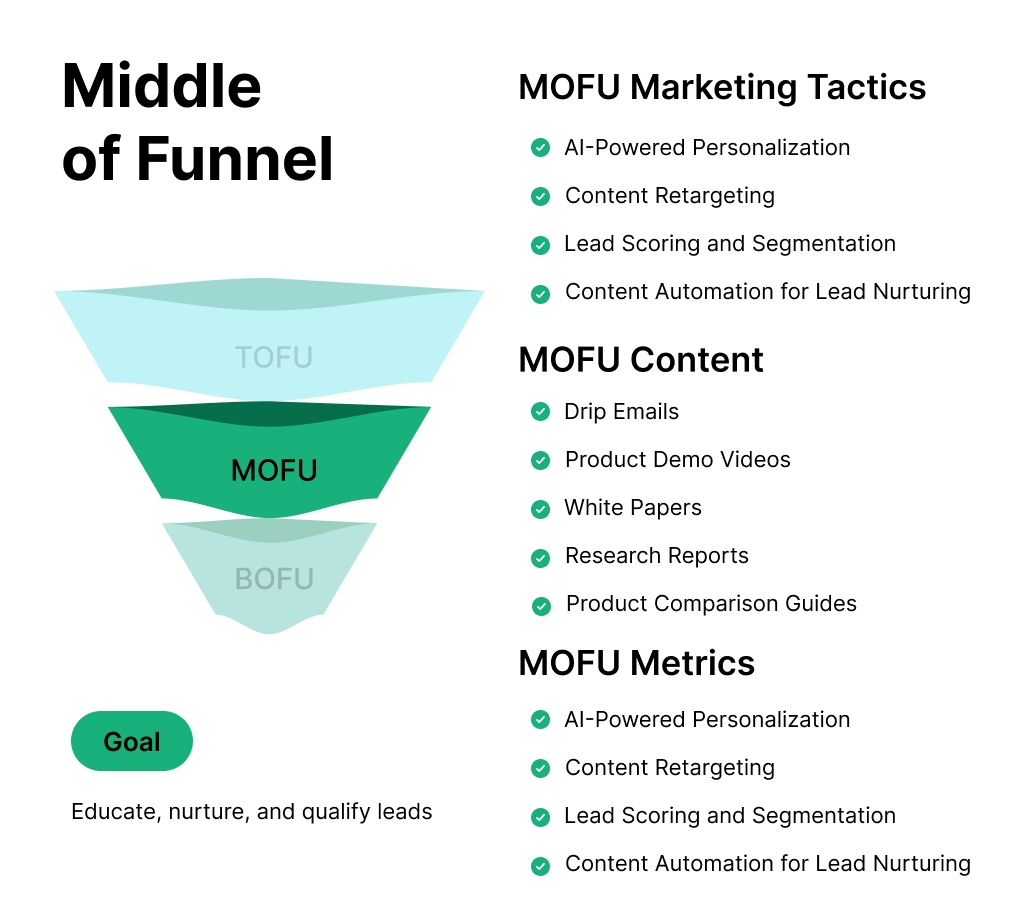
MOFU Marketing Tactics
In the MOFU stage, your primary goal is to nurture leads by providing detailed content that helps them evaluate their options and consider your solution. These leads are moving away from the general awareness stage and are now deciding which product or service will best meet their needs.
Here’s how you can leverage AI to enhance your MOFU marketing tactics:
1. AI-Powered Personalization
At MOFU, leads are more informed and are looking for solutions. AI tools can analyze past behavior (e.g., which blog posts they read, what CTAs they clicked) and serve up personalized content that directly addresses their needs. For instance, AI can automatically send them case studies, product comparison guides, or white papers based on their interests.
AI Example: AI platforms like HubSpot and Marketo help you track user behavior, segment your audience, and send personalized emails or content that push leads down the funnel.
2. Content Retargeting
With AI, you can implement retargeting ads that are tailored to the specific interests of users who have engaged with your TOFU content. By showing them ads or content that aligns with their actions (e.g., content they clicked on or forms they filled out), you can keep your brand top-of-mind as they move closer to making a decision.
AI Example: Using tools like Google Ads or Facebook Ads, AI algorithms can create dynamic retargeting campaigns that show specific ads to leads based on their interaction with your website.
3. Lead Scoring and Segmentation
Lead scoring powered by AI helps you prioritize and segment your leads based on their level of engagement and readiness to buy. AI tools can analyze engagement patterns, assign a score to each lead, and ensure that high-value leads receive the most attention. For example, if a lead frequently views pricing pages or signs up for a product demo, they might be moved into a higher segment and receive more targeted content.
AI Example: Platforms like Salesforce Einstein use AI to automatically score and segment leads, making it easier to identify the leads that are most likely to convert.
4. Content Automation for Lead Nurturing
At MOFU, leads need to be educated about the solutions you offer, and AI-driven content automation makes this process seamless. For instance, AI can automatically send a series of drip emails or nurturing sequences that move the lead from general information to more specific, solution-based content.
AI Example: ActiveCampaign and Mailchimp are examples of AI tools that can automate email sequences based on user behavior, ensuring that the right content reaches the right people at the right time.
MOFU Content
In the MOFU stage, your leads are looking for more specific information to help them evaluate their options. Your content should be more in-depth and targeted to their needs.
Here are the types of MOFU content that help educate and nurture leads:
- Drip Emails to Various Audience Segments: Targeted email series that nurture leads by providing tailored, detailed content based on their interests and behaviors.
- Product Demo Videos: Visual demonstrations showcasing product features and benefits, helping leads in the evaluation phase understand how your solution works.
- White Papers and Research Reports: In-depth, authoritative resources providing valuable insights, helping prospects evaluate your solution with solid, data-driven information.
- Product Comparison Guides: Content comparing your product with competitors, aiding leads in making informed decisions, and highlighting why your solution is the best fit.
- Online Classes: Educational sessions that engage leads, positioning your brand as an expert and offering valuable knowledge that moves them closer to a purchasing decision.
- Customer Testimonials and Success Stories: Real-life examples of customer success, building trust by showing how your solution solves specific challenges.
- FAQ Pages and Knowledge Base: Answers to common questions, helping reassure leads and clarify how your solution meets their needs.
- Webinars and Live Q&A Sessions: Interactive content that allows prospects to ask questions and directly engage with your brand, helping them move from consideration to decision.
- Resource Libraries: A collection of guides, articles, and tools that provide deep insights into your product, positioning your brand as an expert and aiding decision-making.
For automating and personalizing your MOFU content, use tools like Mailchimp (with AI-driven segmentation) for email campaigns, HubSpot for lead nurturing workflows, and Unbounce for creating high-converting landing pages. These tools help you provide tailored content and build trust with leads through personalized communication.
MOFU Metrics
Now that you’ve created compelling MOFU content, it’s important to track how well your lead nurturing efforts are performing.
Here are key MOFU metrics to monitor and how AI can help:
- Email Campaign Engagement Rates: The percentage of recipients opening emails, showing how well your drip emails resonate and engage leads at this stage.
- Landing Page Engagement Metrics: Data on visitor interactions (clicks, scrolls) to evaluate the relevance and persuasiveness of your MOFU landing pages.
- Click-Through Rate (CTR) on MOFU Content: The percentage of clicks on mid-funnel content, indicating how interested leads are in deeper engagement with your solution.
- Conversion Rates for Mid-Funnel Offers (Demos, Trials, Classes): The percentage of leads completing desired actions (e.g., demos, trials), assessing how effective your MOFU content is in driving conversions.
Once your leads are engaged, it’s time to turn that initial curiosity into genuine interest. AI steps in here to deliver personalized, valuable content that guides your leads toward a decision.
Best Practices for MOFU Content:
- Use data-driven insights to create personalized content.
- Provide in-depth content like case studies, tutorials, and demos.
- Focus on educating your leads about the features and benefits of your solution.
- Use AI to automate content delivery and follow-up emails.
Speaking of decisions, let’s now take a look at how BOFU content seals the deal and turns those engaged leads into customers.
Bottom of the Funnel (BOFU): AI Content for Conversion & Decision
At the Bottom of the Funnel (BOFU), leads are ready to make a decision. Your goal here is to provide the final push that turns prospects into customers. BOFU content should focus on demonstrating how your solution is the best fit for their needs, addressing any remaining objections, and encouraging action.
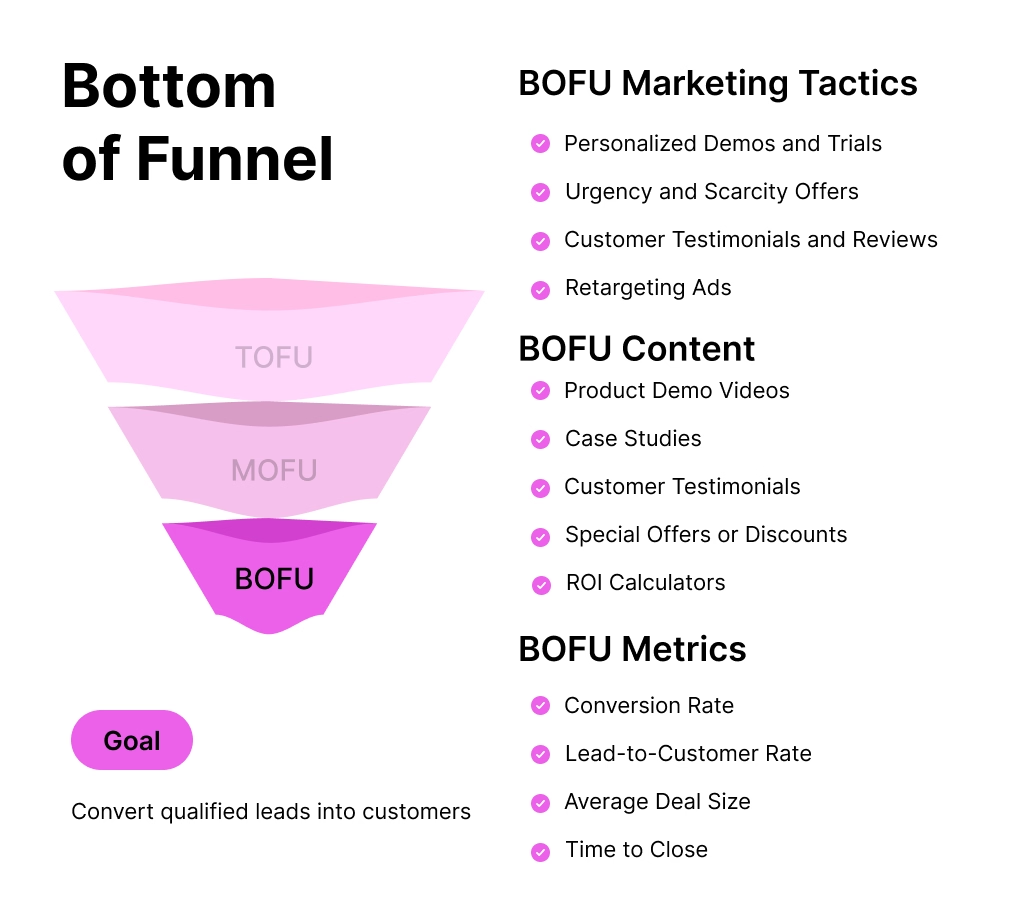
BOFU Marketing Tactics
Here are some key BOFU marketing tactics:
- Personalized Demos and Trials: Provide tailored product demos or free trials to show exactly how your solution solves their specific problems.
- Urgency and Scarcity Offers: Use time-sensitive offers or discounts to create a sense of urgency and drive immediate action.
- Customer Testimonials and Reviews: Leverage customer testimonials and case studies to build trust and demonstrate how your product has worked for similar customers.
- Retargeting Ads: Use AI to retarget leads with ads showcasing your product’s value, encouraging them to take the final step toward conversion.
BOFU Content
Here are some well-suited types of BOFU content:
- Product Demo Videos: Show how your solution works in action, addressing specific pain points and showcasing the benefits.
- Case Studies: Provide real-life examples of how your solution helped other customers, offering social proof that it works.
- Customer Testimonials: Highlight positive feedback and success stories from satisfied customers to help build credibility and trust.
- Special Offers or Discounts: Present exclusive deals or limited-time promotions to encourage immediate action and conversion.
- ROI Calculators: Help prospects see the tangible value of your solution by providing them with tools to calculate potential return on investment.
For optimizing BOFU content and driving conversions, AI-powered tools like Clearbit for personalized product recommendations, Optimizely for A/B testing, and Drift for AI-powered chatbots can enhance user experience. These tools help create personalized experiences that guide leads toward conversion.
BOFU Metrics
Here are some BOFU metrics to measure:
- Conversion Rate: The percentage of leads converting into customers by completing actions like signing up for a demo or purchasing your solution.
- Lead-to-Customer Rate: Measures how effectively your BOFU content moves leads from interest to purchase, evaluating the overall efficiency of your conversion strategy.
- Average Deal Size: Track the size of deals closed at the BOFU stage to assess how valuable your conversions are.
- Time to Close: The time it takes for leads to convert into customers, helping you understand how quickly BOFU content is moving leads through the decision process.
At BOFU, AI content is all about making it easy for prospects to take the final step. Whether it’s a demo, a testimonial, or an exclusive offer, AI ensures you’re delivering exactly what they need to convert.
Best Practices for BOFU Content:
- Provide clear CTAs and product details.
- Use AI to personalize the user experience (e.g., custom pricing).
- Offer limited-time deals or discounts to create urgency.
- Make it easy for users to buy (one-click checkout, clear purchase buttons).
Now that we’ve covered each stage of the funnel, let’s explore why funnel-specific content is the secret sauce for success in 2026.
Using AI to Optimize the Entire Funnel
AI is a game-changer when it comes to optimizing your content strategy for the entire funnel. Here’s how to leverage AI at every stage:
- Content Personalization: AI tools can help tailor content to specific audience segments, ensuring that the right message is delivered to the right person at the right time.
- A/B Testing: Use AI to run A/B tests on your content, landing pages, and emails to determine which versions perform best.
- Analytics and Insights: AI can analyze user behavior and provide real-time insights, helping you adjust your strategy based on what works.
Why Funnel-Specific Content Wins in 2026
In today’s fast-paced digital world, creating generic content no longer cuts it. With AI transforming the way content is created and consumed, marketers must tailor their content strategy to match the specific needs of prospects at each stage of the TOFU-MOFU-BOFU funnel.
Here’s why funnel-specific content is more crucial than ever in 2026 and how it can boost your marketing game.
1. AI’s Role in Personalizing Content
In 2026, AI tools like Generative AI and Natural Language Processing (NLP) have made it easier than ever to create personalized, targeted content that speaks directly to your audience’s current stage in the funnel.
- TOFU content becomes more effective because AI helps identify search intent through semantic search, allowing you to create content that answers users’ questions at the exact moment they need it.
- MOFU content can be tailored to offer more value and insight based on a prospect’s behaviors, past interactions, and interests. With AI-driven lead nurturing, you can send timely content such as case studies or white papers that resonate with their specific needs.
- BOFU content becomes hyper-targeted, using AI content detection and data-driven personalization to serve up offers, demos, and testimonials that speak to the prospect’s exact pain points, pushing them toward conversion.
By leveraging AI in this way, you ensure that your content doesn’t just fill space on your website; it actively nurtures your audience, driving them through the funnel and increasing conversions.
2. Search Intent Drives the Funnel
In 2026, search intent plays a pivotal role in content creation. Prospects are no longer searching for vague, one-size-fits-all answers; they’re looking for specific solutions that align with their exact needs. Funnel-specific content, whether it’s informational blog posts at the top, product comparisons in the middle, or testimonials at the bottom, ensures that you meet your audience exactly where they are in their decision-making journey.
- TOFU stage: Visitors are looking for broad, informational content. They might be asking questions like, “What is AI content creation?” or “How does content automation work?” At this stage, AI tools can help you produce content that answers these queries and provides value upfront.
- MOFU stage: Leads are now evaluating options. They want detailed, solution-focused content, such as comparisons and case studies. AI tools can suggest and generate content that helps prospects see the benefits of your product.
- BOFU stage: Prospects are on the verge of converting. They want to see real-world applications and success stories. Here, AI content generation tools can create tailored product demos or even dynamic CTAs that push the lead to take action.
By crafting content that aligns with your audience’s search intent at each stage, you not only improve your SEO but also create an experience that feels personalized and relevant.
3. Improved ROI with Funnel-Specific Content
When you create content tailored to each funnel stage, you’re not just improving engagement, you’re directly enhancing your conversion rates. According to recent studies, marketers who use personalized content see an average 20% increase in conversions. This is because funnel-specific content addresses the unique needs of each prospect, guiding them smoothly from awareness to decision-making.
With the help of AI, you can easily create content clusters and pillar pages that support your SEO strategy while maintaining relevance at every stage of the funnel. Additionally, AI tools can automate the creation of these pages, reducing the time and effort needed to keep your content fresh and optimized.
4. AI Helps Optimize Content Performance Across the Funnel
AI doesn’t just help create content, it also helps optimize it. AI tools provide analytics and performance data to track which content resonates most with your audience at each stage.
- At the TOFU stage, AI can help identify high-performing topics and keywords that drive traffic to your site.
- At MOFU, AI-driven SEO insights can refine your content to rank higher in search engines and improve engagement rates.
- At BOFU, AI tools can suggest ways to optimize conversion rate optimization (CRO) strategies, like tweaking CTAs or adjusting landing page content for better performance.
As we move into 2026, making sure your content is spot-on at each stage of the funnel is crucial, and AI is the key to making it happen. But how can you tell if your strategy is really hitting the mark?
It’s all about measuring success, and AI can help you fine-tune your funnel for even greater results.
Now, let’s wrap up and see how AI-driven content for TOFU, MOFU, and BOFU can take your marketing strategy to the next level, driving growth and better conversions.
Final Thoughts
AI-driven content for TOFU, MOFU, and BOFU funnels transforms how businesses attract, engage, and convert leads. By using AI tools, you can create personalized content that resonates with your audience at each stage, from SEO optimization in TOFU to lead nurturing in MOFU and targeted conversions in BOFU. AI-powered metrics like CTR, conversion rates, and CAC allow you to track success and continuously improve your funnel.
Incorporating AI not only streamlines content creation but also boosts ROI, ensuring more efficient and effective marketing strategies. Embrace AI to optimize your funnel and drive long-term business growth.
FAQs (Frequently Asked Questions)
1. What is TOFU, MOFU, and BOFU in a marketing funnel?
TOFU (Top of Funnel) focuses on raising awareness and attracting leads. MOFU (Middle of Funnel) nurtures leads with more detailed content, helping them evaluate options. BOFU (Bottom of Funnel) focuses on conversion, providing content that persuades leads to take action.
2. How can AI help in creating content for each funnel stage?
AI helps by personalizing content, automating content creation, and optimizing SEO for TOFU. For MOFU, AI can assist in lead nurturing through personalized email sequences and content recommendations. At BOFU, AI helps by targeting the right prospects with product demos and success stories, improving conversions.
3. What AI tools can be used for measuring funnel success?
Popular AI tools like Google Analytics, HubSpot, Salesforce Einstein, and Marketo can track performance across TOFU, MOFU, and BOFU, measuring engagement, conversion rates, and ROI to optimize your funnel.
4. Why is content personalization important in the MOFU stage?
Personalization in MOFU content ensures that leads receive relevant, tailored information, which improves engagement and trust. By using AI, you can automate and optimize this process based on user behavior, moving leads closer to conversion.
5. What metrics should I track to measure success in a funnel?
Key metrics include CTR, engagement rates, conversion rates, lead scoring, and ROI. These help assess content performance at each funnel stage and inform optimizations for better results.
6. How does AI help improve conversion rates in BOFU?
AI helps improve BOFU conversion rates by providing personalized offers, product demos, and testimonials that address specific lead concerns. It also uses retargeting ads and time-sensitive offers to create urgency and push leads toward conversion.
7. Can AI tools help with content creation for SEO at the TOFU stage?
Yes! AI tools can optimize your TOFU content by identifying high-volume, low-competition keywords, suggesting SEO-friendly blog topics, and helping generate engaging and relevant content that ranks well on search engines.
This page was last edited on 14 May 2026, at 11:51 am