
If you’ve been freelancing for a while, you probably know this feeling.
One month, work is flowing in. Clients reply quickly. Invoices get paid on time.
The next month? Silence. No replies. No clear idea where the next project will come from.
Most freelance writers don’t fail because they lack talent. They struggle because they’re running a business without a plan.
Not a stiff, corporate document, but a clear roadmap that answers simple questions:
Who do I want to work with? How do I make money consistently? What should I focus on this month instead of reacting to everything?
That’s exactly what a freelance writing business plan helps you do.
In this guide, you’ll learn what a freelance writing business plan really is, why it matters (even if you’re a beginner), and how to create one step by step. You’ll also see practical examples, common mistakes to avoid, and how AI-assisted workflows and WordPress tools can help you turn your plan into real results without turning this into a sales pitch.
What Is a Freelance Writing Business Plan?
A freelance writing business plan is a simple strategic document that outlines your goals, services, target clients, pricing, marketing approach, and financial plan for your freelance writing business.
It acts as a roadmap that helps you make smarter decisions, earn more consistently, and grow your writing work with intention instead of guesswork.
In real life, it’s not something you write once and forget. Freelance writers use a business plan to decide which projects to accept, how much to charge, where to find clients, and how to move from unstable income to predictable revenue.
Why Freelance Writers Actually Need a Business Plan
Many writers assume business plans are only for startups, agencies, or people chasing investors. But the truth is simple: freelance writing is a business, even if it’s just you, a laptop, and a Wi-Fi connection.
Without a clear plan, most freelance writers operate in reaction mode, saying yes to whatever shows up, adjusting prices on the fly, and hoping next month looks better than this one. A freelance writing business plan replaces that uncertainty with structure.
A solid plan helps you:
- Break the feast-or-famine cycle by mapping how clients and income are generated consistently
- Price your work with confidence, based on income goals instead of guesswork
- Attract the right clients instead of chasing every low-fit opportunity
- Connect writing work to revenue, so effort actually translates into earnings
- Make smarter growth decisions, from raising rates to adding new services
More importantly, a business plan shifts how you think. You stop seeing yourself as “just a writer looking for work” and start operating like a business owner with systems, priorities, and direction.
Without a plan, success often comes down to luck.
With a plan, you build repeatable systems that support long-term stability and growth.
Core Components of a Freelance Writing Business Plan
You don’t need complexity here; you need clarity. A strong freelance writing business plan is built around a few core components that help you move from “busy but uncertain” to “focused and sustainable.” Each section answers a specific business question, so you always know why you’re doing something, not just what you’re doing.
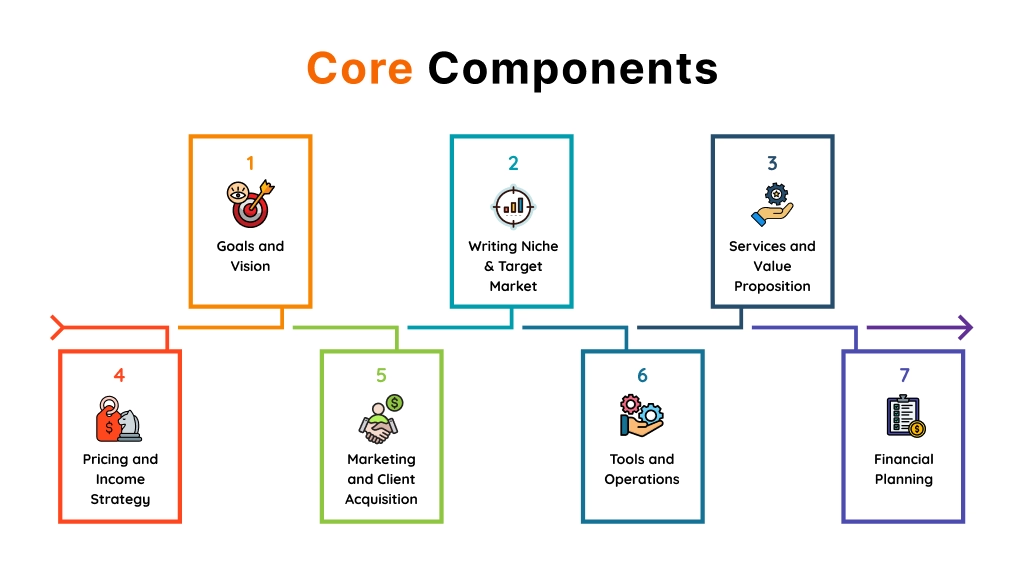
Below are the essential sections every freelance writer should include.
1. Goals and Vision
Everything starts with direction. Without clear goals, it’s easy to stay stuck doing random projects that don’t move you forward.
Ask yourself:
- How much do I want to earn monthly and yearly?
- What type of writing do I want to be known for?
- What does a successful freelance writing business look like to me in one year?
A good goal is specific and measurable. For example:
“I want to earn $5,000 per month writing SEO blog content for SaaS companies within 12 months.”
Clear goals act like a filter. They help you decide which clients, projects, and opportunities are worth your time and which aren’t.
2. Writing Niche and Target Market
Trying to write for everyone usually leads to unclear positioning and weaker client interest.
This part of your business plan defines:
- Your writing niche (such as SaaS, health, finance, or ecommerce)
- Your ideal client (startups, agencies, content teams, founders)
- The specific problems your writing helps solve
When this section is clear, clients immediately understand your value. You’re no longer “just a freelance writer”; you’re the right writer for a specific need.
3. Services and Value Proposition
Next, outline what you actually sell. Be concrete.
Common freelance writing services include:
- Blog posts and articles
- Website and landing page copy
- Email campaigns and newsletters
- Case studies and whitepapers
- Content strategy or editing support
Then connect those services to outcomes. For example:
- Blog posts → organic traffic and brand authority
- Email campaigns → conversions and retention
- Case studies → sales enablement
Clients don’t buy words. They buy results. Your value proposition should make that connection obvious.
4. Pricing and Income Strategy
This is where your business plan becomes practical.
Your pricing section should explain:
- How you price your work (per project, retainer, or package)
- Your minimum acceptable rate
- How many projects or clients do you need each month to reach your income goal
For example:
- $1,000 per blog package × 5 clients = $5,000 per month
This simple math keeps your goals realistic. Motivation fades, but numbers don’t lie.
5. Marketing and Client Acquisition
Decide where your clients will come from before you need them.
You don’t need every channel. You need a few that you can manage consistently, such as:
- A personal website supported by SEO
- LinkedIn outreach and networking
- Referrals from past clients
- Freelance platforms
- Targeted email pitching
If you’re using WordPress, this section often ties directly to your site structure, service pages, and content strategy. This is where planning turns into visibility.
6. Tools and Operations
A freelance writing business runs on systems, not just talent.
This section covers how you’ll operate day to day, including:
- Your website (often WordPress-based)
- Project management or planning tools
- Contracts, proposals, and invoicing
- Writing, editing, and research tools
Many writers also use an AI content marketing tool or a WordPress AI writing plugin to support outlining, drafting, FAQ creation, or content updates, especially when managing multiple clients. The goal isn’t automation for its own sake, but smoother workflows.
7. Financial Planning
You don’t need an accountant-level spreadsheet, but you do need visibility into your finances.
At minimum, track:
- Startup costs (domain, hosting, tools)
- Monthly business expenses
- An emergency buffer
- Basic income projections
Knowing your numbers reduces stress and helps you make confident decisions, far more than any productivity hack ever will.
Step-by-Step: How to Create Your Freelance Writing Business Plan
You don’t need a complicated framework or a business background to create a strong freelance writing business plan. What you need is intentional thinking about your work, your income, and how you want your freelance career to function day to day.
These steps go deeper than surface-level advice. They’re designed to help you move from “I’ll figure it out as I go” to a clear, repeatable way of running your writing business.
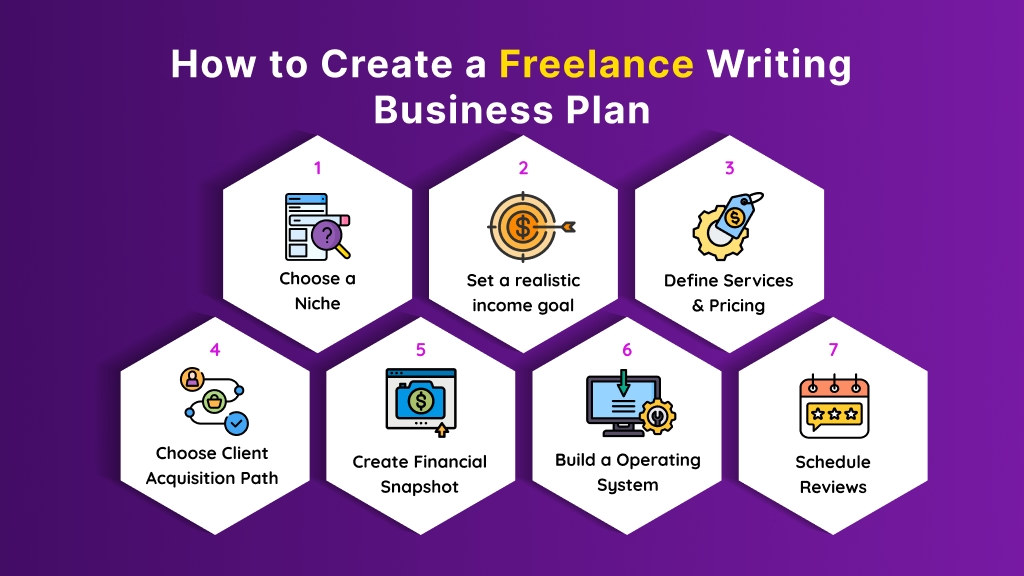
Step 1: Choose a niche and define a clear outcome
This step is about positioning, not limitation.
Start by identifying who you want to serve and what result your writing creates for them. A niche isn’t just an industry; it’s the intersection of audience, problem, and outcome.
Ask yourself:
- Who do I enjoy working with most?
- What type of writing do I produce best?
- What business problem does my writing help solve?
For example, there’s a big difference between:
- “I write blog posts,” and
- “I help SaaS companies publish SEO-focused blog content that attracts qualified leads.”
The second version immediately communicates value. It also makes your services easier to market, price, and scale.
Step 2: Set a realistic income goal (and reverse-engineer it)
A freelance writing business plan needs numbers, even if they’re simple.
Start with a yearly income goal that feels challenging but achievable. Then work backward:
- What does that mean per month?
- How much do you need to earn per week?
- How many clients or projects does that require?
This exercise often reveals gaps:
- Your current rates may be too low
- You may be taking on too many small projects
- You may need fewer, better clients instead of more work
Seeing the math clearly helps you make smarter pricing and workload decisions.
Step 3: Define your services and pricing model
Now translate your skills into clear offers.
Write down exactly what you sell:
- Blog posts or content packages
- Website or landing page copy
- Email sequences or newsletters
- Editing, audits, or content strategy
- Monthly retainers or ongoing content support
Then decide how you want to be paid. Flat project pricing and retainers are usually more predictable than hourly work, especially as you gain experience.
The goal of this step is clarity for you and for potential clients. When your services and pricing are clearly defined, conversations become easier and more professional.
Step 4: Choose 2-3 client acquisition channels
Your business plan should answer a critical question: Where will clients actually come from?
Instead of trying everything, focus on a few channels you can commit to consistently:
- Your website and SEO-driven content
- Referrals from past or current clients
- LinkedIn networking or direct outreach
- Select freelance platforms used strategically
Document your approach. For example:
- “Publish two SEO blog posts per month.”
- “Send five targeted pitches per week.”
- “Ask every completed client for a referral.”
Consistency in fewer places almost always beats scattered effort everywhere.
Step 5: Create a simple financial snapshot
You don’t need complex forecasts, but you do need awareness.
Outline:
- Fixed monthly expenses (hosting, tools, subscriptions)
- Variable costs (outsourcing, ads, one-off tools)
- Your minimum income requirement to stay comfortable
- A small buffer for slow months
This snapshot helps you stay calm during quieter periods and prevents reactive decisions like underpricing or overbooking yourself out of fear.
Step 6: Build a repeatable operating system
This step turns planning into execution.
Think through how your freelance business actually runs:
- How do projects start?
- How do you plan and outline content?
- How do revisions and feedback work?
- How do you invoice and close projects?
Document simple workflows for each stage. Many writers use AI-assisted workflows inside WordPress to speed up outlining, draft service pages, generate FAQs, or update content while still keeping strategy, tone, and judgment firmly human-led.
A repeatable system reduces decision fatigue and saves hours every week.
Step 7: Schedule reviews and allow the plan to evolve
A freelance writing business plan is a living document.
Built-in review points:
- Monthly check-ins to review income, workload, and lead flow
- Quarterly reflections on what’s working and what isn’t
- Annual updates to goals, pricing, niches, or services
As your experience grows, your plan should grow with you. This step ensures your business doesn’t stall or outgrow the structure you originally created.
Using AI to Build and Optimize Your Business Plan
AI won’t replace your judgment as a freelance writer, but it can remove a lot of unnecessary friction from the planning process. When used intentionally, AI becomes a practical assistant that helps you think more clearly, move faster, and stay organized.
Many freelance writers use AI-assisted workflows to handle the heavy lifting that often slows business planning down, such as:
- Drafting first versions of a freelance writing business plan: AI can help you outline sections like goals, services, pricing strategy, and marketing plans, giving you a solid starting point instead of a blank page.
- Researching niches and competitors: You can quickly explore writing niches, analyze competitor positioning, and identify gaps in content writing services, then refine the insights using your own experience.
- Creating service pages and content inside WordPress: Writers often use a WordPress AI plugin to draft service page copy, structure portfolio pages, or update blog content while keeping full control over tone and messaging.
- Generating FAQ sections and support content: AI can help surface common client questions related to pricing, timelines, or deliverables, making it easier to build FAQ sections that improve clarity and trust.
- Organizing ideas into structured documents: From turning scattered notes into a clear roadmap to breaking goals into actionable steps, AI helps transform ideas into usable plans.
The key is balance. AI works best as a supporting assistant, not a decision-maker. Your strategy, positioning, and business direction should always come from you; AI simply helps you execute those decisions more efficiently and consistently.
Common Freelance Writing Business Plan Mistakes
Even the best intentions can go off track if a business plan isn’t used the right way. Most freelance writers don’t struggle because they didn’t create a plan; they struggle because of how they apply it (or don’t).
Here are the most common mistakes to watch out for.
Writing a plan and never using it
A freelance writing business plan isn’t meant to sit in a folder untouched. When it’s not revisited, it quickly becomes irrelevant. Your plan should guide weekly decisions, what projects to accept, where to market, and what to prioritize next.
Setting income goals without pricing math
Saying “I want to earn more” isn’t a strategy. Many writers skip the simple math: how many projects, at what rates, are needed to hit a monthly income target? Without this clarity, underpricing and burnout are almost guaranteed.
Relying on one client or one platform
Depending on a single client or marketplace might feel safe, until it doesn’t. A strong business plan accounts for multiple income streams and client acquisition channels, so your freelance business isn’t vulnerable to sudden changes.
Ignoring contracts, invoicing, and legal basics
Creative work still needs structure. Skipping contracts, proper invoicing, or a basic legal setup can lead to payment issues and unnecessary stress. These operational details may not feel exciting, but they protect your time and income.
Overcomplicating tools instead of building habits
More tools don’t equal better results. Some writers spend more time tweaking systems than actually executing the plan. A simple workflow, sometimes supported by light AI-assisted tools or a WordPress setup, is far more effective than a complex stack you don’t use consistently.
At its core, your freelance writing business plan should simplify your work, not add pressure. If it feels overwhelming, that’s usually a sign it needs refinement, not abandonment.
Templates, Tools, and Resources for Freelance Writing Business Plan
To make your freelance writing business plan easier to execute and easier to stick to, having the right tools matters more than having many tools. The goal isn’t to build a complicated system but to support consistent action.
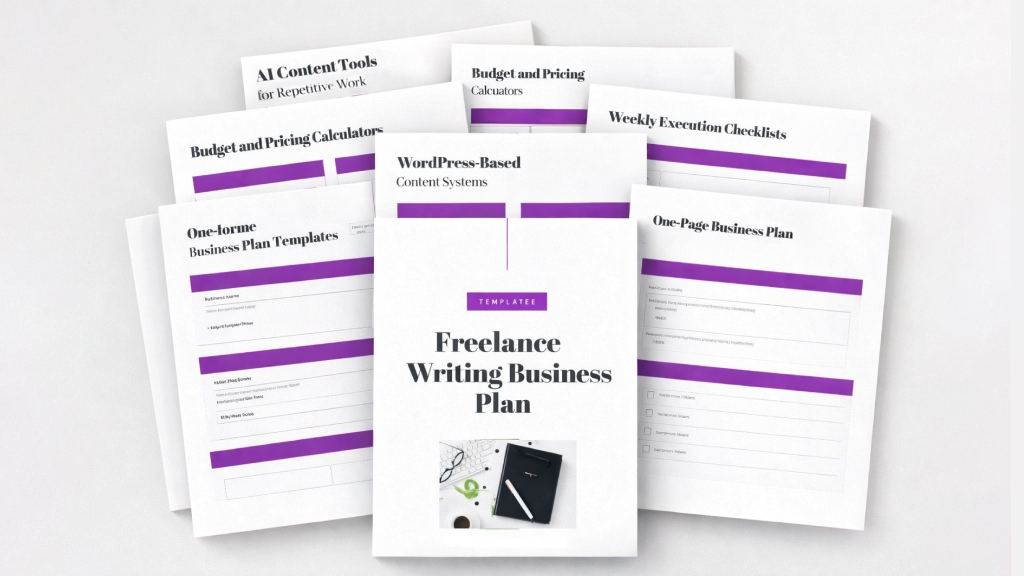
Most freelance writers find these resources genuinely useful:
- One-page business plan templates: Ideal for mapping out goals, services, target market, pricing strategy, and income targets without overthinking the process.
- Budget and pricing calculators: These help you connect your income goals with real numbers, monthly expenses, minimum rates, and how many projects you actually need to book.
- Weekly execution checklists: Simple checklists keep your plan active by breaking it into small, repeatable actions like pitching, follow-ups, content creation, and admin tasks.
- WordPress-based content systems: A well-structured WordPress site, like service pages, portfolio, blog, and contact flow, turns your business plan into a client acquisition engine instead of a static document.
- AI content tools for repetitive work: Many writers use AI-assisted workflows to speed up outlines, drafts, FAQs, and content updates, especially inside WordPress. Used thoughtfully, these tools save time without replacing strategy or voice.
Ultimately, the best tools are the ones you’ll use consistently. A simple setup that supports your freelance writing business plan is far more effective than an advanced system you abandon after a week.
How to Review, Update, and Scale Your Plan
A good freelance writing business plan isn’t something you write once and leave untouched. It’s meant to evolve as your skills, clients, and income grow.
As you gain experience, your priorities will naturally shift. What worked in your first few months may not support your next stage, and that’s where regular reviews matter.
Start by checking in on your plan every month. Ask simple but important questions:
Are you hitting your income targets? Are your current clients aligned with your niche? Are your marketing channels still bringing results?
Over time, your updates may include things like
- Raising rates intentionally as your expertise and results improve
- Adding retainer or package-based services to create more predictable income
- Refining marketing channels, focusing on what actually brings qualified clients
- Automating parts of your workflow, such as content planning, outlines, or site updates
- Exploring scaling options, like subcontracting, productized services, or recurring offerings
For many writers, this is also the stage where tools and systems matter more. Using structured workflows, sometimes supported by AI-assisted tools or a WordPress setup, can free up time while keeping quality consistent.
Most importantly, your business plan should always reflect where you’re going, not just where you started. When it grows with you, it becomes a decision-making tool, not just a document.
Final Thoughts
You don’t need to feel “ready” before you create a freelance writing business plan. Most writers never do. What you actually need is clarity, clarity about where you’re going, how you’ll earn, and what deserves your focus right now.
Start small and keep it practical:
- Write your first version today, even if it feels rough
- Keep the plan simple and flexible, not perfect
- Use it to guide real decisions: what clients to pitch, what projects to accept, what to say no to
- Revisit and improve it as your skills, niche, and income grow
A freelance writing business plan isn’t about locking yourself into rigid rules. It’s about giving yourself a clear direction, so you’re not constantly reacting to emails, platforms, or panic.
When you know your goals, your target market, and your income strategy, your writing stops feeling random. You work with intention. And that’s where confidence and sustainable growth actually come from.
Frequently Asked Questions (FAQs)
Do I really need a business plan as a freelance writer?
Yes. A freelance writing business plan helps you set clear income goals, choose the right clients, and avoid inconsistent “feast-or-famine” cycles. Even a simple plan gives structure to your services, pricing, and marketing decisions.
How long should a freelance writing business plan be?
It doesn’t need to be long. Most freelance writers do well with a one- to three-page plan that covers goals, niche, services, pricing, marketing, and basic finances.
What should be included in a freelance writing business plan?
A strong plan includes your writing niche, target market, services, pricing strategy, client acquisition channels, tools, and a basic financial plan. These elements work together to guide daily and long-term decisions.
Is a freelance writing business plan different from a portfolio?
Yes. A portfolio shows your writing samples, while a business plan explains how you run and grow your writing business. One supports credibility; the other supports strategy and income.
How do I set income goals in a freelance writing business plan?
Start with a realistic monthly or yearly income target, then work backward to calculate how many projects or retainers you need. This helps align your pricing and workload with your financial goals.
Can beginners create a freelance writing business plan without experience?
Absolutely. Beginners often benefit the most because a plan prevents underpricing and random effort. You can start with assumptions and refine them as you gain real client data.
What’s the best niche to choose for a freelance writing business plan?
The best niche combines your skills, interests, and market demand. Common examples include SaaS, health, finance, ecommerce, and content marketing, but the right niche depends on where you can deliver clear value.
How does pricing fit into a freelance writing business plan?
Pricing connects your services to your income goals. Your plan should explain whether you charge per project, per package, or on retainer, and how those rates support consistent revenue.
Should I include marketing strategies in my freelance writing business plan?
Yes. Your plan should outline how you’ll attract clients, such as through a WordPress website, SEO, LinkedIn outreach, referrals, or freelance platforms. Clear marketing focus reduces wasted effort.
Do I need a website to follow a freelance writing business plan?
A website isn’t mandatory, but it helps. Many freelance writers use WordPress to showcase services, publish content, and support long-term client acquisition as part of their plan.
This page was last edited on 17 February 2026, at 6:03 pm