
You’ve read the Reddit threads. You’ve seen the listicles. Yet here you are, staring at your screen, wondering where the actual roadmap is. Maybe you’re tired of your 9-5 and want more freedom. Maybe you’ve got a blog but aren’t sure how to turn it into income. Or maybe you just love writing, but have no clue how to land your first client.
You’re not alone. Most freelance writers start in that exact place, overwhelmed, uncertain, and totally new.
But here’s the good news: you don’t need a degree, connections, or a 5,000-word portfolio to begin. You just need clarity, the right tools, and a step-by-step plan.
This guide is built for beginners like you, bloggers, creators, and content lovers, who want to write for a living. We’ll cover everything from choosing a niche to setting rates, building your portfolio, finding clients, and even how to work smarter using AI and WordPress.
Let’s map out your freelance writing future, one step at a time.
What Is a Freelance Writer?
A freelance writer is a self-employed professional who creates content, such as blog posts, whitepapers, case studies, and marketing copy, for businesses, brands, and publications on a per-project or retainer basis.
Unlike in-house writers, freelancers choose their own clients and often specialize in niches like SEO content writing, ghostwriting, B2B marketing, or technical writing. Many find clients via platforms like Upwork, LinkedIn, and their own portfolio sites.
Freelance writers work across industries and content formats. Their job isn’t just to write, it’s to communicate ideas, solve business problems, and help clients reach specific goals (traffic, trust, or conversions).
What Freelance Writers Actually Do
When people hear “freelance writer,” they often picture someone typing away at blog posts all day. But in reality, freelance writing is a multi-dimensional role that blends creativity, strategy, and communication.
Here’s what it actually involves:
- Creating diverse content types: You won’t just write blog articles. Freelance writers craft a wide range of deliverables, including:
- SEO blog posts and website content
- Newsletters and email sequences
- Social media captions and scripts
- Case studies and whitepapers
- Product descriptions and sales pages
- eBooks, landing pages, and even video scripts
- SEO blog posts and website content
- Understanding client goals and audience: Before you ever write a word, you’ll need to ask:
- Who is this content for?
- What tone and brand voice should it use?
- What’s the desired outcome: clicks, leads, sales, thought leadership?
- Who is this content for?
- Researching and refining content: Even a 1,000-word blog post might require:
- Keyword research (especially for SEO content)
- Competitive analysis
- Verifying facts or data points
- Multiple rounds of edits to meet client standards
- Keyword research (especially for SEO content)
- Driving results, not just delivering words: Great freelance writing educates, persuades, ranks in search, or drives conversions. Whether you’re ghostwriting a thought leadership article or writing product copy for an eCommerce store, your words need to work hard.
Whether you’re ghostwriting for a CEO or crafting product descriptions for an eCommerce brand, you’re offering value with your words.
Step-by-step Instructions to Become a Freelance Writer
Starting a freelance writing career can feel overwhelming, especially with so many platforms, niches, and tools out there.
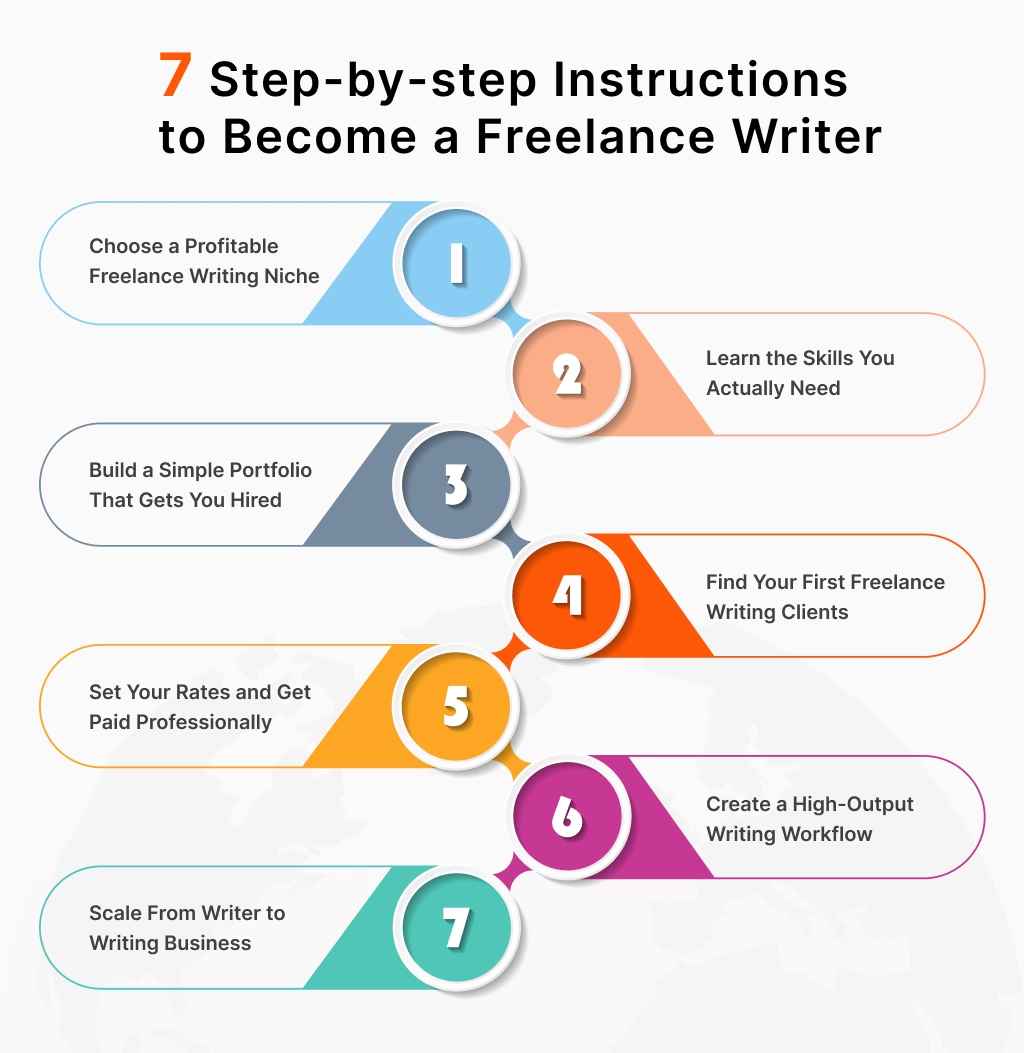
This step-by-step guide breaks it all down into clear, doable actions. Whether you’re writing your first sample or preparing to pitch real clients, each phase is designed to build your skills, confidence, and momentum the smart way.
Step 1: Choose a Profitable Freelance Writing Niche
You don’t need to pick a niche right away, but narrowing your focus early can help you land better gigs, faster. A well-chosen niche gives your marketing efforts direction and makes your pitches more compelling.
High-paying, in-demand niches in 2026 include:
- B2B SaaS: Content that explains complex software features and solves user pain points.
- Health & Wellness: Includes articles on mental health, physical well-being, fitness apps, and supplements.
- Finance & FinTech: Covers budgeting tips, credit building, cryptocurrency, and financial literacy.
- AI & Technology: From writing AI tutorials to product reviews and prompt engineering guides.
- Digital Marketing & SEO: Writing for agencies and brands that need blog content, email funnels, and lead magnets.
Think strategically: Were you in customer service? Try writing CX case studies or help docs. Worked in education? EdTech blogs might be a great fit. Your past roles can become your writing superpower.
Niche writing not only helps you stand out, but it also lets you raise your rates, because you’re seen as an expert rather than a generalist.
Step 2: Learn the Skills You Actually Need
You don’t need to be a literary genius, but you do need to be clear, credible, and client-ready. Freelance writing is equal parts creativity, research, formatting, and client management.
Must-have skills:
- Writing fundamentals: Your sentences should be easy to read, grammatically correct, and structured for flow.
- SEO basics: Knowing how to write a meta description or insert keywords naturally can increase the visibility of your client’s content.
- Content formatting: Clients love clean, readable formatting, think short paragraphs, bolded takeaways, and easy navigation.
- Client communication: You’ll need to ask the right questions, interpret briefs accurately, and respond professionally to revisions.
Modern workflow skills:
- Tools like Notion for task tracking, Google Docs for collaboration, and Trello for managing deadlines are essential.
- AI content assistants can help with research, outlines, or rough drafts, saving you hours each week.
Pro Tip: Let AI handle the groundwork (like outlining or headline suggestions), but always rewrite in your authentic voice. This blend makes you faster without sacrificing quality.
Step 3: Build a Simple Portfolio That Gets You Hired
Degrees won’t get you hired; samples will. Think of your portfolio as a “shop window” that shows potential clients what you can do.
Start your portfolio with 3-5 strong pieces:
- Create original blog posts tailored to your chosen niche
- Rewrite a dull industry article to showcase your ability to improve clarity and engagement
- Use an AI tool to generate a rough structure, then personalize and polish the result
Then, build your home base:
- A WordPress website lets you control how your work is presented
- Include an About page that tells your story and positions your expertise
- Add a simple contact form to make outreach easy
Tool Tip: Our AI content writing plugin lets you spin up an optimized writer site that’s fast, mobile-friendly, and conversion-ready, even if you’ve never built a site before.
Step 4: Find Your First Freelance Writing Clients
Your first few clients will teach you more than any course and help build momentum.
Start with these proven channels:
- Freelance platforms: Create a detailed profile on Upwork or Fiverr. Use filters to avoid low-paying gigs.
- Job boards: Check ProBlogger, Superpath, and content writing Slack communities for active gigs.
- LinkedIn: Update your headline to include your niche. Share valuable content 1-2x/week to grow visibility.
Try outbound pitching:
- Search for small businesses or creators who aren’t using content effectively.
- Reach out with a personalized message offering value, like a free content idea or audit.
Your pitch should include:
- Your niche and how you help
- A quick note about their brand (to show research)
- Your portfolio link
- A soft CTA like: “Open to a quick chat or free sample?”
Step 5: Set Your Rates and Get Paid Professionally
Setting rates can feel awkward at first, but it’s crucial to treat your writing like a business.
Starter pricing guidelines (per 1,000 words):
- Blog posts: $75–$150 depending on research level
- Email sequences: $150–$300 for 3–5 emails
- Whitepapers: $400–$800 depending on depth
- Case studies: $500–$1,200 with interviews and data
Advanced pricing models:
- Flat-fee per article with word count limits
- Monthly retainers offering bundled content
- Add-ons like SEO optimization, social post repurposing, or meta tag creation
Pro Tip: Don’t just price for writing. Price for outcomes, like helping a SaaS brand increase demo sign-ups or improve SEO rankings. Tools like Sprout Invoices and Wise make professional billing easy.
Step 6: Create a High-Output Writing Workflow
Having a solid system separates hobbyists from pros. It boosts consistency, reduces revisions, and keeps you focused.
Sample workflow for high-output writing:
- Research topics: Use SEO tools like Ubersuggest, or prompt ChatGPT for fresh angles
- Outlining: Create a structured roadmap with key headers and bullet points
- Writing: Draft manually or with AI input, then refine for tone and clarity
- Editing: Use Grammarly for grammar, Hemingway for readability
- Formatting & Delivery: Add links, headings, CTA buttons, then export or upload per client request
Smart Workflow: Our AI content tool fits seamlessly into your process, helping you brainstorm smarter, write faster, and keep quality high.
Step 7: Scale From Writer to Writing Business
Freelance writing can evolve into a full-fledged business, but only if you treat it like one.
Growth strategies:
- Offer retainers: Monthly blog packages give income stability and reduce admin time
- Upsell strategy: Pitch SEO content audits or brand tone guidelines as value adds
- Repurpose content: Turn blog posts into carousels, newsletters, or video scripts
- Automate systems: Use tools like Calendly for meetings and WP plugins for performance tracking
- Build authority: Publish guest posts, case studies, and LinkedIn thought leadership
Final Thoughts
Freelance writing isn’t just a side hustle or a way to make a few extra dollars. It’s a skillset that opens doors, a service that businesses rely on, and a business you can shape on your own terms.
Whether your goal is to escape the 9-5 grind, supplement your income, or build a full-time writing career, this guide has given you the roadmap to begin.
Remember:
- Start small: a few solid samples and one paying client are all it takes to gain momentum
- Use smart tools: leverage AI and automation to work efficiently, not harder
- Write consistently: your confidence, speed, and clarity will improve with every piece
Every established freelance writer once stared at a blank Google Doc, wondering if they had what it takes. The difference? They didn’t quit.
Ready to accelerate? Our AI-powered writing plugin for WordPress helps you brainstorm, draft, optimize, and publish faster, all from one place. It’s free to start and built to support your growth every step of the way.
Frequently Asked Questions (FAQs)
Do I need experience to become a freelance writer?
No, you don’t need prior experience. You can create writing samples, publish on platforms like Medium or LinkedIn, and start pitching clients to build credibility from day one.
How long does it take to get your first freelance writing client?
Some writers land their first client within a week, while others take a month or more. Consistent pitching and having a clear niche can speed up the process.
Can I use AI tools to help with freelance writing?
Yes, AI tools like ChatGPT or Jasper can help you generate outlines, draft content faster, and spark new ideas. The key is to always refine and humanize the output.
What’s the best way to build a writing portfolio without clients?
Write 3–5 sample articles in your chosen niche and publish them on platforms like Medium or your own WordPress site. These samples serve as proof of your writing style and skills.
Do I need a WordPress site to start freelancing?
You don’t need one, but it’s highly recommended. A self-hosted WordPress site gives you a professional online presence, lets you showcase your work, and helps with SEO visibility.
How much do beginner freelance writers make?
Beginner rates range from $75 to $150 per 1,000-word blog post. As you gain experience and specialize in a niche, you can earn significantly more with project-based or retainer pricing.
What types of content do freelance writers create?
Freelance writers produce blog posts, email newsletters, landing pages, social media copy, product descriptions, case studies, and more, depending on client needs.
Will AI replace freelance writers in the future?
AI can support writers but won’t replace those who provide strategy, voice, and original thought. Clients still need humans for creativity, nuance, and trust-building.
How can I stand out as a freelance writer in 2026?
Develop a specialty, build a portfolio website, use AI tools wisely, and show that you understand content strategy, not just writing. Being a reliable problem-solver makes you invaluable.
Can business owners use freelance writers for SEO content?
Absolutely. Freelance writers help businesses increase traffic, improve brand authority, and convert leads by creating well-optimized blog posts, product pages, and lead magnets.
What’s the difference between a content writer and a copywriter?
Content writers focus on informing and educating (e.g., blogs), while copywriters aim to persuade (e.g., landing pages, ads). Many freelance writers do both, depending on the project.
This page was last edited on 13 February 2026, at 11:31 am