
Quick Answer
To use AI writing tools, start by defining your topic and goal, then enter a clear, detailed prompt describing what you want. Let the AI generate an outline first, then expand it into full content section by section. After that, edit and refine the output to match your tone, improve accuracy, and optimize it for SEO before publishing.
AI writing tools have moved far beyond simple text generators. Today, they function as full content assistants that help with research, ideation, drafting, editing, SEO optimization, and even publishing workflows. Whether you’re a blogger, marketer, agency owner, or business operator, knowing how to use these tools effectively can dramatically improve your content output and search visibility.
But success with AI writing is not about pressing a button and copying results. It’s about building a structured workflow where AI supports your strategy—not replaces it.
This guide explains exactly how to use AI writing tools step by step, with practical workflows, tools, SEO strategies, and real-world applications.
What Are AI Writing Tools?
AI writing tools are software systems powered by artificial intelligence and natural language processing (NLP) that generate human-like text based on prompts and context.
They can help you create:
- Blog posts and articles
- Website copy and landing pages
- Product descriptions
- Email campaigns
- Social media captions
- SEO-optimized content outlines
- Content ideas and keyword suggestions
Popular platforms like ChatGPT, Claude, and Jasper AI are widely used across industries for content creation at scale.
Each tool has its strengths—some focus on creativity, others on long-form writing, and others on marketing consistency.
Why AI Writing Tools Matter in 2026
AI writing tools are now a core part of modern SEO and content strategies. They help solve major challenges such as time constraints, writer’s block, and scaling content production.
Key advantages include:
- Faster content production without sacrificing structure
- Improved SEO optimization through keyword suggestions
- Consistent tone across multiple pieces of content
- Ability to scale content output for websites and blogs
- Reduced dependency on large writing teams
- Better ideation for niche topics and long-tail keywords
For businesses competing in search rankings, AI is no longer optional—it’s a competitive necessity.
Step-by-Step Process: How to Use AI Writing Tools Effectively
This section breaks down a practical, easy-to-follow workflow for using AI writing tools from start to finish. Instead of randomly generating content, you’ll learn how to structure your process so AI supports every stage—planning, writing, optimizing, and publishing.
By following these steps, you can create higher-quality, SEO-friendly content faster while maintaining full control over tone, accuracy, and strategy.
1. Start with a Clear Content Strategy
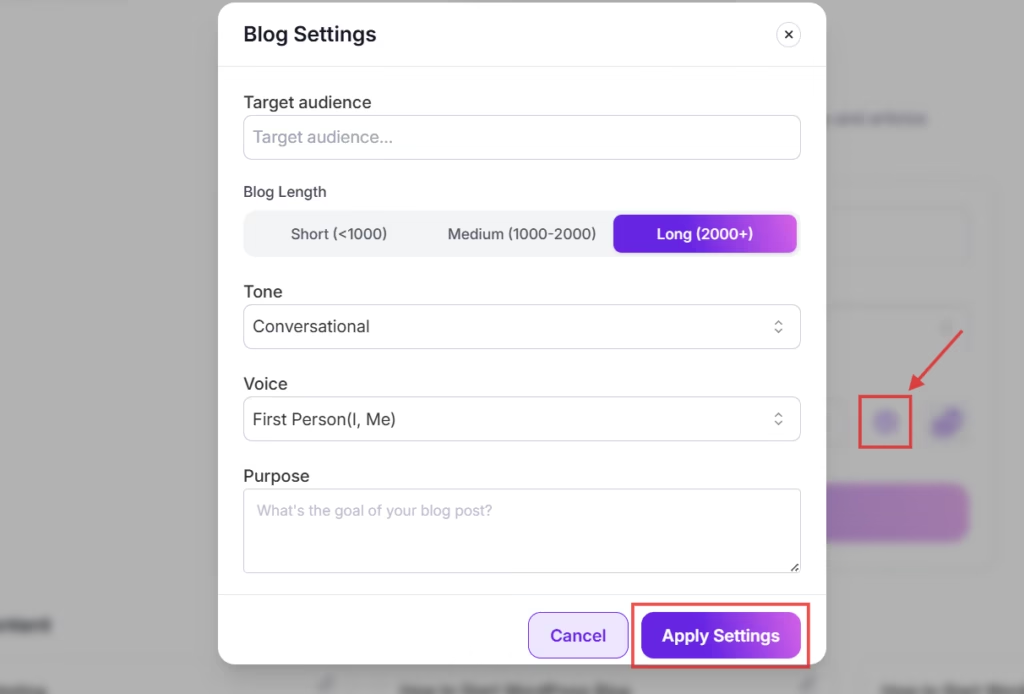
Before using any AI tool, define the purpose of your content.
Ask yourself:
- What is the goal of this content? (traffic, leads, sales, authority)
- Who is the target audience?
- What problem does this content solve?
- What keyword or topic am I targeting?
Without clarity, AI will generate generic content that lacks direction and SEO value.
2. Conduct Keyword and Topic Research with AI

Modern AI tools can assist in identifying:
- Primary keywords
- Long-tail keyword variations
- Related search queries
- Content gaps in your niche
- User intent behind searches
For example, instead of targeting a broad keyword like “AI writing tools,” you can refine it into:
- “how to use AI writing tools for SEO”
- “best AI writing tools for bloggers”
- “AI content writing workflow for beginners”
This improves your chances of ranking on search engines by matching real user intent.
3. Build a Structured Content Outline First

Never start writing without a structure. AI can generate detailed outlines that improve readability and SEO performance.
A strong outline should include:
- Title (H1)
- Subheadings (H2, H3)
- Logical flow of topics
- SEO keyword placement strategy
- FAQ section ideas
This step ensures your article is organized, easy to read, and optimized for both users and search engines.
4. Generate High-Quality Drafts Using AI
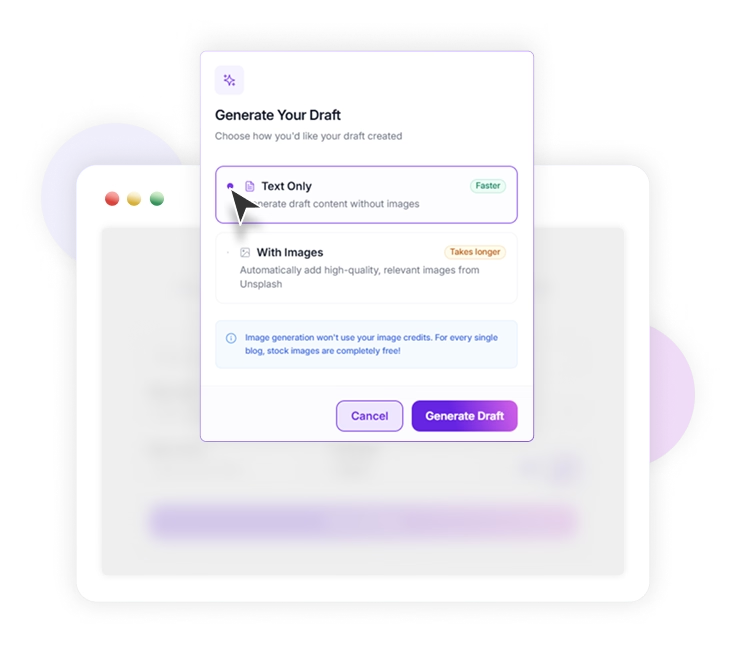
Once your outline is ready, use AI to expand each section into full paragraphs.
Leading tools include:
- ChatGPT – Best for versatile writing, brainstorming, and structured content
- Claude – Best for natural, human-like long-form writing
- Jasper AI – Best for brand-focused marketing content
For creators who want a complete system instead of multiple tools, WriteRush offers an integrated workflow that combines keyword research, content writing, SEO optimization, and publishing in one place.
5. Optimize Content for SEO Using AI
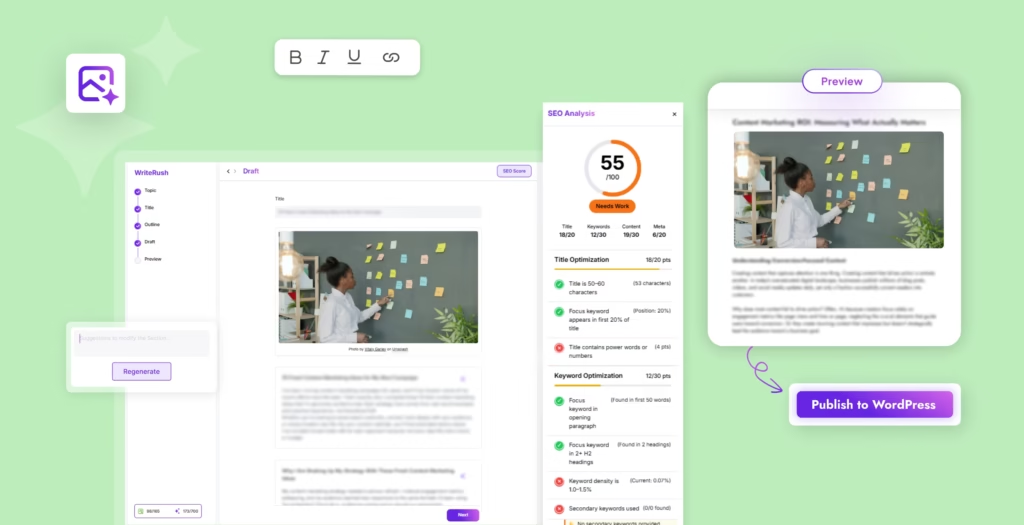
After drafting, the next step is SEO refinement.
Focus on:
- Adding primary and secondary keywords naturally
- Improving readability and sentence structure
- Writing compelling meta titles and descriptions
- Using proper heading hierarchy (H1, H2, H3)
- Adding internal and external linking opportunities
- Ensuring semantic keyword coverage
AI can also help identify missing topics or sections that improve topical authority.
6. Humanize and Edit the Content
AI-generated content should always be refined before publishing.
Editing should include:
- Removing repetitive or redundant sentences
- Adding real-world examples or insights
- Adjusting tone to match your brand voice
- Fact-checking all statements
- Improving emotional engagement and storytelling
This step ensures your content feels authentic and valuable to readers.
7. Publish and Distribute Strategically
Publishing is not the final step—distribution matters equally.
You should:
- Share content on social media platforms
- Repurpose into newsletters or threads
- Build internal links across your website
- Submit to indexing tools for faster SEO discovery
- Track engagement and ranking performance
Consistent distribution increases visibility and long-term traffic.
Best Practices for Using AI Writing Tools
To get consistent, high-quality results from AI writing tools, you need more than just good prompts—you need a repeatable system. The difference between average AI content and high-performing content usually comes down to how well you guide, refine, and integrate AI into your workflow.
Below are the most effective best practices used by experienced writers, marketers, and SEO professionals.
1. Treat AI as a Writing Assistant, Not a Replacement
AI should support your writing process, not fully control it. While tools like ChatGPT or Claude can generate full articles, the real value comes when you direct the structure, tone, and intent.
Use AI for:
- Drafting and ideation
- Expanding outlines into sections
- Rewriting for clarity or tone improvement
- Generating variations of headlines or intros
But always ensure a human layer of judgment is involved before publishing.
2. Use Clear, Context-Rich Prompts
The quality of AI output is directly tied to the quality of your input. Vague prompts produce generic results, while detailed prompts create focused, usable content.
Instead of:
“Write a blog about AI writing tools”
Use:
“Write a 1200-word SEO blog about how beginners can use AI writing tools to improve content quality. Include headings, step-by-step guidance, and SEO tips.”
Adding context such as audience, tone, word count, and structure dramatically improves results.
3. Always Start with an Outline First
Jumping straight into full content generation often leads to disorganized and repetitive writing. A structured outline helps AI stay focused.
A strong outline should define:
- Main topic and keyword focus
- H1, H2, and H3 structure
- Flow of ideas from introduction to conclusion
- FAQ or supporting sections for SEO
This ensures your final content is logically structured and easier to optimize.
4. Optimize Content for Search Intent, Not Just Keywords
Modern SEO is about answering user intent, not just inserting keywords. AI tools can help identify related queries, but you must ensure the content actually solves the reader’s problem.
Focus on:
- Informational intent (how-to guides, explanations)
- Commercial intent (comparisons, reviews)
- Navigational intent (brand or tool searches)
When writing, always ask: Does this section fully answer what the user is looking for?
5. Combine Multiple AI Tools for Better Output
No single AI tool is perfect for every task. Each tool has strengths:
- ChatGPT – Best for brainstorming, flexibility, and general writing
- Claude – Best for natural tone and long-form content quality
- Jasper AI – Best for brand-consistent marketing copy
Using multiple tools in combination can significantly improve content depth and quality.
6. Always Edit and Humanize AI Content
AI-generated content should never be published as-is. Editing is what transforms basic output into high-performing content.
During editing, focus on:
- Removing repetition and filler sentences
- Adding personal insights or real examples
- Improving flow and readability
- Ensuring factual accuracy
- Adjusting tone to match your brand
This step is essential for building trust and authority.
7. Maintain Consistent Brand Voice
One common issue with AI writing is inconsistent tone. To fix this, define your brand voice clearly and apply it across all prompts.
You can guide AI by specifying:
- Formal, casual, or conversational tone
- Level of technical depth
- Target audience (beginners, professionals, etc.)
- Preferred writing style (storytelling, instructional, persuasive)
Consistency helps build stronger brand recognition and user trust.
8. Track Performance and Continuously Improve
AI writing is not a one-time process—it improves over time when you analyze results.
Monitor:
- Organic traffic performance
- Keyword ranking improvements
- Engagement metrics (time on page, bounce rate)
- Conversion rates (sign-ups, clicks, sales)
Use these insights to refine your prompts and content strategy for future articles.
9. Avoid Over-Automation
One of the biggest mistakes is relying too heavily on AI without oversight. Over-automation can lead to:
- Generic or repetitive content
- Lack of originality
- Poor SEO performance
- Reduced audience trust
Balance automation with creativity and human judgment for the best results.
Streamlining Content Creation in WordPress with WriteRush
- Quickly draft articles, meta descriptions, and FAQ sections right in the WordPress editor
- One-click SEO and readability optimization ensures your content meets best practices before it goes live
- Support for multilingual publishing and tone adjustment allows effortless outreach to new audiences
- Built-in collaboration lets teams comment and review drafts, supporting consistent quality and on-brand messaging
For WordPress users, using plugin-based AI writing tools like WriteRush is a game-changer. WriteRush lets you generate, optimize, and publish content without leaving your dashboard.
This integration eliminates tedious copy-pasting and manual uploads, so your content process is faster and more organized—whether you’re working solo or as part of a team.
Pitfalls to Avoid When Using AI Writing Tools
- Relying too much on AI: Always review output for originality, accuracy, and brand consistency. Blind acceptance risks generic or off-message content.
- Skipping fact-checking: AI can invent details (“hallucinations”). Double-check facts, especially for expertise or product claims.
- Neglecting ethics and copyright: Personalize AI drafts to avoid unintentional plagiarism. Always cite relevant sources.
- Ignoring platform integration: Switching between multiple tools wastes energy. Use solutions that work natively with your CMS—for WordPress, plugins like WriteRush streamline the process.
- Not customizing outputs: Your audience deserves tailored messaging. Adjust AI settings to fit your goals instead of settling for default text.
By treating AI as a creative assistant, not a replacement, you maximize efficiency while protecting quality and originality.
Final Thoughts
AI writing tools are reshaping how content is created and scaled. When used correctly, they allow individuals and businesses to produce high-quality, SEO-optimized content in a fraction of the time.
However, the real advantage comes from combining AI efficiency with human strategy. Tools like ChatGPT, Claude, and Jasper AI provide the foundation—but your planning, editing, and optimization determine your success.
If you want a faster, more streamlined workflow from keyword research to publishing, platforms like WriteRush can help unify the entire content creation process.
Frequently Asked Questions
What is the best AI writing tool for beginners?
WriteRush and ChatGPT is the most beginner-friendly options due to their simplicity and flexibility.
Can AI writing tools replace human writers?
No. AI tools assist with writing, but human creativity, editing, and strategy are still essential for high-quality content.
Are AI writing tools good for SEO?
Yes. They help generate keyword-rich content, improve structure, and optimize readability for search engines.
Which AI tool is best for long-form content?
Claude is widely preferred for natural, long-form writing quality.
Do AI writing tools support multiple languages?
Most leading AI writing tools offer multilingual support, enabling fast translation and localization for global audiences.
What is an all-in-one AI writing solution?
WriteRush provides an integrated workflow for writing, SEO optimization, and content management in one system.
This page was last edited on 24 June 2026, at 6:17 pm