Struggling to create high-quality content at scale? Or maybe you’ve spent hours writing, only to feel like your words just don’t resonate?
As bloggers, content marketers, and WordPress users, we’ve all been there, caught between the pressure to churn out high-quality content and the need to keep up with SEO trends.
It’s exhausting, right?
What if you didn’t have to choose between speed and quality? What if you could harness the power of AI to write faster, while still delivering the personal touch and creativity your audience craves?
In this blog, we’re diving into the AI writing vs. human writers debate, exploring the pros and cons of each, and showing you how combining both can solve your content challenges. Stick with me, and I’ll share how you can use AI to streamline your workflow while maintaining the authenticity and depth that make your content shine.
Ready to level up your content game? Let’s dive in!
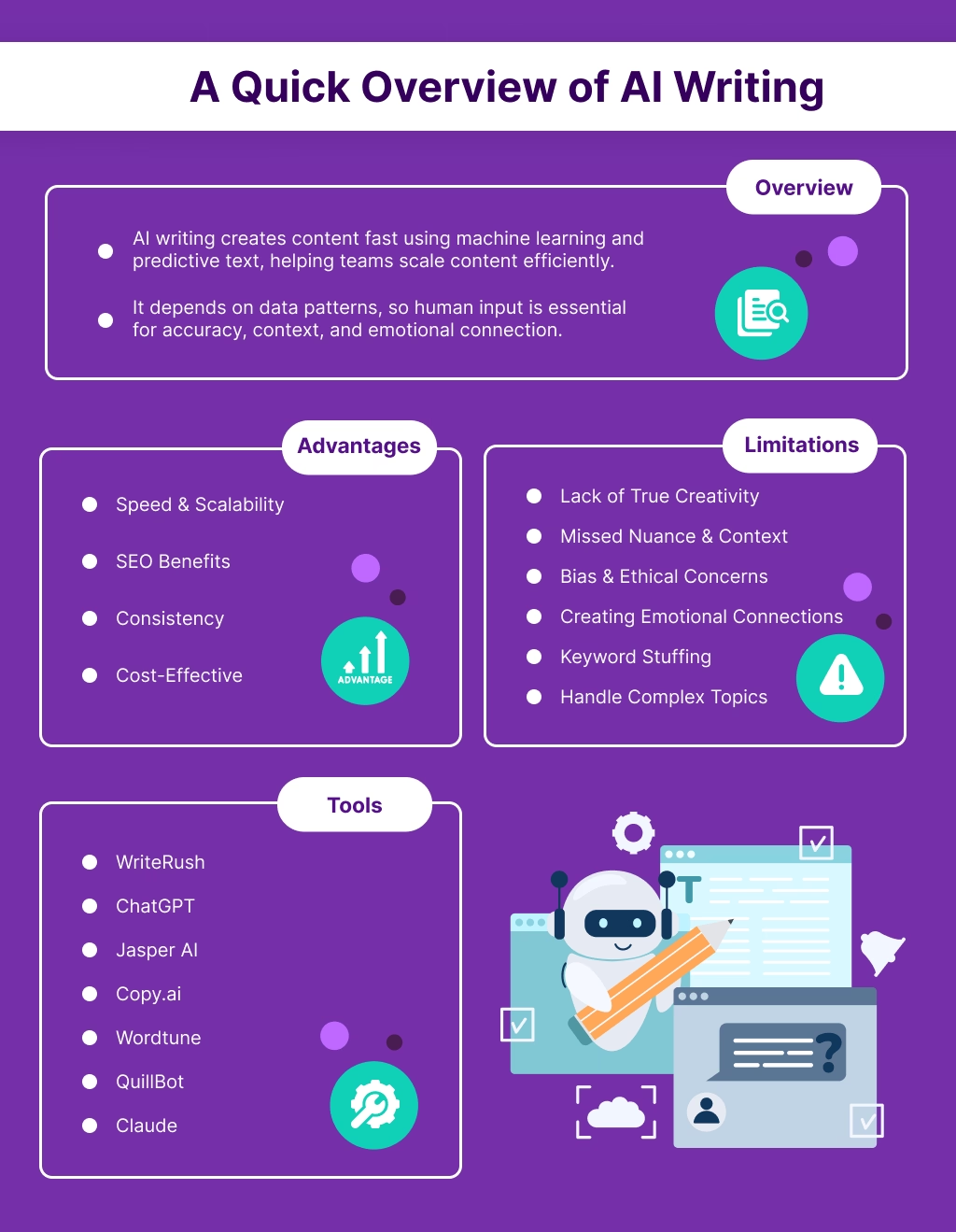
A Quick Overview of AI Writing
AI writing is more than just a buzzword; it’s a technology that’s revolutionizing how we create content. Powered by sophisticated algorithms, Natural Language Processing (NLP), and Generative AI, AI tools can now write articles, blogs, and even poems.
But how exactly does this all work, and what makes AI such a game-changer in the world of content creation?
Let’s break it down and explore the core elements that make AI writing both powerful and complex.
How AI Writing Works: The Core Technology
At the heart of AI writing is Natural Language Processing (NLP), which enables machines to understand, interpret, and generate human language in a way that feels natural. Combined with Generative AI and Large Language Models (LLMs) like GPT-4 and Claude, these tools can produce text that closely mirrors human writing. But let’s dig a little deeper into how it all comes together:
- Training Data: AI writing models are trained on vast amounts of training data, which includes books, websites, and other forms of written text. By analyzing these patterns, AI learns how words, phrases, and sentences work together, enabling it to create coherent content. However, it’s important to note that AI’s effectiveness is directly tied to the quality and diversity of the data it has been trained on.
- Neural Networks: These networks mimic the way the human brain processes information. Neural networks allow AI to improve over time by recognizing patterns and making predictions about the next words or phrases, based on prior data. This makes it capable of generating content that feels more natural, though sometimes it may still lack the nuance that human writers can bring to the table.
- Predictive Text: One of the key components of AI writing is its ability to predict the next word, sentence, or paragraph. This is powered by predictive text algorithms, which ensure that the content flows in a coherent and logical way. Whether you’re drafting a blog post or an email, AI can suggest phrases and fill in gaps, saving time and effort in the writing process.
- Algorithmic Content Generation: The true power of AI lies in its ability to create algorithmic content based on inputs like topics, keywords, and tone. By simply feeding it a set of instructions, AI can generate an entire article that aligns with your content goals. For instance, you can ask AI to write a product description with a certain keyword density, and it will churn out content that is SEO-optimized and tailored to your specifications.
What AI Writing Does Well
AI writing is not a replacement for human creativity, but it does excel in certain areas that make it indispensable for content creators. Let’s explore its strengths in detail:
Speed & Scalability
One of the most significant advantages of AI writing is its ability to produce content at an incredibly fast rate. It can generate thousands of words in minutes, something that would take human writers hours or even days. This makes it perfect for businesses that need to produce large volumes of content quickly, such as product descriptions for e-commerce sites or regular blog posts for SEO purposes.
Example: Imagine a company with hundreds of new products each month. Instead of hiring a team of writers to craft unique descriptions for each product, AI can generate SEO-friendly content in bulk, saving valuable time and resources.
SEO Benefits
SEO is essential for ranking on search engines, but it’s also one of the trickiest aspects of content creation. AI writing tools often come with built-in SEO capabilities, which help ensure that the content is not only well-written but also optimized for search engines. AI can suggest keyword density, ensure proper meta tags, and even generate alt text for images, all while keeping the content relevant and engaging for readers.
Pro Tip: Many AI tools can analyze competitors’ content and suggest keyword variations, making it easier for you to outperform rivals in SERPs (Search Engine Results Pages).
Consistency
Another strength of AI is its ability to maintain consistent tone and style across all your content. Whether you’re writing blog posts, landing pages, or social media updates, AI can ensure that your messaging stays aligned with your brand voice. For businesses managing multiple writers or frequently updating content, AI is a reliable solution for maintaining uniformity.
Example: If you run a large blog with a diverse writing team, AI can help standardize the tone across all posts, ensuring a cohesive brand experience for your audience.
Cost-Effective
With AI, content creation becomes much more affordable than hiring a full-time writing team. AI content marketing tools typically charge a subscription fee or per word, which is far cheaper than paying a human writer for every post. This makes AI a great option for businesses with tight budgets or those who need to scale content production quickly.
Example: A startup looking to increase its blog traffic can use AI to produce multiple high-quality posts per week without breaking the bank.
Limitations of Pure AI Writing
While AI writing tools are incredibly efficient and helpful in many ways, they are not without their limitations. These drawbacks can have a significant impact on content quality, especially when compared to the depth, creativity, and intuition that human writers bring to the table.
Let’s dive into the areas where pure AI writing falls short and explore why human writers are still crucial in the content creation process.
1. Lack of True Creativity
AI writing systems excel at following patterns, but they can’t truly innovate or think outside the box. Creativity involves emotional intelligence (EQ), nuance, and the ability to generate unique ideas, traits that machines struggle to replicate. While AI can create content that reads well, it often lacks the originality and innovative thinking that a human writer brings.
Example: AI can generate an article about “the future of AI in healthcare,” but a human writer might add real-world experiences, expert opinions, or a fresh perspective that resonates more deeply with readers.
As a result, content produced by AI often feels more formulaic or robotic, especially when addressing complex topics that require a deeper understanding of human experiences and emotions.
2. Missed Nuance & Context
AI struggles with understanding context and subtle nuances that make writing rich and engaging. Human writers draw on subject matter expertise (SME) and their own life experiences to inject emotion and depth into content. However, AI writing relies heavily on training data and lacks the lived experiences that make a piece truly relatable.
Example: AI may generate content that’s factually accurate but misses the emotional undertone of a topic, such as a blog post about mental health struggles. A human writer can use empathy and creative storytelling to craft a more compelling and relatable piece.
3. Bias & Ethical Concerns
Another major limitation of AI is its tendency to reflect the biases inherent in the training data it uses. If the data used to train an AI model is flawed or biased, the output can be as well. This can lead to ethical concerns or the propagation of misinformation. While human writers can fact-check and use critical thinking to ensure the accuracy and fairness of content, AI systems might unintentionally perpetuate harmful stereotypes or misinformation.
Example: AI may unintentionally produce biased content, especially when dealing with sensitive topics such as race, gender, or politics, because it mimics existing biases found in its training data.
4. Difficulty in Creating Emotional Connections
Human writers excel at building emotional connections with their audience. They understand emotional intelligence (EQ), empathy, and nuance, traits that make their writing resonate on a deeper level. AI, on the other hand, lacks the ability to understand the emotional state of the reader or inject genuine empathy into the writing.
Example: When crafting content for a nonprofit focused on mental health, a human writer can connect with the audience on an emotional level by sharing personal anecdotes or creating a narrative that touches the heart. AI-generated content may fail to achieve the same emotional depth.
5. SEO Limitations & Keyword Stuffing
While AI can assist with SEO optimization by suggesting keywords and structuring content for search engines, it may also fall victim to keyword stuffing or producing content that sounds unnatural for the sake of SEO. Human writers can strike a balance between SEO and creating content that feels natural, ensuring that the content resonates with readers without sacrificing search engine rankings.
Example: AI might overuse a target keyword in an attempt to optimize for SEO, making the content feel forced or awkward. Human writers can seamlessly integrate keywords while keeping the content engaging and conversational.
6. Limited Ability to Handle Complex, High-Authority Topics
Some topics require topical authority, fact-checking, and the ability to critically analyze information, especially in areas like law, medicine, or finance. AI can produce general content on these topics, but it may struggle with accuracy and reliability, two critical factors for topics that demand E-E-A-T (Experience, Expertise, Authoritativeness, and Trustworthiness).
Example: When writing about complex legal issues, AI might generate content that is technically correct but lacks the depth or expert insight a Subject Matter Expert (SME) could provide.
Examples of Some Popular AI Writing Tools
To better understand the AI writing vs. human writers landscape, it’s helpful to look at some of the most widely used AI writing tools today. These tools support everything from drafting and editing to creative writing, helping teams work faster while keeping humans in control.
Below are some of the most popular AI writing tools used by bloggers, content marketers, and WordPress users today:
- WriteRush: Built for WordPress users, combining AI drafting, brand voice training, and workflow automation in one place.
- ChatGPT (OpenAI): A versatile conversational AI widely used for brainstorming, drafting, and refining long-form content.
- Jasper AI: Known for its marketing-focused templates and team collaboration features.
- Grammarly: Specializes in grammar, clarity, tone of voice, and readability improvements.
- Writesonic: Designed for fast content creation, including blogs, ads, and landing pages.
- Copy.ai: Focuses on marketing copy, ideation, and short-form content generation.
- Wordtune: Helps rewrite and rephrase content to improve clarity and tone.
- QuillBot: Popular for paraphrasing, summarizing, and improving sentence flow.
- Claude: Known for safer, more contextual responses and long-form content handling.
- Sudowrite: Tailored for fiction writers, storytelling, and creative brainstorming.
- Rytr: A budget-friendly AI tool for blogs, emails, and social content.
- Anyword: Uses predictive performance scoring to optimize marketing copy.
- ProWritingAid: Advanced editing tool focused on style, structure, and in-depth writing analysis.
AI is clearly fast, efficient, and impressive, but speed alone doesn’t guarantee great content, which naturally leads us to the real question: how should you actually use AI without messing things up?
Read More: WriteRush vs. Other AI WordPress Plugins
Best Way to Use AI Writing Tools (Step‑by‑Step)
In the debate between AI writing vs. human writers, the smartest approach is often a hybrid strategy, where AI tools handle the repetitive, time-consuming tasks, and human writers focus on infusing creativity, nuance, and expertise.
So, how can you leverage AI writing tools effectively without sacrificing quality?
Let’s break it down step-by-step.
Step 1: Start with AI for Research & Outlining
The first step in any content creation process is research. AI can help streamline this stage by quickly gathering relevant data, identifying key points, and generating an outline. With the help of NLP and semantic search, AI can identify the most pertinent sources of information and even suggest relevant keywords that will help boost your SEO ranking.
- AI Tools for Research: Use AI to gather stats, define key terms, and outline topics you want to cover.
- Example: For a blog post on “AI in Marketing,” use AI to pull out the latest trends, influential case studies, and emerging tools in the industry.
Step 2: Generate a Draft with AI
Once you have your outline, it’s time to let AI take over the writing process. With its ability to use predictive text and algorithmic content generation, AI can quickly turn an outline into a full draft. The best part? You can set the tone of the content (informal, formal, etc.) and ensure that the first draft is SEO-optimized with keyword density and meta tags.
- Pro Tip: Customize AI settings to match the desired tone of voice and style to make the content more aligned with your brand.
- Example: Let AI draft the introduction, key points, and conclusion for an article. It can also help you generate content velocity by drafting multiple pieces at once.
Step 3: Human Writers Inject Creativity & Context
Now, here’s where the magic happens. While AI does a great job at producing structured and optimized content, human writers add the emotional intelligence (EQ), subject matter expertise (SME), and creative storytelling that make the content truly engaging. Human writers should refine the AI-generated draft by:
- Adding personal anecdotes or real-world examples to connect with readers emotionally.
- Correcting any factual inaccuracies and using critical thinking to ensure the content is trustworthy.
- Adjusting tone and language for more nuance and idioms that AI might miss.
This combination of AI efficiency and human creativity ensures that the content is not only optimized for SEO but also resonant with your target audience.
Step 4: Refine SEO with AI Tools
Once the content has been fine-tuned, AI can be used again for the final touches on SEO optimization. AI tools can help you:
- Improve readability: Use tools to adjust the readability score (like the Flesch-Kincaid readability test) to ensure that your content is accessible to a wide range of readers.
- Generate meta descriptions & titles: AI can suggest the best titles and meta descriptions that are optimized for search engines.
- Plagiarism Check: Run the content through AI-powered plagiarism detection to ensure originality and avoid any penalties.
- Example: After finishing the post, use AI to generate an SEO-friendly meta description and title that include your target keyword.
Step 5: Final Edit by Human Writers
While AI can take care of the bulk of the work, final editing is a crucial step that ensures the content flows naturally and aligns with your voice. Here’s where a human editor can make a real difference by:
- Enhancing consistency in tone and style across different sections of the content.
- Ensuring the content aligns with the brand’s tone of voice and overall business goals.
- Fact-checking to ensure accuracy and E-E-A-T (Experience, Expertise, Authoritativeness, and Trustworthiness).
At this stage, you can also make any final adjustments to ensure that the content resonates with your specific target audience.
Step 6: Publish and Analyze Performance
Once the content is ready, it’s time to hit publish. But the process doesn’t end there. With AI-powered content marketing ROI tools and analytics, you can monitor how the content performs in terms of engagement, organic traffic, and conversion rates. If certain sections of the content perform better than others, you can use this data to refine future content creation strategies.
- Example: After publishing, track how well the blog post is doing in terms of organic traffic. AI tools can also suggest ways to improve or re-optimize content in the future.
Once you see how AI fits into your workflow, it becomes obvious that it can’t do everything, and that’s exactly where human writing starts to matter.
A Quick Overview of Human Writing
Now, let’s shift gears and talk about the other side of the AI writing vs. human writers debate, the part that still feels deeply personal and irreplaceable: human writing.
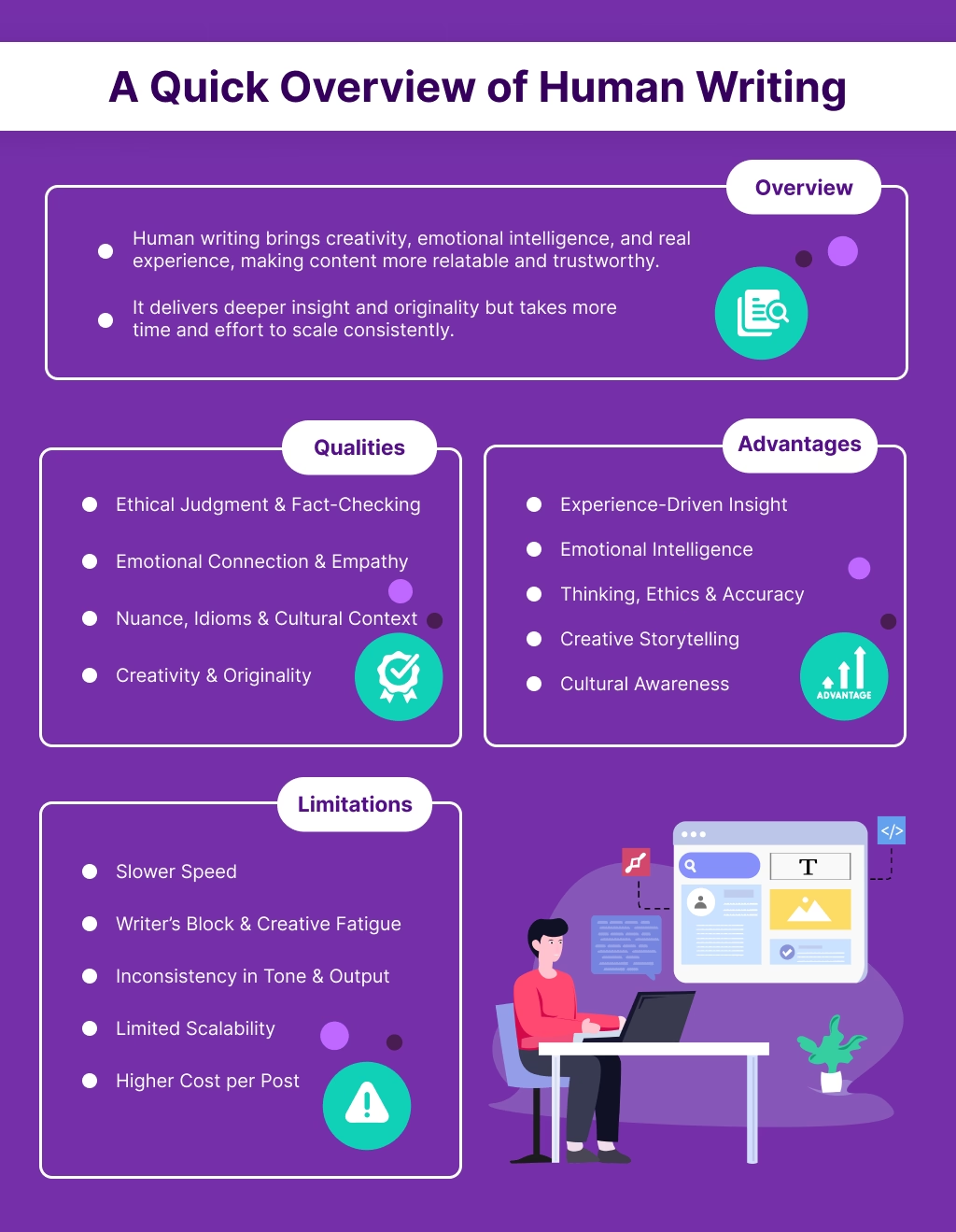
At its core, human writing is driven by lived experience, intuition, and emotional awareness. Unlike AI, which relies on training data and predictive text, humans draw from real conversations, failures, successes, and observations. That’s what makes human-written content feel authentic rather than assembled.
Qualities of Human Writing
Human writers don’t just arrange words; they interpret meaning. They understand why something matters, not just what to say. This ability comes from a mix of subject matter expertise (SME), critical thinking, and emotional intelligence (EQ).
Here’s where human writing truly shines:
- Creativity & Originality: Humans create ideas from scratch. They use creative storytelling, unexpected angles, and fresh perspectives, something AI can imitate, but not genuinely originate.
- Emotional Connection & Empathy: Through empathy, personal anecdotes, and relatable examples, human writers connect with readers on a deeper level. This is especially important for blogs, brand stories, and thought leadership content.
- Nuance, Idioms & Cultural Context: Humans naturally understand nuance and idioms, humor, sarcasm, and cultural references. These subtle details often make content more engaging and trustworthy.
- Ethical Judgment & Fact-Checking: Human writers apply ethical judgment, verify claims, and ensure accuracy, key factors for maintaining E-E-A-T (Experience, Expertise, Authoritativeness, and Trustworthiness), especially in high-impact content.
Core Advantages of Human Writing
In the ongoing conversation around AI writing vs. human writers, this is where human writers clearly prove their long-term value. While AI can generate content quickly and efficiently, human writing brings depth, intention, and emotional intelligence, elements that truly connect with readers and build trust over time.
Let’s explore why human-written content still plays a critical role in modern content strategies.
1. Experience-Driven Insight & Subject Matter Expertise
One of the biggest advantages of human writing is the ability to create content rooted in real experience and subject matter expertise (SME). Human writers don’t just compile information; they analyze it, question it, and add meaningful information gain. This leads to content that aligns better with search intent, builds topical authority, and strengthens E-E-A-T over time.
Example:
Imagine a blog about WordPress performance optimization. A human writer with hands-on experience can explain not only what tools to use, but why certain fixes work, what mistakes to avoid, and how results differ across hosting environment details that AI often misses.
2. Emotional Intelligence & Reader Connection
Human writers excel at emotional intelligence (EQ). They understand reader pain points, motivations, and expectations, and naturally reflect that understanding through tone, empathy, and storytelling. This emotional layer helps content feel relatable, trustworthy, and human.
Example:
A content marketer writing about burnout can share personal struggles, lessons learned, and practical advice. That emotional honesty builds trust and keeps readers engaged far longer than generic, emotionless content.
3. Creative Storytelling & Original Thinking
Another major strength of human writing is creative storytelling. Humans can introduce fresh angles, unexpected metaphors, and original opinions that make content memorable. This increases originality, improves engagement, and creates natural burstiness that keeps readers interested.
Example:
Instead of listing SEO tips, a human writer might frame the article as a journey from failed rankings to steady organic growth, making the content more engaging and easier to remember.
4. Critical Thinking, Ethics & Accuracy
Human writers actively apply critical thinking, ethical judgment, and manual fact-checking throughout the writing process. They understand context, evaluate sources, and know when accuracy matters more than speed, especially for high-impact content.
Example:
When writing about AI regulations or data privacy, a human writer can verify sources, avoid misleading claims, and clearly explain risks, reducing misinformation and protecting brand credibility.
5. Nuance, Language & Cultural Awareness
Human writers naturally understand nuance and idioms, cultural references, humor, and tone shifts. This allows them to adapt language for different audiences while maintaining a consistent brand voice and high readability.
Example:
A global brand targeting different regions can rely on human writers to adjust phrasing, humor, and examples so content feels local and authentic, something AI often struggles to do accurately.
Limitations of Human Writing
While human writers bring creativity, empathy, and depth to the table, they’re not without challenges, especially when you look at the AI writing vs human writers comparison through a modern, scale-first lens. Understanding these limitations helps explain why many teams now pair humans with AI instead of relying on humans alone.
Slower Speed & Limited Content Velocity
One of the biggest limitations of human writing is speed. Creating high-quality content requires research, outlining, drafting, editing, and fact-checking, which naturally slows down content velocity. While this careful process improves depth and accuracy, it makes it harder to publish consistently or react quickly to trends and search demand.
Example:
Imagine a content team trying to publish 20 SEO blog posts a month. With human writers alone, deadlines often slip, content queues pile up, and growth slows, especially when last-minute revisions or approvals come into play.
Higher Cost per Post
Human writers, especially those with strong subject matter expertise (SME), come at a higher cost. When you factor in research time, revisions, editing, and management, the cost-per-post can increase significantly, impacting overall content marketing ROI.
Example:
A startup wants to scale its blog to drive organic traffic, but can only afford a few posts per month due to writer fees. As a result, competitors publishing more frequently start dominating search results.
Inconsistency in Tone & Output
Human writing quality can vary from person to person, and even from day to day. Maintaining a consistent brand voice across multiple writers requires strong guidelines and extra editorial work, which adds time and complexity.
Example:
One blog post sounds friendly and conversational, while the next feels overly formal. Without heavy editing, this inconsistency can confuse readers and weaken brand identity.
Writer’s Block & Creative Fatigue
Even experienced writers struggle with writer’s block and creative burnout. Inspiration isn’t always available on demand, and constant publishing pressure can reduce productivity and motivation over time.
Example:
A blogger knows what topic to write about, but spends hours staring at a blank screen. Deadlines approach, stress builds, and the final content feels rushed or uninspired.
Limited Scalability without Automation
Human writing doesn’t scale easily. Producing content in bulk, such as product descriptions, landing pages, or large topic clusters, requires more writers, more coordination, and more time. Without workflow automation, scaling content becomes inefficient.
Example:
An eCommerce site with hundreds of products struggles to keep descriptions updated. Hiring writers for each update isn’t practical, leading to outdated or thin content across the site.
Human writing brings depth, emotion, and real-world understanding, but it also comes with limits, so let’s be honest and compare both sides head-to-head.
When to Hire a Human Writer
While AI writing tools are powerful, there are certain situations where human writers shine. When the content requires deep insight, creativity, or emotional depth, human expertise is invaluable. Here’s when you should opt for a human writer:
1. Creative Writing
For any type of content that demands a unique, creative touch, such as stories, novels, or original marketing campaigns, human writers are the best option. AI tools, though efficient, often lack the imagination and narrative depth that a skilled writer can bring to the table. If you want content that stands out with originality, a human writer is essential.
2. In-Depth Research Articles
When you need content that involves complex research, data analysis, or expert-level knowledge on a specific topic, human writers excel. Whether it’s a technical report, scientific research, or industry-specific analysis, human writers bring a nuanced understanding and can delve into topics in a way that AI tools cannot replicate. They can synthesize information from multiple sources and present it in a coherent, insightful manner.
3. Persuasive and High-Stakes Content
For content that requires persuasion, such as sales pages, advertisements, legal documents, or fundraising appeals, human writers are needed. They understand how to craft a compelling argument, appeal to emotions, and strategically position a product, service, or cause. The human touch ensures the right tone and messaging to drive action.
4. Emotional Storytelling
When your content aims to build a connection with your audience, such as in personal blogs, brand storytelling, or customer testimonials, human writers are irreplaceable. They understand the subtleties of emotions and can weave compelling narratives that resonate with readers on a personal level. AI may generate text, but it lacks the emotional intelligence needed for truly engaging and relatable storytelling.
Key Differences: AI Writing vs Human Writers
Before looking at the table, remember this: AI writing vs human writers isn’t about competition, it’s about capability. Both approaches serve different purposes in content creation.
The table below highlights their key differences side by side, making it easier to see where AI excels and where human writers add the most value.
| Aspect | AI Writing | Human Writers |
|---|---|---|
| Speed & Scalability | Produces content extremely fast using Generative AI, LLMs, and predictive text, enabling high content velocity and scalability. | Slower due to research, drafting, editing, and fact-checking, but delivers deeper insight and quality. |
| Creativity & Originality | Relies on patterns from training data and algorithmic content, which can feel repetitive over time. | Brings genuine creative storytelling, fresh perspectives, and higher originality with natural burstiness. |
| Consistency | Maintains strong consistency in tone, structure, and formatting across large volumes of content. | Quality and tone can vary depending on the writer’s experience, mood, or workload. |
| Emotional Intelligence | Lacks true emotional intelligence (EQ) and struggles with empathy or emotional depth. | Excels at empathy, emotional connection, and understanding reader pain points. |
| SEO Capabilities | Efficient at SEO mechanics like keyword density, semantic search, and boosting organic traffic through automation. | Better at interpreting search intent and aligning content with real user needs. |
| Accuracy & Reliability | May produce AI hallucinations or inaccuracies without human oversight. | Applies critical thinking, manual fact-checking, and ethical judgment to ensure accuracy. |
| Authority & Trust (E-E-A-T) | Can support structure but struggles to demonstrate real Experience or Expertise on its own. | Naturally strengthens E-E-A-T through experience, expertise, and accountability. |
| Workflow Efficiency | Integrates well with workflow automation, reduces writer’s block, and lowers cost-per-post. | Requires more time and resources, making large-scale production harder. |
| Strategic Control | Executes tasks based on prompts and inputs. | Drives content strategy, decision-making, and brand direction via human-in-the-loop (HITL) control. |
When you look at AI and humans side by side, it stops being a competition and starts looking more like a partnership waiting to happen.
Combining AI and Human Writers for Maximum Efficiency
As the conversation around AI writing vs human writers evolves, one truth is becoming increasingly clear: the future of content creation isn’t about replacement, it’s about collaboration. Businesses, bloggers, and content teams that succeed in the coming years will be the ones that know how to balance AI-powered efficiency with human creativity and judgment. This blended approach is commonly known as the human-in-the-loop (HITL) model, and it’s quickly shaping modern content workflows.

Instead of viewing AI as a competitor, think of it as a productivity partner, one that handles the repetitive and time-consuming tasks so humans can focus on what truly matters.
Where AI Adds the Most Value
AI excels in areas that demand speed, scale, and structure. Thanks to machine learning, neural networks, and predictive text, AI tools can support content teams by accelerating the early and technical stages of content creation.
- Rapid topic discovery and research using semantic search
- High-speed draft generation that improves content velocity
- Consistent formatting, structure, and tone across multiple pieces
- SEO assistance, including keyword usage, readability, and structure
- Overcoming writer’s block and improving production efficiency
In short, AI helps you move faster without exhausting your team.
Where Human Writers Truly Shine
While AI can generate content, humans give it meaning. This is where human writers play an irreplaceable role in the workflow.
- Applying subject matter expertise (SME) to add depth and clarity
- Using critical thinking and manual fact-checking to ensure accuracy
- Infusing emotional intelligence (EQ), empathy, and context
- Shaping a consistent and authentic brand voice
- Making ethical decisions and strengthening E-E-A-T
Humans don’t just polish content; they ensure it’s useful, trustworthy, and aligned with real user expectations.
A Smarter, Hybrid Content Workflow
When AI and human writers work together, the result is a more sustainable and scalable content process:
- AI handles ideation, outlines, and first drafts
- Human writers enrich content with insights, stories, and nuance
- AI supports SEO optimization and readability improvements
- Humans finalize tone, intent, and factual accuracy
- Performance is reviewed to refine future content strategy
This workflow reduces cost-per-post, increases content marketing ROI, and supports long-term topical authority without sacrificing quality.
This isn’t just theory; the AI + human model is already shaping how smart teams create content today, and the next examples show exactly how it works in practice.
Examples of Effective Hybrid Approaches
By now, it’s clear that the real win in the AI writing vs human writers discussion comes from using both together. A hybrid approach allows teams to move faster without sacrificing quality, and it works especially well when each side plays to its strengths.
Let’s look at some practical, real-world examples where this collaboration delivers the best results.
- Routine Content Creation: AI can efficiently handle routine content like product descriptions, FAQs, summaries, and data-driven reports, while human writers focus on adding brand voice, context, and meaningful insights.
- SEO Research & Optimization: AI assists with keyword research, semantic search, and initial SEO structure, while humans refine the content to better match search intent, improve readability, and add information gain.
- Blog Drafting & Storytelling: AI generates outlines and first drafts at scale, and human writers enhance them with creative storytelling, personal anecdotes, and emotional intelligence (EQ).
- Editing & Proofreading: AI tools quickly catch grammar issues, repetition, and readability gaps, while human editors ensure tone, nuance, and messaging align with brand goals.
- Content Refresh & Updates: AI identifies outdated sections and suggests improvements based on performance data, while humans validate facts, update examples, and maintain topical authority.
- Content Planning & Workflow: AI supports workflow automation and reduces writer’s block, while humans lead content strategy, editorial decisions, and final approvals.
These examples show how AI and human writers complement each other; AI handles speed and structure, while humans bring clarity, trust, and creativity.
If these scenarios feel familiar, that’s because this hybrid approach isn’t futuristic; it’s practical, realistic, and already delivering results.
Final Thoughts
AI writing tools and human writers both have their strengths and weaknesses. The key to success lies in recognizing where each excels and combining their powers for maximum impact. Whether you’re a blogger, content marketer, or WordPress user, adopting a hybrid approach will help you create high-quality content faster and at a fraction of the cost.
And the best part? Tools like ours help you do just that, seamlessly integrating AI into your WordPress workflow to make the most of both worlds. If you haven’t already, give it a try and see how AI can elevate your content creation process.
Frequently Asked Questions (FAQs)
1. Is AI writing better than human writing?
AI writing is faster and more scalable, but human writing excels in creativity, emotional intelligence, and critical thinking. The best results come from using both together.
2. Can AI-generated content rank on Google?
Yes. Google does not penalize AI-generated content as long as it is helpful, accurate, original, and aligned with user search intent.
3. Will AI replace human writers in the future?
No. AI can assist writers, but it cannot fully replace human creativity, ethical judgment, or subject matter expertise. Human oversight remains essential.
4. What are the biggest risks of using AI writing tools?
The main risks include AI hallucinations, factual inaccuracies, lack of nuance, and over-optimized or robotic content without human editing.
5. When should I use AI writing instead of human writers?
AI is best for routine, high-volume tasks like drafts, outlines, SEO optimization, and content scaling. Humans should handle strategy, storytelling, and final edits.
6. What is a human-in-the-loop (HITL) content workflow?
It’s a hybrid approach where AI generates or assists with content, and humans review, edit, and enhance it for quality, accuracy, and trust.
7. Is AI writing ethical for content marketing?
Yes, when used responsibly. Ethical use includes transparency, fact-checking, avoiding misinformation, and ensuring content adds real value to readers.
8. How can I maintain brand voice when using AI writing tools?
By setting clear guidelines, editing AI drafts manually, and using human writers to refine tone, nuance, and messaging.
9. Are AI content detectors reliable?
Not always. Many AI content detectors produce false positives. Content quality and usefulness matter more than whether it was written by AI or humans.
10. What is the best content strategy in the AI era?
A hybrid strategy, using AI for speed and automation, and humans for creativity, accuracy, and trust, delivers the strongest long-term results.
This page was last edited on 14 May 2026, at 3:39 pm