You sit down to plan your next marketing campaign with a fresh cup of coffee, full of ideas, and then reality hits.
Your content calendar is half empty. SEO rules keep changing. Social posts need to be written again. And somehow, you’re expected to publish more content, drive more traffic, and get better results without more time or a bigger team.
If you’re a blogger, content marketer, or WordPress user, this probably feels familiar. You’re not lacking creativity or effort. You’re struggling with time, consistency, and clarity.
What should you write next? Will this content actually rank? And how do you keep up without burning out?
This is exactly where an AI marketing strategy changes the game.
Not by replacing your ideas, but by helping you work smarter. With the right approach, AI can help you plan better content, understand what your audience is searching for, and turn scattered efforts into a clear, repeatable system.
In this blog, you’ll discover what an AI marketing strategy really means, how real creators are using it today, and how you can apply it step by step, especially if you work inside WordPress.
By the end, you’ll have a practical roadmap to create more impactful content, save time, and grow with confidence.
What Is an AI Marketing Strategy?
An AI marketing strategy is a data-driven marketing approach that uses artificial intelligence, machine learning, and automation to plan, execute, and optimize campaigns more efficiently. It helps businesses analyze customer behavior, improve personalization, and make smarter marketing decisions.
In practice, an AI marketing strategy uses AI marketing tools to automate content creation, optimize SEO, predict performance, and streamline marketing workflows. As a result, marketers can scale content marketing, reduce manual effort, and achieve better ROI using data-backed insights instead of guesswork.
Why AI Marketing Strategy Will Become Essential in 2026
Marketing in 2026 won’t look like it did even a year ago. Content is growing faster than ever, customer expectations are rising, and competition for attention is intense. As a result, relying on manual processes or gut feeling simply won’t be enough. This is exactly why an AI marketing strategy is quickly becoming essential, not optional.
Let’s break it down in a way that actually feels real.
The Pressure on Marketers Is Increasing
Marketing teams today are under constant pressure to deliver more results in less time. Content calendars are fuller, platforms are multiplying, and audience expectations are higher than ever. Bloggers are expected to publish consistently, content marketers must support multiple campaigns, and WordPress users often manage everything alone.
On top of that, algorithms and SEO best practices keep changing. As a result, manual workflows quickly become exhausting. An effective AI marketing strategy helps relieve this pressure by supporting faster content creation, smarter planning, and more consistent execution without increasing workload.
Today’s bloggers, content marketers, and WordPress users are expected to:
- Publish high-quality content consistently
- Personalize messaging for different audiences
- Optimize for SEO and multiple platforms
- Make data-driven decisions, fast
Doing all of this manually leads to burnout. However, AI marketing tools help reduce this pressure by automating repetitive tasks and supporting smarter planning.
AI Turns Data Into Clear Direction
Modern marketing generates massive amounts of data, but data alone doesn’t equal clarity. Traffic numbers, engagement rates, and conversion metrics can feel overwhelming when analyzed manually. This is where AI makes a meaningful difference. By using machine learning and predictive analytics, AI identifies patterns in customer behavior and content performance.
Instead of guessing what might work, marketers gain actionable insights that guide topic selection, content structure, and optimization decisions. With AI, data transforms from noise into direction.
With AI-powered marketing:
- Customer behavior analysis becomes easier
- Predictive analytics help forecast performance
- Campaign decisions are based on insights, not guesswork
As a result, marketing becomes more strategic, focused, and measurable.
Personalization Will No Longer Be a “Nice to Have”
Audiences today expect content that speaks directly to their needs. Generic messaging is easy to ignore, and even easier to scroll past.
In 2026, personalization won’t be optional. An AI marketing strategy enables marketers to personalize content at scale by analyzing user behavior, intent, and preferences. Whether it’s tailoring blog content, adjusting tone, or delivering the right message at the right time, AI helps create more meaningful customer experiences without rewriting everything manually.
An AI marketing strategy enables:
- Personalized content at scale
- Smarter audience segmentation
- More meaningful customer experiences
This is especially powerful for content marketing with AI, where messaging can be adapted without rewriting everything from scratch.
Efficiency Will Define Competitive Advantage
As competition increases, the brands that succeed will be the ones that move faster and adapt more quickly. Efficiency will become a key differentiator. AI-powered marketing automation allows teams to streamline workflows, reduce repetitive tasks, and focus on strategy rather than execution.
By combining AI-generated content, SEO optimization, and automated workflows, marketers can do more with fewer resources, giving them a strong competitive edge in an increasingly crowded digital landscape.
An AI marketing strategy isn’t about replacing marketers; it’s about helping them stay competitive, consistent, and confident in an increasingly complex digital landscape.
The Core Pillars of a Successful AI Marketing Strategy
A winning AI marketing strategy isn’t about using every AI tool available; it’s about building a smart foundation where technology supports strategy, creativity, and growth. When done right, AI helps marketers move from reactive execution to proactive planning.
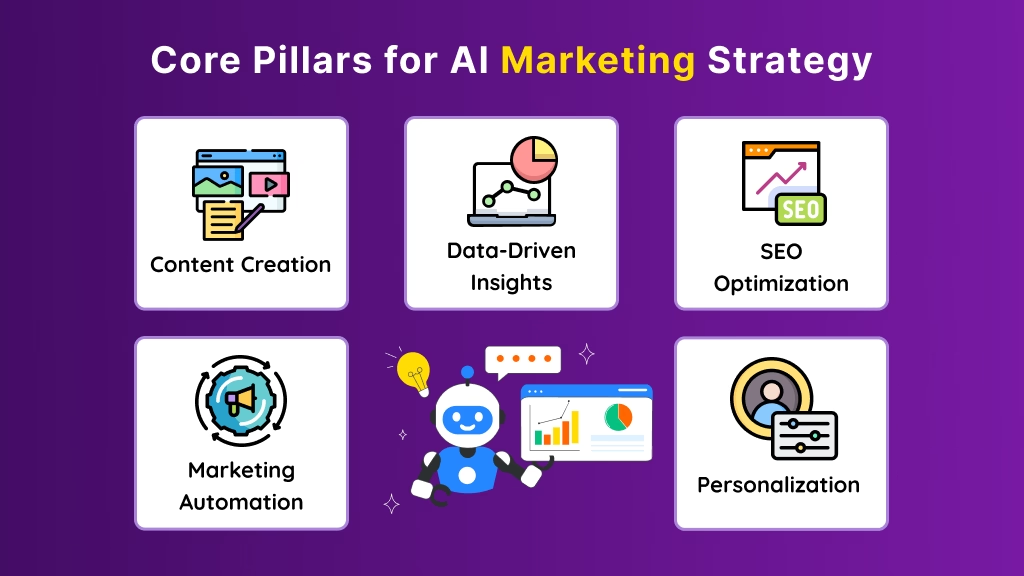
Let’s explore the key pillars that make an AI-powered marketing strategy sustainable and effective.
1. AI-Powered Content Creation That Scales Without Burnout
Content creation is often where marketers feel the most pressure. Ideas run out, deadlines pile up, and quality starts to suffer. An effective AI marketing strategy removes this friction by supporting content creation at every stage from ideation to final draft. AI-powered content tools help generate structured outlines, draft blog posts, refine messaging, and adapt tone for different audiences.
Instead of replacing creativity, AI acts as a writing assistant that speeds up the process. This allows bloggers and content marketers to publish consistently, experiment with new formats, and scale content output without feeling overwhelmed or burnt out.
AI helps you:
- Generate structured blog drafts, social media captions, and marketing copy
- Adapt tone and messaging for different audiences
- Maintain consistency through brand voice training
- Produce AI-generated content aligned with search intent
As a result, bloggers and content marketers can publish more frequently without sacrificing quality or burning out. AI doesn’t replace creativity; it removes friction from the writing process.
2. Data-Driven Decision Making With Actionable AI Insights
Modern marketing produces more data than ever, but interpreting that data manually can be time-consuming and confusing. This is where AI adds real value. By applying machine learning and predictive analytics, an AI marketing strategy transforms raw data into clear, actionable insights. AI can identify trends in customer behavior, highlight which content performs best, and predict future performance.
As a result, marketers no longer rely on assumptions. Instead, they make informed decisions about topics, formats, and channels, leading to more focused campaigns and better results.
With AI-driven insights, marketers can:
- Analyze customer behavior across channels
- Identify which content topics perform best
- Use predictive analytics to forecast campaign outcomes
- Spot trends before competitors do
Consequently, decisions become proactive instead of reactive. Rather than guessing what might work, marketers rely on a data-driven marketing strategy backed by AI intelligence.
3. SEO Optimization and Sustainable Organic Growth
SEO success today depends on relevance, structure, and intent, not just keywords. An AI marketing strategy supports AI-powered SEO optimization by analyzing SERP trends, identifying content gaps, and suggesting keyword clusters that build topical authority.
AI helps structure content in a way that improves readability and engagement, which search engines reward. Over time, this approach leads to sustainable organic growth. Bloggers and WordPress users can attract consistent, high-quality traffic without constantly chasing algorithm updates or short-term tactics.
AI supports SEO by:
- Analyzing SERPs to identify ranking patterns
- Finding keyword clusters and content gaps
- Structuring outlines that improve readability and dwell time
- Supporting topical authority building
Over time, this leads to stronger organic visibility, higher-quality traffic, and long-term growth, especially important for bloggers and WordPress-based businesses.
4. Marketing Automation That Improves Workflow Efficiency
Repetitive tasks are one of the biggest productivity killers in marketing. From formatting content to scheduling posts, these activities consume time without adding strategic value. AI-driven marketing automation simplifies these workflows.
Moreover, it helps automate content planning, optimization, and publishing processes, especially within WordPress environments. By reducing manual effort, marketers can focus on creative thinking, campaign planning, and audience engagement. The result is a smoother workflow, faster execution, and less operational stress.
With automation, you can:
- Streamline content planning and publishing
- Reduce manual editing and formatting
- Speed up campaign execution
- Manage workflows directly inside WordPress
As a result, marketing operations become faster, smoother, and far less stressful, an essential advantage in competitive digital environments.
5. Personalization and Customer Experience at Scale
Today’s audiences expect content that feels relevant and personalized. However, delivering tailored experiences manually is nearly impossible at scale. An AI marketing strategy makes personalization achievable by analyzing user behavior, preferences, and intent.
AI enables marketers to segment audiences more accurately and deliver content that resonates with each group. Whether it’s adjusting messaging tone, recommending relevant topics, or aligning content with customer journeys, AI enhances the overall customer experience, building trust, engagement, and long-term loyalty.
This leads to better customer experiences, higher trust, and stronger conversions. So, personalization powered by AI turns generic marketing into meaningful communication.
How AI Marketing Strategy Fits Different Creators
One of the biggest misconceptions about an AI marketing strategy is that it’s only meant for large companies with big budgets. In reality, AI-driven marketing adapts beautifully to different creators, whether you’re a solo blogger, a content marketer inside a growing team, or a WordPress user managing everything yourself.
Let’s see how AI fits into each role and solves real, everyday challenges.
For Bloggers
For bloggers, consistency is often the biggest challenge. You may start with enthusiasm, publish regularly for a few weeks, and then slowly fall behind as ideas dry up or life gets busy. An effective AI marketing strategy helps bloggers stay consistent without sacrificing quality or creativity.
AI tools assist with topic research, outline creation, and SEO optimization, making it easier to move from idea to published post. Instead of struggling with blank pages, bloggers can focus on storytelling and value while AI handles structure and optimization. Over time, this consistency leads to stronger organic growth, better rankings, and a more sustainable blogging routine.
As a result, bloggers can publish more frequently, grow organic traffic, and build authority, without feeling overwhelmed.
For Content Marketers
Content marketers are constantly balancing strategy and execution. Campaign deadlines, multiple stakeholders, and performance pressure make manual workflows inefficient.
With an AI marketing strategy, planning becomes smarter, and execution becomes faster. AI helps analyze customer behavior, identify high-performing content topics, and prioritize efforts using data-driven insights. It also supports content creation and optimization across channels, ensuring consistency in tone and messaging.
As a result, content marketers spend less time on repetitive tasks and more time on strategy, creativity, and campaign performance.
Consequently, marketers can focus less on manual work and more on strategy, creativity, and results.
For WordPress Users
For WordPress users, managing content often means switching between multiple tools for writing, SEO, and publishing. This fragmented workflow slows progress and increases complexity. An AI marketing strategy designed for WordPress simplifies everything.
AI-powered plugins allow users to create AI-generated content, optimize SEO, and manage workflows directly inside the WordPress dashboard. This reduces friction, speeds up publishing, and keeps strategy and execution in one place. Whether you’re a solo site owner or managing multiple pages, AI helps you stay efficient, organized, and focused on growth.
Ultimately, this leads to a smoother workflow, faster publishing cycles, and better overall performance.
How to Build an AI Marketing Strategy
An effective AI marketing strategy isn’t built overnight, and it’s not about using AI everywhere at once. Instead, it’s a structured process where artificial intelligence supports planning, execution, and continuous improvement. When you understand the purpose behind each step, AI becomes practical, approachable, and genuinely useful.
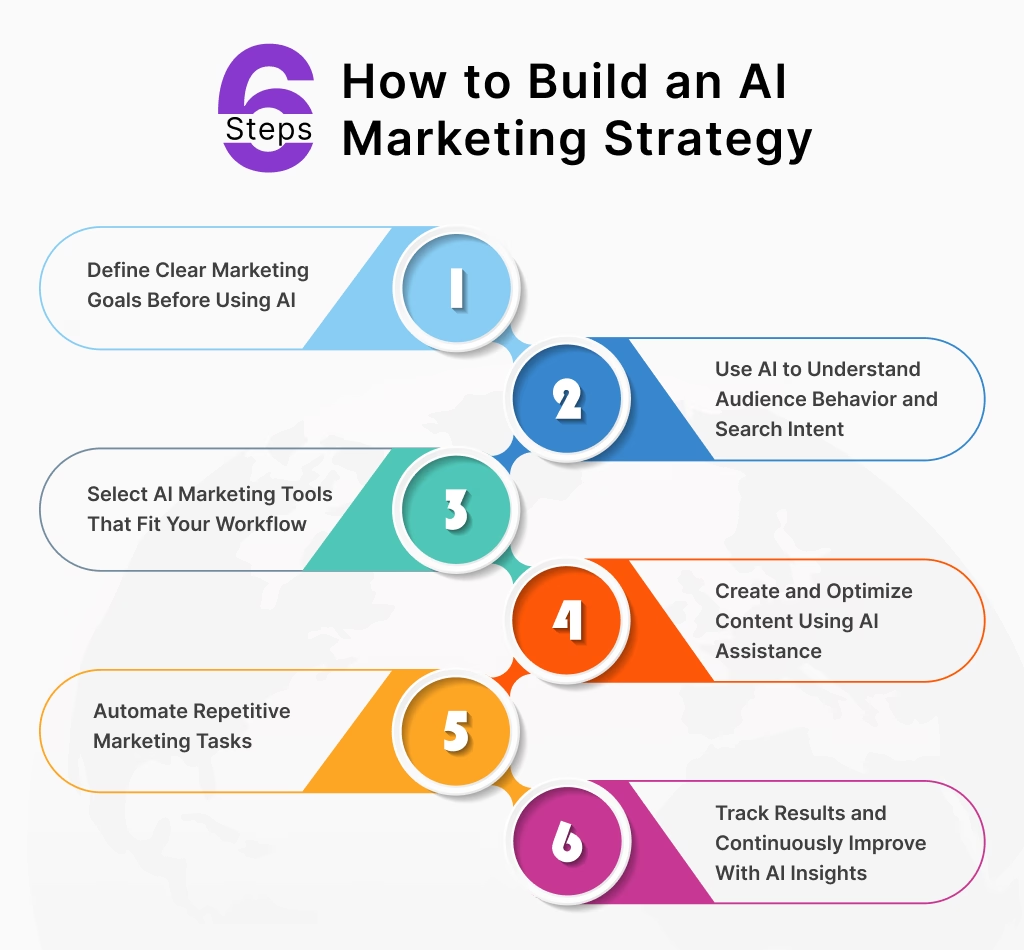
Let’s break it down clearly.
Step 1: Define Clear Marketing Goals Before Using AI
Before AI can deliver results, it needs direction. Many marketers jump straight into AI tools without defining success, which often leads to wasted effort. A clear goal acts as the foundation of your entire AI marketing strategy and determines how AI will support your decisions.
Think about what growth actually means for your business. Are you trying to increase visibility, attract the right audience, or convert visitors into customers? Your answers will shape how AI is used across content creation, SEO optimization, and automation.
To bring clarity, start by identifying goals such as:
- Increasing organic traffic through search engines
- Generating qualified leads or conversions
- Building long-term brand authority and trust
Step 2: Use AI to Understand Audience Behavior and Search Intent
Once your goals are defined, the next step is understanding your audience beyond assumptions. Many marketing strategies fail because content is created based on what marketers think users want, not what data shows.
An AI marketing strategy relies on customer behavior analysis and data-driven insights to uncover patterns that are otherwise easy to miss. AI analyzes search queries, engagement signals, and performance data to reveal what truly resonates with your audience.
AI helps you answer important questions like:
- What problems is your audience actively searching for?
- Which keywords and topics match real search intent?
- What type of content keeps users engaged longer?
This step ensures your content feels relevant, timely, and genuinely helpful.
Step 3: Select AI Marketing Tools That Fit Your Workflow
Choosing AI tools is not about quantity; it’s about compatibility. The wrong tools can complicate workflows, while the right ones quietly enhance productivity.
A strong AI marketing strategy uses tools that fit naturally into how you already work, especially if you rely on WordPress. The goal is to reduce friction, not add more steps to your process.
When evaluating AI marketing tools, look for features such as:
- AI-powered content creation for blogs and marketing copy
- AI-powered SEO optimization for keywords and structure
- Predictive analytics to guide content decisions
- Marketing automation to save time
- Seamless integration with WordPress workflows
Step 4: Create and Optimize Content Using AI Assistance
This is where planning turns into execution. AI shines most when it supports the content creation process, not by replacing creativity, but by accelerating it.
An AI marketing strategy allows you to move from idea to published content faster while maintaining structure and quality. AI assists with outlining, drafting, optimizing, and refining content so you can focus on messaging and storytelling.
With AI assistance, you can:
- Generate structured blog drafts and outlines
- Optimize content for SEO, readability, and intent
- Adjust tone and messaging for different audiences
- Create AI-generated content that stays aligned with your brand voice
Human review remains essential, but AI significantly reduces the heavy lifting.
Step 5: Automate Repetitive Marketing Tasks
As content output grows, repetitive tasks become the biggest time drain. Formatting, scheduling, and updating content manually can slow down even the best strategies.
This is where marketing automation becomes a key pillar of an AI marketing strategy. Automation allows AI to handle routine work, freeing up time for strategic thinking and creativity.
AI-powered automation can help you:
- Plan and schedule content efficiently
- Handle formatting and basic optimization
- Reduce repetitive editing and publishing tasks
The result is a smoother workflow and less day-to-day stress.
Step 6: Track Results and Continuously Improve With AI Insights
An AI marketing strategy is not a one-time setup; it’s an evolving system. The final step focuses on learning and improvement.
AI-driven analytics and predictive analytics help you understand what’s working, what’s not, and where to optimize next. Over time, AI learns from performance data and provides smarter recommendations.
AI helps you:
- Monitor content and campaign performance
- Identify underperforming content
- Optimize or regenerate content based on insights
- Adjust strategy using real data instead of assumptions
This feedback loop ensures your strategy becomes stronger and more effective with every iteration.
Common Mistakes to Avoid in an AI Marketing Strategy
Before diving into AI-driven marketing, it’s important to remember that AI works best when guided by strategy, not shortcuts. Many marketers rush implementation or rely too heavily on automation, which often leads to disappointing results.
Avoiding the following mistakes will help you build a more effective, balanced, and sustainable AI marketing strategy.
- Guide AI with clear goals and context instead of relying on one-click content generation
- Review and refine AI-generated content to improve clarity, accuracy, and usefulness
- Maintain a consistent brand voice by aligning AI outputs with your audience and messaging style
- Focus on audience intent and relevance rather than publishing generic AI content
- Use customer behavior analysis to create content that solves real user problems
- Apply data-driven insights with purpose instead of tracking metrics without direction
- Use predictive analytics to support strategic decisions, not just report performance
- Support SEO efforts with AI-powered optimization while following core SEO best practices
- Build topical authority and helpful content rather than chasing rankings alone
- Review, test, and improve AI-generated content regularly
- Use performance insights to optimize and regenerate content over time
How an AI Content Writing Tool Simplifies Everything
At this stage, one thing becomes clear: having an AI marketing strategy is only half the work. The real challenge is execution. When planning, writing, optimizing, and publishing all happen in different tools, even the best strategy feels overwhelming. This is where an AI content writing tool brings everything together and makes the entire process feel manageable.
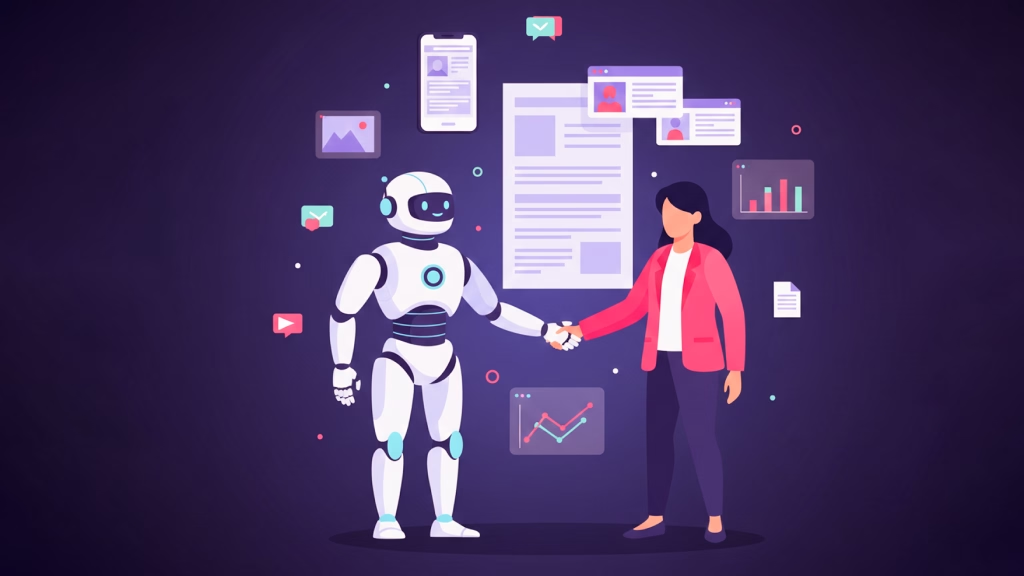
Instead of adding complexity, it simplifies how marketers turn ideas into results.
From Planning to Publishing, All in One Flow
One of the biggest pain points for marketers is the gap between planning and execution. Ideas often stay stuck in notes, spreadsheets, or half-written drafts. An AI content writing tool bridges that gap by guiding you through the entire journey from topic selection to final publish-ready content.
It helps you move step by step by enabling you to:
- Analyze search intent and content gaps using data-driven insights
- Generate structured outlines based on SERP and SEO analysis
- Create AI-generated content with a logical, reader-focused flow
As a result, content planning and publishing become part of one smooth, connected process.
Smarter Content Creation With Built-In Intelligence
Writing content without direction wastes time. AI-powered tools remove that uncertainty by using machine learning and predictive analytics to guide content creation. Instead of guessing what might work, you create content backed by data and intent.
With built-in intelligence, an AI content writing tool allows you to:
- Discover topic ideas aligned with audience interest
- Optimize content using AI-powered SEO optimization
- Maintain tone, structure, and brand voice consistency
- Improve readability and engagement automatically
This ensures every piece of content has a clear purpose and direction.
Automation That Saves Time Without Losing Control
As content volume grows, repetitive tasks can quickly drain productivity. Formatting, revising, and regenerating content manually slows down momentum. This is where marketing automation plays a critical role.
An AI content writing tool automates routine tasks while keeping you in control. It enables you to:
- Speed up drafting, editing, and revisions
- Regenerate or optimize sections instantly
- Reduce manual formatting and repetitive edits
Consequently, marketers gain more time for strategy and creativity without sacrificing quality.
Built for Real Marketing Workflows
What truly simplifies an AI marketing strategy is when tools align with how marketers actually work. Switching between platforms breaks focus and slows progress. An AI content writing tool, especially one built for WordPress, fits naturally into existing workflows.
It supports real marketing needs by helping you:
- Manage end-to-end content creation in one place
- Apply SEO optimization throughout the writing process
- Scale content marketing with AI efficiently
- Improve content continuously using performance insights
Instead of guessing what to do next, you follow a guided, repeatable system that supports long-term growth.
Turning Strategy into Growth
An AI marketing strategy isn’t about replacing creativity or chasing automation; it’s about working smarter. When used intentionally, artificial intelligence helps marketers move beyond guesswork and build strategies based on data-driven insights, customer behavior, and efficient workflows.
AI supports, rather than replaces, human creativity. By combining AI-powered content creation, SEO optimization, and marketing automation, marketers can spend less time on repetitive tasks and more time creating meaningful, audience-focused content. As a result, execution becomes faster, more consistent, and easier to scale.
As this guide shows, success lies in balance. When strategy leads, and AI supports, marketing becomes clearer, more adaptable, and sustainable. Whether you’re a blogger aiming for consistency, a content marketer focused on ROI, or a WordPress user managing everything in one place, an AI-driven approach helps you grow with confidence.
Start small, refine your process, and let your AI marketing strategy evolve into a reliable engine for long-term growth.
FAQs
Is AI going to replace human marketers?
No, AI will not replace human marketers. While AI can analyze data, automate tasks, and personalize campaigns, it lacks human creativity, empathy, and strategic thinking. The future of marketing is a partnership where AI handles the data while humans focus on storytelling and brand building.
Which industries benefit most from AI marketing?
AI marketing delivers the biggest impact in e-commerce, SaaS, healthcare, and finance, where personalization and data-driven insights directly drive growth. Still, nearly every industry can use AI to improve targeting, efficiency, and customer engagement.
How much does AI marketing cost?
AI marketing costs range from free tools with basic features to premium platforms that can cost hundreds or even thousands per month. Your exact spend depends on goals, team size, and which tools fit best with your existing stack.
How can AI personalize marketing campaigns effectively?
AI personalizes marketing by analyzing customer data such as purchase history, browsing patterns, and engagement. It then delivers tailored ads, emails, and product recommendations in real time, making campaigns more relevant and increasing conversions.
How do I get started implementing AI in my marketing strategy?
Start small: define one clear goal, clean and organize your data, and choose a single AI tool that matches your objective. For example, begin by automating email campaigns or using predictive analytics, then scale as you see results.
What are the ethical concerns of using AI in marketing?
The main ethical concerns are data privacy, bias, and transparency. Marketers should protect customer data, avoid intrusive tracking, and regularly audit AI models for fairness. Being ethical not only keeps you compliant but also builds long-term trust with customers.
This page was last edited on 30 December 2025, at 5:18 pm