
Anyone who blogs or runs a content site knows the pressure: you need more articles, more keywords, more consistency—without burning through hours or your budget on every post. Maybe you’ve thought about AI writing tools, hoping they’ll finally let you compete on Google and keep up a regular blog calendar. But while these tools can absolutely speed up outlining, drafting, and even WordPress publishing, they don’t guarantee rankings on their own.
In this guide, you’ll see exactly what an AI SEO article writer is, how these tools shape blog content, which features make the real difference, and—most importantly—how to use AI plus WordPress to write smarter, not just faster. Whether you’re a blogger, WordPress power user, or content marketer, you’ll learn how to blend AI efficiency and human quality so your articles actually perform.
What Is an AI SEO Article Writer?
An AI SEO article writer is a tool that uses artificial intelligence to create search-optimized articles. It can generate outlines, draft blog posts, suggest keywords, produce meta titles and descriptions, improve readability, and prepare content for publishing. Human editing is still needed for accuracy, originality, and expertise.
Unlike a basic AI text generator, an AI SEO article writer is built with ranking in mind. It understands core SEO elements—like search intent, semantic keywords, and meta tags—so the content it creates is structured for better visibility on Google and other search engines. However, editorial review and expert input are always needed to ensure articles are both accurate and genuinely useful.
Why Bloggers, Businesses, and WordPress Users Are Searching for AI SEO Tools
- Faster content production: You can shift from keyword to article draft in minutes.
- Lower writing costs: Less reliance on hiring, outsourcing, or editing from scratch.
- Better keyword coverage: More articles targeting long-tail and semantic phrases.
- More consistent publishing: Easier to fill out blog calendars.
- Seamless WordPress draft creation: Some tools let you work directly inside your CMS.
- Automated SEO essentials: Generate titles, meta descriptions, and internal linking concepts on the go.
The main promise? AI can help turn your keyword ideas into structured, publish-ready SEO articles much faster. But the risk is just as real: if you publish untouched AI output, you’ll likely end up with generic or even inaccurate content that may not rank and could harm your credibility.
What Is the Difference Between an AI Article Writer and an AI SEO Article Writer?
| AI Article Writer | AI SEO Article Writer |
|---|---|
| Generates general text | Builds with SEO structure top of mind |
| May not target keywords | Aligns content to search intent |
| Often drafts generically | Uses metadata, headings, and optimization cues |
| Prioritizes speed | Prioritizes search visibility & readiness |
The main difference comes down to intent and output: AI SEO article writers bake in search intent, heading structure, keyword suggestions, and metadata so your draft isn’t just words on a page—but an SEO-ready article you can refine and publish.
How an AI SEO Article Writer Works Behind the Scenes
An AI SEO article writer helps you go from idea to optimized draft with less friction, but each step still benefits from human input. Here’s how these tools typically operate:
It Starts With a Keyword, Topic, or Content Brief
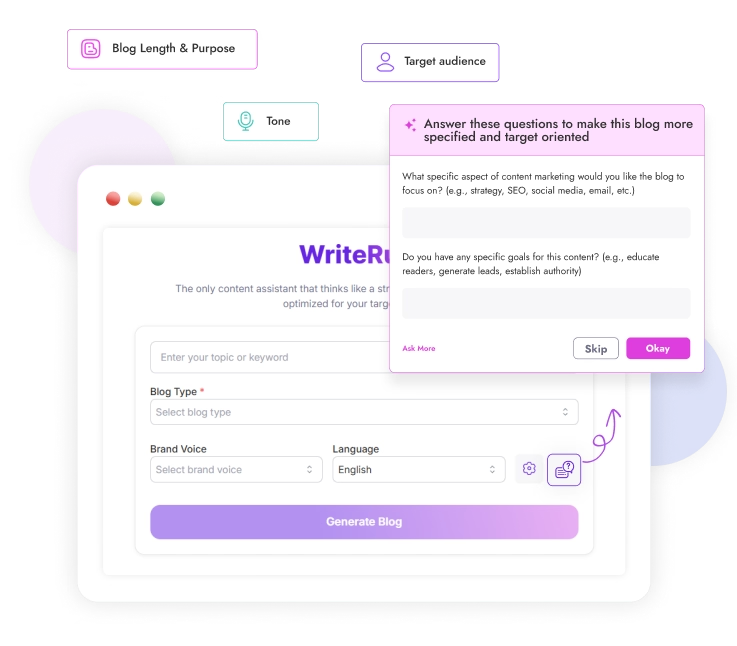
The process begins when you give the AI your target keyword (“best CRM for small businesses” or “how to optimize WordPress blog posts”), your target audience, and any style or intent details. The tool may prompt you for a content goal, ideal length, or unique angle.
It Uses Language Models to Generate Structured Content

Modern tools rely on large language models (like GPT-4, Claude, or Gemini) to predict and generate coherent drafts. They use the information you provide—plus their vast training data—to write introductions, create sections, and fill out your outline with topic-relevant information.
It Organizes the Article Around Search Intent
To rank, it’s not about keyword stuffing; it’s about matching what users want. Search intent falls into four types:
- Informational: Explain or educate (“What is an AI SEO article writer?”)
- Commercial: Compare or suggest options (“best AI writing tool for bloggers”)
- Transactional: Drive action (“sign up for AI SEO article writer”)
- Navigational: Lead to a specific page or brand
A good AI SEO article writer helps shape your content around the right intent, which Google rewards.
It Helps With On-Page SEO Elements
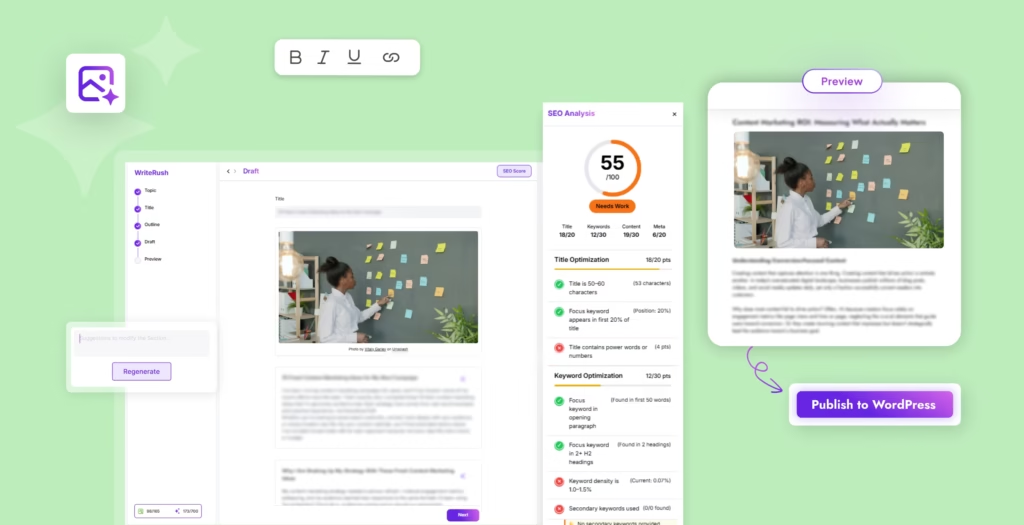
The best tools generate more than just paragraphs. They can include:
- Logical H1, H2, H3 heading structures
- Meta titles and meta descriptions
- URL slug recommendations
- Keyword suggestions and semantic keyword use
- Ideas for internal links
- Suggestions for alt text and image placement
It Still Needs Human Judgment
While AI is fast, quality relies on you. AI content can misunderstand facts, use bland intros, overuse keywords, or miss your brand’s personality. Editorial review, adding examples, original research, or practical tips remains essential.
Tip: Tools like WriteRush blend AI content creation with WordPress publishing workflows, making it easier to review and refine your articles right where you publish.
What to Look for in an AI SEO Article Writer
A strong AI SEO article writer will blend speed with SEO-awareness, editing support, and CMS integration. Here’s what matters most:
Search Intent and Outline Support
Your tool should help turn a keyword into a logical, SEO-friendly outline—often prioritizing sections that answer queries quickly for featured snippets and AI search tools.
Long-Form SEO Article Generation
Look for the ability to generate full blog posts, not just short snippets. The tool should handle how-to articles, product reviews, listicles, and in-depth guides.
Semantic Keyword and Entity Coverage
It should support NLP and semantic keywords, related terms, and understand broader topic clusters—so your articles naturally rank for secondary queries, too.
Meta Title and Meta Description Generation
Strong metadata can boost click-through rates. Look for tools that generate multiple meta title and meta description options, help edit them, and integrate easily with your CMS.
WordPress Publishing or Plugin Support
If you work in WordPress, integration is a game-changer: draft inside the CMS, keep formatting, auto-fill SEO fields, and publish or schedule posts with less manual effort.
Brand Voice and Tone Control
Whether you’re an agency or a niche blogger, choose a tool that adapts to your brand guidelines, so your content doesn’t sound generic.
Editing and Rewriting Features
Optimize readability with features that let you expand thin sections, shorten overlong intros, rewrite weak passages, create FAQs, and summarize quickly.
How to Use an AI SEO Article Writer Without Publishing Generic Content
To get the most from an AI SEO article writer and avoid thin, unhelpful posts, follow a responsible workflow.
Process Snippet:
To use an AI SEO article writer, choose a target keyword, define the search intent, generate an outline, create a first draft, add semantic keywords, edit for accuracy and brand voice, optimize metadata and links, then publish or schedule the article in your CMS.
Choose a Target Keyword With Clear Intent
Pick a primary keyword with an obvious search goal. Add a few relevant secondary keywords or related questions, ensuring you know the reader’s needs.
Study the SERP Before Generating the Draft
Check Google for your keyword. Are top results guides, reviews, or tool pages? Mimic the type, structure, and key sections of content Google already rewards.
Generate an Outline Before the Full Article
Use AI to build out detailed H2s and H3s. Check your outline includes definitions, benefits, workflows, risks, tool features, FAQs, and user-specific angles.
Add Semantic Keywords and Missing Entities
Supplement your draft with related terms: “keyword research,” “search intent,” “SEO content generator,” and so on. Use these words naturally to build authority.
Generate the First Draft as a Starting Point
Treat AI output as a springboard, not a finished product. Let the tool handle structure and bulk writing, so you can focus your energy on details.
Edit for Expertise, Examples, and Originality
Add your own experience, case studies, screenshots, or examples. Trim generic filler. Double-check facts and fill gaps AI misses.
Optimize Before Publishing
Polish headings, strengthen internal links, cite external sources, refine metadata, update image alt text, check readability, and add FAQ schema where needed.
If you’re on WordPress, a plugin like WriteRush helps generate, edit, and prep SEO elements directly inside your blog dashboard—removing the pain of endless copy-pasting.
Using an AI SEO Article Writer in WordPress
If you blog with WordPress, running your workflow inside the CMS saves hours and reduces technical headaches.
Why WordPress Users Need a Publishing-First Workflow
Many AI tools live outside your site, creating friction when you copy drafts into WordPress. This can break formatting, images, links, and often leaves out metadata and SEO essentials.
A Practical WordPress AI Writing Workflow
- Choose your target keyword and set clear search intent.
- Generate an SEO-focused outline with AI.
- Draft the article.
- Review and add expertise.
- Format headings in the WordPress editor.
- Add internal links to related posts.
- Upload or generate featured images, with descriptive alt text.
- Write a compelling meta title and description.
- Use built-in preview to check layout and readability.
- Save, publish, or schedule right from your CMS.
What WordPress Plugin Support Should Include
- Gutenberg-friendly draft generation
- SEO title and meta description fields
- Internal link suggestions
- Template options for repeatable post types
- Easy editing and expansion before hitting publish
For WordPress users, a plugin such as WriteRush can make the process smoother by helping create and refine content closer to the publishing environment, reducing manual tasks and speeding up editorial review.
Can AI-Written Articles Rank on Google?
Google does not automatically penalize AI-generated content. It evaluates whether content is helpful, original, accurate, and created for users rather than search engines. Low-quality, spammy, or mass-produced AI content can perform poorly, so human review is important.
What Google cares about most:
- Helpfulness and originality, not just automation
- Topical authority, accuracy, and up-to-date insight
- E-E-A-T (Experience, Expertise, Authoritativeness, Trust)
- Fulfilling search intent
- Avoiding mass-produced low-value content
Why can AI content rank?
When it is matched to user intent, well-structured, and human-edited, AI content can hit all the right notes Google needs—especially when it includes internal links, rich subtopics, and useful metadata.
Why can AI content fail?
It falls short when it’s bland, factually shaky, or simply repeats what every other article says. Google is quick to demote thin, unoriginal, or unhelpful posts.
To make AI articles more useful, add expert commentary, unique examples, cite trustworthy sources, improve formatting, answer user questions directly, and refresh content as needed.
AI search visibility tip:
Structure answer-first paragraphs, question-based headings, clear entities, bullet lists, and use schema markup. This helps both Google’s AI overviews and new generative engines understand and feature your work.
What AI SEO Article Writers Cannot Do for You
Even the best AI can’t do everything—knowing its limits will save you headaches:
- They cannot guarantee rankings: Search performance depends on competition, authority, backlinks, and real quality—not just content speed.
- They cannot replace subject-matter expertise: AI writes fluently, but you provide the true insight and nuance users trust.
- They cannot perfectly fact-check: AI can make mistakes, especially with statistics, names, or regulated topics.
- They cannot build brand authority alone: Links, trust, author credibility, and original resources still make the difference.
- They cannot fix weak keyword strategy: Always start with researched, relevant keywords and clear intent.
- They cannot make thin content valuable: If your article just repeats generic information, it likely won’t stand out.
Mistakes to Avoid Before Publishing AI-Generated SEO Articles
Relying on AI to write isn’t a shortcut if you skip these critical steps:
- Publishing raw AI drafts without editing: Unedited content is usually generic and risky. Always perform a human editorial pass.
- Targeting keywords without checking intent: A mismatch between keyword and content type can kill rankings.
- Overusing the primary keyword: Aim for natural language; use semantic variants, not constant repetition.
- Ignoring internal links: These connections help both users and search engines understand your site’s topic network.
- Forgetting metadata and image optimization: Double-check meta title, meta description, image alt text, slugs, and Open Graph details.
- Skipping a final quality checklist:
- Search intent is clear
- Main query is answered early
- Headings are descriptive
- Facts are accurate
- Examples or expertise added
- Internal links included
- Metadata fully optimized
- Images with alt text
- Content is readable
- Article has a clear next step
Building a Smarter AI SEO Writing Workflow
The bottom line: an AI SEO article writer helps you work faster, but lasting results come only when you add your expertise, edit for quality, and align with user intent.
- Drafting first versions
- Outlining blog posts
- Writing metadata
- Updating old content
- Scaling your content calendar
- Supporting WordPress publishing
- Helping small teams stay consistent
If you want to create, improve, and publish SEO-focused content more efficiently in WordPress, explore how WriteRush can support your publishing workflow—so you can keep up with both search engines and your audience.
FAQs
What is an AI SEO article writer?
An AI SEO article writer is a tool that uses artificial intelligence to create search-optimized articles, including outlines, full drafts, keyword suggestions, and metadata for better Google rankings.
How is an AI SEO article writer different from ChatGPT?
ChatGPT is a general AI assistant, while an AI SEO article writer is specialized for ranking in search engines—it adds SEO structure, keyword focus, metadata, and often integrates with content platforms like WordPress.
Can AI SEO article writers create content that ranks?
Yes, especially when human editors review, add expertise, optimize for search intent, and fine-tune links and metadata.
Does Google penalize AI-generated articles?
No. Google does not automatically penalize AI-generated content, but it demotes spammy, thin, or unhelpful automation.
Are AI SEO article writers good for bloggers?
Absolutely—they speed up outlines, topic research, drafts, metadata, and content updates, making regular publishing easier.
Can I use an AI SEO article writer in WordPress?
Yes. Choosing a WordPress plugin or integration simplifies drafting, editing, and SEO optimization directly inside your blog dashboard.
Should I publish AI-generated articles without editing?
No. Always review for accuracy, original insight, readability, and user trust before publishing.
What features should I look for in an AI SEO article writer?
Prioritize keyword and outline input, long-form drafting, semantic support, metadata tools, readability helpers, internal link ideas, and WordPress compatibility.
Are free AI SEO article writers worth using?
Free tools are great for testing, but full-featured paid tools offer better control, brand voice, editing depth, and publishing integration.
How do I make AI-generated content sound more human?
Add personal examples, opinions, unique insights, transitions, screenshots, and language in your brand’s style.
This page was last edited on 20 June 2026, at 4:40 pm