
Quick Answer
AI SEO writing uses artificial intelligence tools to create and optimize web content for search engines. By analyzing keywords, search intent, and semantic entities, these tools help bloggers and site owners produce relevant, high-quality articles that rank better and save time.
If you’ve ever tried to write a blog post that both delights your readers and pleases Google, you know how overwhelming it can feel. Choosing the right keywords, nailing search intent, and keeping up with SEO “rules” can turn what should be a spark of creativity into a weekly grind.
Lately, though, there’s a new buzzword everywhere: AI SEO writing. It sounds like a promise to make content creation easier and faster. But what does it actually mean, and is it really as game-changing as people say? This guide pulls back the curtain—breaking down what AI SEO writing is, how it actually works (especially for WordPress users and bloggers), and what steps you can take to turn it into a real-world competitive edge.
By the end, you’ll understand not just the “why” behind AI-driven SEO content, but also the practical workflows, tools, and traps to watch for—whether you’re growing a side project or publishing at agency scale.
Best AI SEO Writing Tools
Choosing the right AI SEO writing tool depends on your workflow, content goals, and SEO needs. Some tools are better for full blog generation, while others focus more on optimization, keyword research, or content scoring.
Here are some of the best AI SEO writing tools to consider.
1. WriteRush
WriteRush is a powerful AI SEO writing platform designed to help users create high-quality, search-optimized content faster. It is ideal for bloggers, marketers, agencies, and business owners who want to simplify the entire content creation process.
With WriteRush, users can move from idea to optimized draft without jumping between too many tools. It helps create SEO-friendly blog content, improve writing flow, and speed up the publishing workflow.
What makes WriteRush valuable is its focus on both productivity and SEO. Instead of only generating generic AI text, it helps users create content that is structured, readable, and aligned with search intent. This makes it a strong choice for anyone who wants to publish optimized content consistently.
Key Features of WriteRush
- AI-powered blog writing
- SEO-friendly content generation
- Keyword-focused article creation
- Faster blog drafting workflow
- Clear content structure and readability support
- Useful for bloggers, agencies, marketers, and business owners
Why Choose WriteRush?
WriteRush.ai is best for users who want a simple, efficient, and SEO-focused writing workflow. It helps reduce the time spent on content creation while keeping the final output aligned with ranking goals.
If you want to create optimized blog posts, improve publishing speed, and reduce manual writing stress, WriteRush.ai is a strong platform to start with.
2. Surfer SEO
Surfer SEO is popular for content optimization and SERP-based recommendations. It analyzes top-ranking pages and gives suggestions for word count, headings, keywords, and content structure.
This tool is useful for writers who already have a draft and want to improve it based on competitor analysis. It is especially helpful for teams that want detailed on-page SEO guidance.
3. Jasper
Jasper is a well-known AI writing tool for marketing teams and businesses. It helps create blog posts, landing pages, ads, emails, and social media content.
For SEO writing, Jasper can be useful when combined with a clear content brief and keyword strategy. It is a good option for brands that need different types of marketing content in one platform.
4. Copy.ai
Copy.ai is useful for generating short-form and long-form marketing content. It can help with blog ideas, outlines, product descriptions, emails, and ad copy.
For AI SEO writing, Copy.ai works best when users provide detailed prompts, target keywords, and clear instructions. It is a flexible tool for marketers who need quick content drafts.
5. Frase
Frase is designed for content research and SEO optimization. It helps users analyze search results, build content briefs, and optimize articles around target topics.
This tool is helpful for writers who want to understand what competitors are covering and what questions users are asking. It is especially useful for creating detailed SEO briefs before writing.
6. Writesonic
Writesonic is an AI writing platform that helps create blog posts, ads, landing pages, and product descriptions. It also offers SEO-focused writing features for users who want faster content generation.
It can be a useful choice for small businesses and content teams that need quick drafts with simple optimization support.
How to Use AI SEO Writing Effectively
AI SEO writing works best when you follow a clear process. Simply asking an AI tool to “write a blog post” may give you generic content. But when you guide the tool with the right keywords, structure, audience, and intent, the output becomes much stronger.
Step 1: Start With Keyword Research
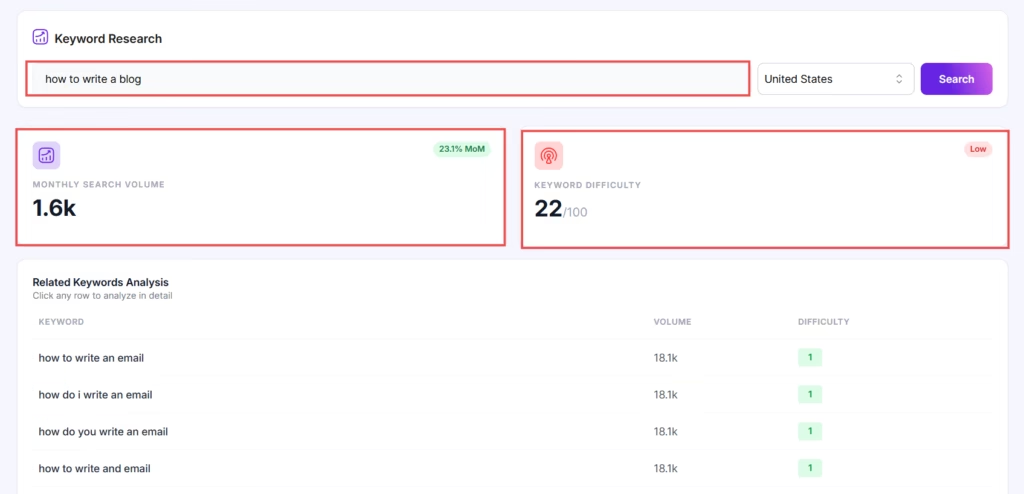
Before writing, choose a primary keyword and a few related keywords. For example, if your main keyword is “AI SEO writing,” related keywords may include:
- AI SEO content writing
- AI writing for SEO
- SEO content generator
- AI blog writing tool
- AI content optimization
- SEO-friendly AI writing
These keywords help shape the direction of your article and make sure your content covers the topic properly.
Step 2: Understand Search Intent
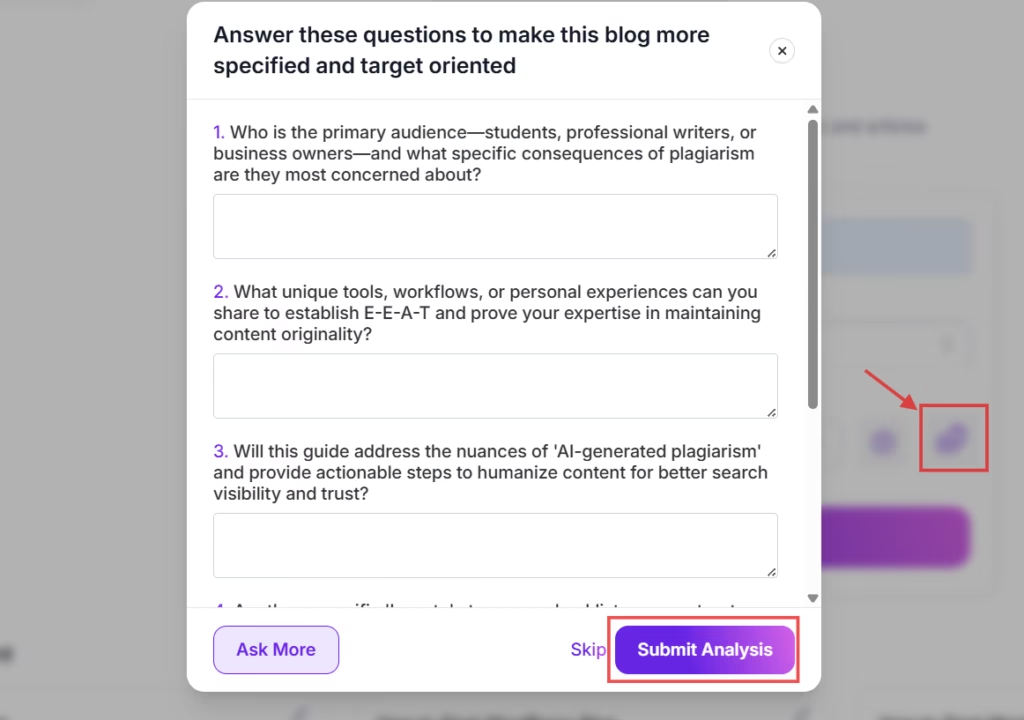
Next, identify what readers want from the keyword. For “AI SEO writing,” readers may want to know:
- What AI SEO writing means
- How AI helps with SEO content
- Which tools are best
- How to use AI without hurting quality
- Whether AI content can rank on Google
Your article should answer these questions clearly.
Step 3: Create a Strong Outline

A good outline keeps your content organized. Use headings that match the reader’s journey. Start with the basics, explain the benefits, introduce tools, show the process, and then answer common questions.
This makes the content easier to read and improves the chance of ranking for related search queries.
Step 4: Generate the First Draft
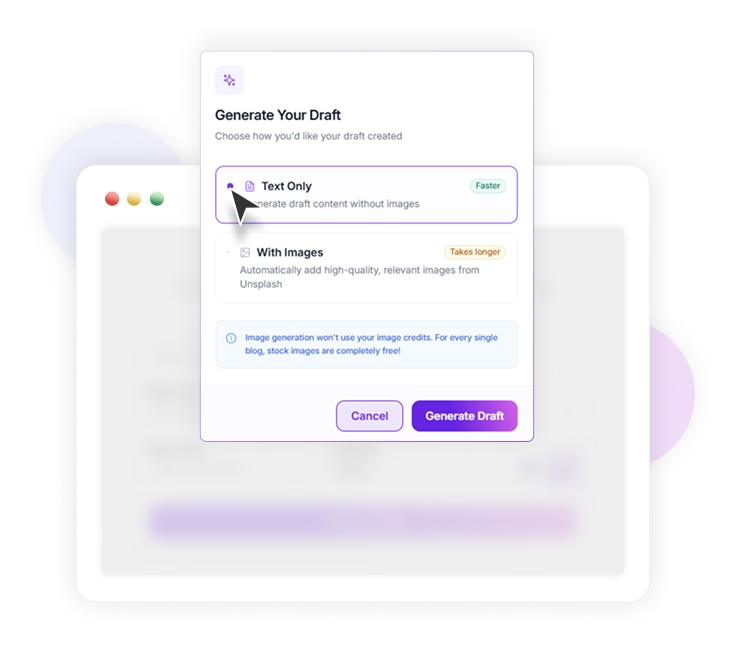
Once the outline is ready, use an AI SEO writing tool like WriteRush.ai to create the first draft. The draft should include the main keyword naturally, answer the reader’s questions, and follow a logical structure.
Do not publish the first draft without reviewing it. AI can speed up writing, but human editing is still important.
Step 5: Edit for Accuracy and Brand Voice
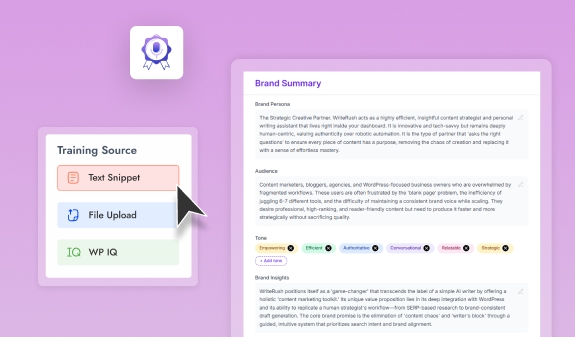
After generating the draft, review it carefully. Add personal insights, examples, product details, internal links, and brand-specific language.
This step makes the content more original and trustworthy. It also helps avoid generic AI writing that sounds similar to many other articles online.
Step 6: Optimize On-Page SEO

Before publishing, optimize the important SEO elements:
- SEO title
- Meta description
- H1 and H2 headings
- URL slug
- Internal links
- Image alt text
- Keyword placement
- FAQ section
These small improvements can make a big difference in how search engines understand and rank your content.
Streamlining AI SEO Writing With WriteRush
Managing multiple content tools and manual WordPress uploads can be clunky and error-prone. This is where an end-to-end AI SEO content tool like WriteRush really shines.
How WriteRush Can Help:
- Unified Workflow: Create, optimize, and directly publish SEO content in bulk from a central dashboard. No more copy-pasting or reformatting.
- Semantic Optimization: The WriteRush editor shows real-time semantic keyword gaps and helps ensure your content covers topically relevant entities—great for Google’s algorithm.
- Custom Prompts & Voice Control: Save templates and prompt frameworks that lock in your brand style, making it easier to maintain consistency.
- Bulk Publishing & Scheduling: Schedule dozens of posts at once to WordPress, complete with optimized images, internal links, and metadata—ideal for agencies or busy bloggers.
If you’ve ever lost hours to formatting errors or piecemeal publishing, integrating a tool like WriteRush into your stack eliminates those headaches—while still giving you space to fine-tune and humanize before the final publish.
Common Mistakes to Avoid With AI SEO Writing
- Skipping Manual Review: AI drafts can be off-brand, generic, or even inaccurate—always review and edit before publishing.
- Ignoring Semantic Optimization: Not checking for entity/keyword coverage means you might miss critical ranking signals.
- Overusing or Stuffing Keywords: Thin content or forced keyword inclusion can do more harm than good, risking Google penalties.
- Overlooking AI Detection Risks: Unedited AI content often “sounds” machine-written—run text through humanization checks (WriteRush and others offer this).
- Fragmented Workflows: Using too many disconnected tools can lead to formatting issues, duplicated drafts, and scheduling mishaps (especially with WordPress publishing).
The best approach blends automation and human oversight—leveraging AI for speed, without sacrificing editorial quality or compliance.
Final Thoughts
AI SEO writing is changing how businesses, bloggers, and marketers create content. It helps speed up the writing process, improve keyword optimization, structure articles better, and scale content production more efficiently.
However, the best results come from combining AI with human strategy. Use AI to research, outline, draft, and optimize—but always edit, fact-check, and add unique value before publishing.
For anyone looking for a faster and more SEO-focused writing workflow, WriteRush.ai is one of the best platforms to start with. It helps simplify content creation and makes it easier to produce search-friendly blog posts consistently.
Frequently Asked Questions
What is AI SEO writing, and how does it work?
AI SEO writing uses artificial intelligence to generate and optimize web content that matches search intent, semantic keywords, and ranking factors. Tools analyze SERP data to produce articles ready for better performance in organic search.
Is AI-generated content good for SEO, or will Google penalize it?
If AI content is high-quality, relevant, and humanized, Google will rank it like any other content. Thin, generic, or unedited AI material is more likely to hurt rankings or trigger spam filters—always edit and optimize for people first.
How do I optimize AI-generated blog posts for higher rankings?
Edit for clarity, ensure semantic keyword coverage, write strong meta tags, add internal links, and check for originality. Many AI SEO tools help automate these steps but always do a manual review.
What are the best AI SEO writing tools for WordPress?
Popular choices include WriteRush, Jasper, Surfer SEO, Frase, and Writesonic. Look for tools with seamless WordPress integration and strong optimization features.
Can AI-generated content pass detection and plagiarism checks?
Yes—if you humanize and review the output, most tools can create original content that passes plagiarism and common AI-detection platforms.
How is AI SEO writing different from human SEO writing?
AI excels at scaling, research, and data-driven optimization, but human writing better captures nuance, emotion, and true creativity. Combining both usually gives the best results.
What workflow or plugin do I need to bulk publish AI SEO articles to WordPress?
Look for tools that support direct WordPress integration, auto-scheduling, internal linking, and bulk publishing—WriteRush is one example with these features.
How do I keep a consistent brand voice when using AI writers?
Leverage custom prompt templates, review AI drafts, and set tone guidelines in your writing tool. Some platforms let you save voice and style preferences for reuse.
Are there risks with automating all my content through AI?
Yes—fully-automated, unreviewed content can be inaccurate, off-topic, or flagged by search engines. Always blend AI automation with editorial checks.
What about compliance with Google’s Helpful Content or EEAT guidelines?
Focus on depth, originality, and usefulness. Even with AI, ensure your content meets the intent of real users and includes clear expertise and trust signals.
This page was last edited on 24 June 2026, at 5:27 pm