Quick Answer
The best AI for creative writing depends on your needs: Sudowrite is ideal for fiction and worldbuilding, ChatGPT and Claude excel at versatile prose, and WriteRush integrates creative AI writing directly into WordPress for a seamless content creation workflow.
Staring at a blank page can feel like climbing a mountain—especially when you want your words to sing. For bloggers, content marketers, and fiction writers, the pressure to create something original and engaging is real. Add in tight publishing schedules, evolving reader expectations, and the technical headaches of getting your work online (looking at you, copy-paste mishaps in WordPress), and it’s easy to feel overwhelmed.
If you’ve ever wished for a creative partner who offers ideas, keeps your tone authentic, and fits perfectly into your workflow, you’re not alone. Thankfully, today’s AI tools are increasingly designed to work with you, not just for you. In this guide, you’ll explore the strengths, limitations, and real-world fit of the top AI writing assistants—from fiction specialists to plugins that turn WordPress into your creative playground. By the end, you’ll have a clear path to the tool that brings your creative vision to life—without adding complexity.
What Is AI for Creative Writing?
AI for creative writing refers to using advanced language models like GPT-4, Claude, and tools such as Sudowrite to help writers generate stories, develop ideas, improve narratives, and edit creative content. These platforms are built to support human-like storytelling, adapt to your voice, and help with genre-specific tasks like worldbuilding or character development.
Unlike general-purpose writing assistants, creative writing AIs are trained to understand the flow of a story, maintain style and pacing, and mimic the emotional undertones that make fiction or narrative nonfiction compelling. They can help overcome writer’s block, suggest plot twists, refine dialogue, and even format content for seamless publishing. This evolution means writers get more than generic suggestions—they gain a co-author who understands both language mechanics and narrative depth.
Why Creative Writers and WordPress Users Care
Writers and publishers turn to AI creative writing tools for several key reasons. First, these platforms help generate authentic-sounding prose and characters, which is crucial in both fiction and blog storytelling. Second, tight deadlines and publishing schedules call for efficiency—AI can draft and iterate content faster, freeing up more time for editing and creative polish.
Another major factor is workflow integration. Bloggers and content marketers, especially those using WordPress, want tools that keep them “in flow,” letting them brainstorm, write, and publish in a single environment. Creative writing AIs have become vital for:
- Maintaining narrative voice and style across platforms
- Drafting and revising long-form posts, serial stories, and brand narratives
- Reducing the need for manual copy-paste or reformatting
- Iterating on ideas quickly and collaboratively
For businesses and indie creators alike, narrative-driven content drives real engagement and gives solo writers the power to publish at scale.
How to Choose the Best AI for Creative Writing
Choosing the right AI for creative writing is about more than headline features—it’s about how the tool supports your genre, fits your workflow, and respects your creative process. Here’s what to consider:
Start by defining your writing goals. Are you a novelist, a blogger, or a team producing brand stories? Fiction writers may prioritize worldbuilding prompts, while bloggers want fast, on-brand storytelling.
Next, compare key features:
- Genre expertise: Can the tool support fiction, essays, poetry, or business narratives?
- Voice adaptation: Does the AI learn your style, or is it “one size fits all”?
- Context memory: How well can it develop long plots or remember details across drafts?
Then, check how easily you can integrate it. Do you want a WordPress plugin (like WriteRush), a browser-based editor, or direct API access for larger teams? Each workflow is different.
Price and accessibility matter, too. Look for free trials, clear pricing models, and honest word limits.
Finally, think about originality and ethical safeguards. Are you getting unique, editable prose? Does the tool include plagiarism checks?
Tip: WriteRush stands out for bloggers and authors using WordPress, offering creative writing AI tools directly in your post editor—no copy-paste, no workflow headaches.
AI Tools for Creative Writing: Strengths and Use Cases
Understanding which AI matches your creative needs means diving into the real strengths of each tool. Here’s how popular options stack up:
WriteRush – Creative Writing Inside WordPress
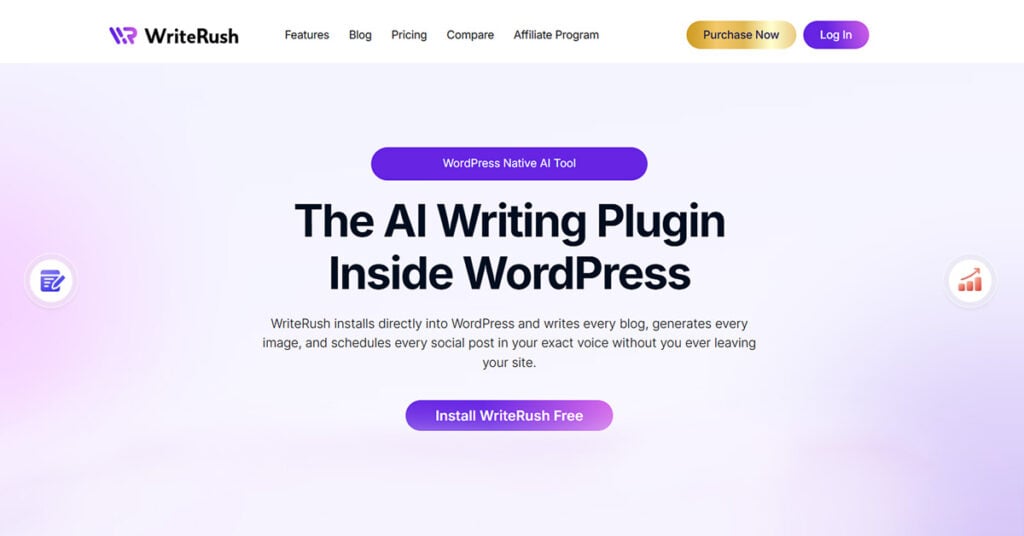
WriteRush is designed for those who want to keep creativity inside WordPress. It brings AI-driven brainstorming, genre-tailored prompts, and collaborative editing directly to your block editor. For bloggers, serial authors, and marketers publishing on WordPress, WriteRush streamlines creative drafting, revision, and publishing—eliminating copy-paste issues and letting your narrative flow from idea to published post.
Sudowrite – Fiction-Focused Creativity
Sudowrite shines for fiction writers who want immersive worldbuilding, vivid scene descriptions, and character development. It’s designed to act as a brainstorm partner, guiding you with genre-specific suggestions and helping expand your ideas into polished stories. However, its focus is fiction—making it less flexible for business content or blogs.
ChatGPT & Claude – Versatile, Adaptable Prose
General-purpose AIs like ChatGPT (GPT-4) and Claude (Claude 3) are strong all-rounders. They’re excellent for drafting across genres, adapting to your tone, and offering flexible brainstorming. Writers can use them for both fiction and non-fiction. Their only real drawbacks: they sometimes miss literary nuance in long-form fiction, and their ability to remember complex story arcs may be limited without manual guidance.
Jasper, Rytr, Writesonic, Copy AI – Content & Short Stories
These tools focus on fast content marketing, branded storytelling, and short-form writing. They bring ready-made templates, workflow automation, and multi-language support—great for blogs and business narratives. Creative depth for fiction is less of a strength, so if you’re crafting a novel, look to other options.
Implementing AI Creative Writing in Your Workflow

Integrating AI into your creative routine is about working smarter, not harder. Start with brainstorming: prompt your AI tool with “Show me five opening lines for a noir detective story” or “Summarize this plot in three sentences.” Sudowrite, ChatGPT, or WriteRush can help develop ideas, characters, and even plots.
For drafting, use AI to expand scene outlines into full chapters or to turn rough notes into compelling blog stories. Most tools let you collaborate in real time, which is especially useful for teams or co-authors.
Editing is next. Lean on narrative feedback features—Sudowrite’s “Describe” or a tool’s style-suggestion— to refine prose and keep your voice consistent.
Finally, publishing gets easier with tools like WriteRush, which let you write and edit content directly inside the WordPress editor. This removes friction—no more messy copy-paste, lost formatting, or broken workflows.
The key is to maintain creative control: use AI for ideation and expansion, but always review and adapt the output to match your style.
How WriteRush Transforms Creative Writing for WordPress
For WordPress-focused creators, WriteRush changes the game. Instead of juggling between your AI tool and your blog editor, you can brainstorm, draft, and edit directly in your WordPress posts. WriteRush offers creative templates for dialogue, worldbuilding, or character arcs, all tuned for story-driven writing.
What makes it special is human + AI collaboration. You can instantly rewrite or expand scenes, keep your voice intact, and iterate drafts inside a familiar environment—ideal for serialized fiction, ongoing blog stories, and collaborative editing.
If you’ve ever lost formatting when copying from one app to another or wasted time toggling between tabs, WriteRush removes those headaches. Your creative process becomes seamless, letting you focus on the story while publishing efficiently.
Common Mistakes When Using AI for Creative Writing
- Letting AI outputs stand without human editing risks a generic or inconsistent narrative voice.
- Using general-purpose models for specialized genres (like complex worldbuilding) leads to lackluster results.
- Forgetting to check for originality—AI can repeat ideas found elsewhere, so plagiarism checks and unique rewrites are a must.
- For WordPress users, relying on copy-paste from external AI tools can cause lost formatting and disrupt workflow. Plugins like WriteRush solve this by letting you work “in editor.”
- Skipping a final read for pacing, plot holes, and emotional impact—AI can suggest, but only humans can ensure resonance.
Conclusion
Finding the best AI for creative writing is all about matching your goals, genre, and workflow. Fiction specialists like Sudowrite bring in-depth story features, while generalists like ChatGPT and Claude offer flexible drafting across formats. For WordPress creators, WriteRush stands out—helping you write, edit, and publish creative content without leaving your editing suite.
Embrace AI as a powerful co-author, but keep your unique voice at the center. If WordPress is your stage, consider trying WriteRush to turn story ideas into published posts, seamlessly and creatively.
Frequently Asked Questions
What is the best AI for writing fiction or novels?
Sudowrite is the top choice for fiction and novel-writing with specialized features for story arcs and worldbuilding. ChatGPT and Claude also perform well, especially for more adaptive, conversational fiction.
Can AI help me brainstorm and draft creative stories?
Yes, AI tools like ChatGPT, WriteRush, and Sudowrite excel at brainstorming ideas, suggesting plot developments, and expanding drafts. They’re especially useful for overcoming writer’s block or exploring new genres.
What free options exist for AI creative writing?
ChatGPT and Claude offer free tiers for basic creative drafting. Some platforms like Jasper or WriteRush provide free trials, but ongoing advanced features may require a subscription or paid plan.
How do I use AI to mimic my writing style?
Many AIs can analyze sample writing and adapt tone or style with guided prompts. The best results come from providing clear examples and editing the AI’s output to fine-tune voice consistency.
Which AI is best for publishing stories on WordPress?
WriteRush is the leading solution for WordPress users. It integrates directly into the WordPress block editor, streamlining creative drafting, editing, and instant publishing—all within one platform.
Can AI writing tools handle worldbuilding and long plots?
Some tools, such as Sudowrite and Claude, are strong at worldbuilding and tracking long narratives, but may require manual context reminders. Persistent memory features are improving but still need human oversight.
What are the limitations of AI-generated creative writing?
AI often struggles with deep emotional nuance, maintaining complex story continuity, and generating wholly original ideas without human guidance. Always revise, adapt, and ensure your unique voice shines through.
Is Sudowrite better than ChatGPT for storytelling?
Sudowrite is better for fiction-specific features, like guided worldbuilding and character arcs. ChatGPT is more versatile across genres but may require more manual input to reach literary quality.
How does WriteRush help with creative writing in WordPress?
WriteRush enables users to brainstorm, draft, and edit creative content right inside WordPress, with AI prompts and templates tailored for storytelling—removing the need for copy-paste or tab-switching.
Can AI replace a human author?
AI can accelerate creative processes and generate drafts, but it cannot fully replace the originality, judgment, and emotional depth that human authors bring to storytelling. Successful writers use AI as a creative partner, not a replacement.
This page was last edited on 25 June 2026, at 3:19 pm