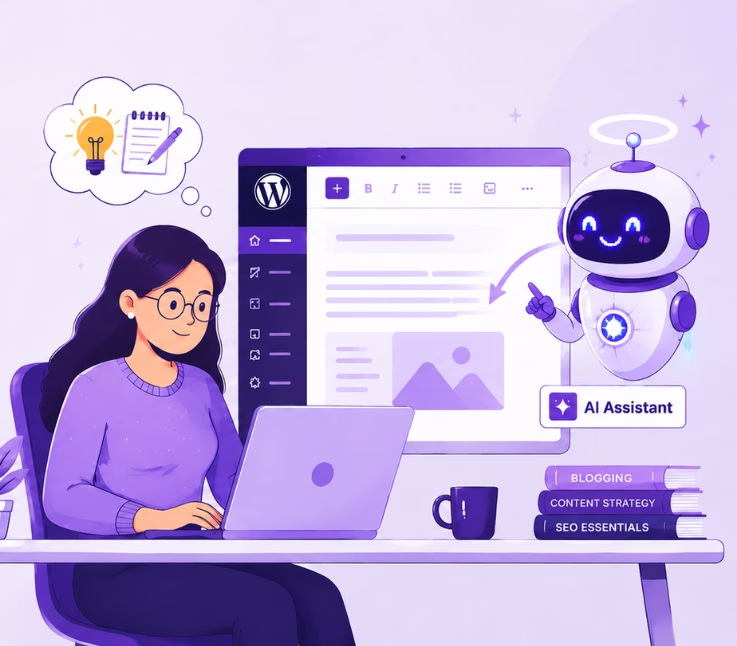
As blogging becomes more competitive, content creators are constantly seeking ways to enhance their efficiency and creativity. This is where AI prompts come into play.
AI prompts are structured queries that help AI tools (like ChatGPT, Jasper, or Claude) generate content for bloggers. These prompts guide the AI to create engaging blog post ideas, detailed outlines, SEO-optimized sections, or even entire blog drafts. The right prompts can help bloggers cut down on their time spent researching and writing, allowing them to focus on creativity and strategic content planning.
In this blog, you’ll discover 50+ AI prompt examples for bloggers. These will not only help you write faster but also ensure your content is SEO-friendly and search intent-aligned, driving more traffic to your site.
Why AI Prompt Examples Matter for Bloggers
AI prompt examples truly supercharge blogging because they shatter creative blocks, save loads of time, and make SEO achievable even for non-experts.
In today’s fast-paced blogging world, AI prompts play a crucial role in enhancing both SEO (Search Engine Optimization) and AEO (Audience, Experience, and Optimization). Here’s why you need them:
SEO Optimization
AI tools can help you write content that targets high-ranking keywords and follows SEO best practices. With precise prompts, you can ensure that your content ranks higher on Google by including relevant semantic keywords, keyword variations, and latent semantic indexing (LSI) terms.
AEO Optimization
AI prompts also focus on audience intent. They help generate content that is relevant and engaging, thus improving the user experience. When content matches search intent, readers stay longer on your page, reducing bounce rates and improving your SEO rankings.
GEO Optimization
For bloggers targeting specific regions or countries, AI can help with geo-targeting prompts. These prompts ensure that your content is locally relevant, tailored to specific geographic locations, and aligned with local trends and language, making it more appealing to your audience in specific regions.
The 7-Part AI Prompt Formula for Better Blog Content
A strong AI prompt is like giving your virtual assistant a map, compass, and mission briefing, not just vague directions.
- Role: Specify who the AI should “be” (e.g., seasoned SEO expert, conversational blogger, how-to guide writer).
- Topic: Clearly state what the content is about.
- Audience: Define who will read it and their knowledge level.
- Goal: Explain what you want to achieve (inform, persuade, boost traffic, etc.).
- Tone: Choose your brand voice (friendly, expert, witty, simple, etc.).
- Format: Say what format you want (list, FAQ, story, how-to, comparison).
- Constraints: Set any boundaries (e.g., 2,000 words, use target keyword, add a call to action).
Reusable Template:
Act as a [role]. Write a [format] blog post about [topic] for [audience]. The goal is to [goal]. Use a [tone] tone. Include the keyword(s) [keywords]. Keep the piece [constraints].
Before-and-After Example:
- Weak Prompt: “Write a blog post about gardening.”
- Strong Prompt: “Act as a gardening expert. Write a step-by-step how-to blog post on composting for beginners interested in urban gardening. The goal is to help readers start composting at home, using a friendly and encouraging tone. Include the keyword ‘urban composting’ throughout. Keep it under 1,200 words.”
Best Practices for Using AI Prompts
Before diving into the specific AI prompts, here are some best practices to keep in mind:
- Be Specific About Your Audience:
AI works best when you define your target audience clearly. Specify the tone, niche, and goal of the blog post, such as whether it’s informative, persuasive, or product-oriented. - Use NLP and Semantic Keywords:
Include semantic keywords and phrases in your prompts to ensure that the generated content is not only keyword-rich but also contextually relevant. - Leverage Multiple Prompts:
Start with idea generation, then move to outlines, drafts, SEO optimization, and editing. Use AI in phases to get the best output. - Iterate and Refine:
Use AI to refine your drafts. Don’t hesitate to ask for revisions, improvements in tone, or inclusion of specific examples.
50+ AI Prompt Examples for Bloggers
Now, let’s dive into 50+ AI prompt examples for different stages of blogging. You can copy these prompts directly into your AI tool for enhanced productivity.
1. Idea & Topic Generation Prompts
Generate 10 unique blog post ideas for [YOUR Blog Topic], focusing on the main keyword "[AI Prompt Examples for Bloggers]" and target audience needs.Analyze the top 5 blog posts ranking for "[AI Prompt Examples for Bloggers]" and identify content gaps. Suggest 10 blog ideas that could fill these gaps.What are the latest trends in [YOUR Industry] that can relate to "[AI Prompt Examples for Bloggers]"? Provide 5 trending topics with reasons why they matter.Create 5 content angles for a blog post on "[AI Prompt Examples for Bloggers]". Include seasonal or time-sensitive angles, addressing the problems of content creators.Generate blog post ideas based on seasonal trends or events relevant to "[AI Prompt Examples for Bloggers]". Focus on how AI can help content creators during this time.Provide a list of long-tail keywords related to "[AI Prompt Examples for Bloggers]" that would help capture niche blog traffic.Generate 5 blog topics targeting bloggers in the [specific niche]. Ensure each idea integrates "[AI Prompt Examples for Bloggers]" and speaks directly to their pain points.Generate 5 AI-related blog topics that are under-discussed in the blogging industry but are highly relevant to "[AI Prompt Examples for Bloggers]".Generate 7 blog ideas about how AI can help bloggers with time management and content creation.
2. Blog Outline & Structure Prompts
Create a detailed blog outline for "[AI Prompt Examples for Bloggers]". Include an introduction, 5 key sections (H2), and a conclusion.Generate a blog outline that targets SEO intent for "[AI Prompt Examples for Bloggers]". Include headings for benefits, examples, actionable steps, and FAQs.Generate 5 subheadings (H2, H3) for a blog about "[AI Prompt Examples for Bloggers]" that naturally incorporate the target keyword and related terms.Generate an outline with headings and subheadings based on the most common questions bloggers have about AI prompts. Ensure clarity and relevance.Create an outline for a step-by-step guide on how bloggers can effectively use AI prompts for their blog writing.Create an outline for a comprehensive blog post on how AI tools help with blogging workflows. Include technical, creative, and promotional aspects.Generate a blog outline that incorporates local trends and SEO strategies for bloggers focusing on "[AI Prompt Examples for Bloggers]" for a specific region.
Read More: AI prompts for blog writing
3. Drafting & Writing Prompts
Write a 150-word introduction for "[AI Prompt Examples for Bloggers]". Include the keyword early on and explain why AI prompts are essential for bloggers.Write a 300-word section titled "How to Use AI Prompts for Blogging: Step-by-Step". Provide actionable tips and explain how bloggers can start using AI.Expand on the benefits of AI for bloggers by providing 5 concrete examples of how AI tools can streamline blog writing, SEO, and content promotion.Write a detailed step-by-step guide on how bloggers can implement AI prompts into their content creation workflow.Generate a section that provides actionable tips for bloggers on using AI tools more effectively. Focus on common mistakes and how to avoid them.Create a case study showcasing how a blogger successfully used AI prompts to improve their blog’s traffic and SEO performance.Write a section about how to create engaging blog introductions using AI. Include tips and prompt examples for generating attention-grabbing intros.Write a 300-word conclusion summarizing the advantages of AI in blogging and encouraging bloggers to start implementing AI prompts.
4. SEO & Content Optimization Prompts
Rewrite this paragraph, including "[AI Prompt Examples for Bloggers]" and semantically related keywords naturally, ensuring readability.Generate 3 SEO-friendly meta descriptions (under 160 characters) for the blog "[AI Prompt Examples for Bloggers]". Include the main keyword and a CTA.Suggest 5 internal links from our existing content that could enhance SEO for the article "[AI Prompt Examples for Bloggers]" and improve content flow.Create a detailed SEO checklist that includes how to use AI prompts for on-page SEO, keyword integration, meta tags, etc.Rewrite the content to add more depth and value. Incorporate more specific AI use cases and integrate keywords like "SEO prompts", "blogging AI tools", etc.Provide structured data (schema) suggestions for enhancing content visibility. Focus on Article, FAQ, and How-to schemas.Generate an outline with targeted keywords for each section, ensuring a perfect balance between readability and SEO compliance.Write a 300-word section on how AI can improve blog ranking factors like backlinks, mobile optimization, and content length.Generate 3 blog headings that are optimized for search intent and include powerful keywords like "AI prompts", "SEO for bloggers", and "content marketing".
5. Editing & Enhancement Prompts
Improve the readability of this blog post on "[AI Prompt Examples for Bloggers]" by simplifying the language, breaking down complex sentences, and ensuring clarity.Integrate the following NLP terms naturally into the blog: "content optimization", "AI writing tools", "SEO blog prompts", "creative content generation".Generate 5 FAQs for "[AI Prompt Examples for Bloggers]" based on common search queries like "How can AI improve blogging?" and "What are the best AI writing tools?". Include concise answers.Adjust the tone of the blog to make it more conversational but still authoritative. Focus on engagement and trust-building.Enhance the content flow by adding transitional sentences between sections. Ensure the blog maintains readability and smooth transitions.Run a spelling and grammar check for the entire blog post. Ensure clarity, accuracy, and correct punctuation.Rewrite the conclusion to be more impactful, ensuring it includes a clear call to action for readers to begin using AI prompts for their own blogs.
6. AI in Blogging: Practical Use Cases
Use AI to generate a list of the top 10 keywords related to "[AI Prompt Examples for Bloggers]". Focus on long-tail keywords and search volume.Generate social media snippets, email newsletters, and other repurposed content from a blog post about "[AI Prompt Examples for Bloggers]".Generate 5 compelling headlines for the blog post "[AI Prompt Examples for Bloggers]". Ensure they include the main keyword and are click-worthy.Write a section explaining how AI tools, like GPT-3 or Jasper, can assist with brainstorming, drafting, and editing blog posts.Generate ideas on how AI can help personalize content for specific audiences, increasing engagement and conversion rates.
7. Advanced AI Techniques for Bloggers
Generate a sentiment analysis of popular blog posts on "[AI Prompt Examples for Bloggers]" to understand their emotional tone and how it resonates with readers.Generate blog prompts focused on optimizing content for voice search. Include conversational language and long-tail phrases.Suggest interactive content ideas, such as quizzes or AI-driven tools, that could increase user engagement on a blog about AI prompts.Use AI to predict future trends in blogging and content creation. Focus on AI tools, SEO strategies, and new content formats.Explain how AI can be used to analyze blog performance, measure KPIs, and generate insights for optimization.
Prompts for Repurposing Blog Content Across Channels
Why let a great post sit in just one place? AI can help multiply your blog’s reach by turning it into new formats for every channel.
- Blog to Social Post (X/LinkedIn/Instagram):
“Summarize this blog post into 3 engaging LinkedIn updates, each with a hook and a call-to-action.” - Blog-to-Newsletter:
“Turn this blog into a concise, value-packed email for my subscribers, highlighting 3 actionable takeaways.” - Blog-to-Video Script:
“Write a YouTube video script (intro, main points, and outro) based on this blog post: [paste summary/main points].” - Blog-to-Podcast Outline:
“Outline a 15-minute podcast episode inspired by this blog, including intro, main segments, and key takeaways.” - Blog-to-Infographic Ideas:
“List 5 data-driven points from this blog that would work well in an infographic format.” - Blog-to-Lead Magnet Checklist:
“Transform the main steps of this blog into a downloadable checklist suitable for email opt-in.” - Blog-to-Webinar Description:
“Write a compelling webinar description based on the key points from this blog post.” - Repurposing for New Audiences or Regions:
“Rewrite this content for a UK audience, adjusting examples and references as needed.”
Mistakes to Avoid When Using AI Prompts for Blogging
AI can be a tremendous ally, but a few missteps can shrink your reputation and rankings. Steer clear of these common traps:
- Publishing Generic or Unedited AI Output:
Fact: Raw AI drafts often sound hollow or repetitive. Always review and personalize. - Missing Your Own Expertise:
Readers come for your unique insights, so add your experience, examples, and voice to the mix. - Skipping the Fact-Check:
AI can hallucinate. Double-check claims, data, and links, especially with health, finance, or product advice. - Overstuffing Keywords:
Too many keywords hurt readability and can tank SEO. Guide AI for a natural flow and focus on user value. - Ignoring Structure and Visuals:
AI loves big blocks of text, but humans don’t. Break content with headings, bullets, images, and clear formatting. - Forgetting Human Editing and Brand Consistency:
Blend AI speed with a final polish, making sure every post stays on-brand and audience-friendly. - Not Tailoring for WordPress:
Always optimize slugs, categories, tags, and meta for WordPress blog performance.
How to Use These AI Prompts in Your Blogging Workflow
Plugging AI prompts into your daily blogging routine transforms chaos into clarity and saves hours each week, no matter your tool of choice.
- Using ChatGPT, Claude, Gemini, or Browser AI Tools:
Paste your chosen prompt.
Add your topic, audience, keyword, or other variables as needed.
Refine outputs with follow-up prompts (“make this more concise,” “add an FAQ,” etc.).
Review and edit before publishing. - WriteRush Workflow for WordPress Users:
By using WriteRush, you can streamline the entire process, like generate, refine, edit, and optimize all from within your WordPress dashboard. Save your favorite prompts, chain them for complex posts, and reduce time to publish without sacrificing quality. - Building Your Personal Prompt Library:
Keep a saved list of your most effective prompts.
Organize them by blogging stage (ideas, outlines, intros, meta, etc.).
Adapt, remix, and update as you learn what works best. - Final Step, Always Review and Customize:
AI is your assistant, not your replacement. Fact-check, add stories, align with your brand voice, and make each piece unmistakably yours.
Conclusion
By incorporating these 50+ AI prompt examples into your blogging workflow, you’ll significantly improve your content creation process. Whether you’re brainstorming ideas, writing drafts, optimizing SEO, or editing, these prompts will streamline your efforts and help you create higher-quality content faster.
Start using these AI prompts today to boost your blog’s SEO rankings, enhance user engagement, and drive more traffic to your site. The future of blogging is here, and AI can help you stay ahead of the competition.
Frequently Asked Questions about AI Prompt Examples for Bloggers
What are the best AI prompts for bloggers?
The best AI prompts for bloggers help generate blog topics, create structured outlines, draft introductions, optimize SEO, and repurpose content. Look for prompts that specify your topic, audience, format, SEO keywords, and tone for the most targeted results.
How do I use AI to come up with blog topics?
You can prompt tools like ChatGPT or WriteRush with instructions such as: “List 10 unique blog ideas for [niche] targeting [audience], focusing on fresh angles and untapped pain points.” Adjust variables for your exact niche and goals.
Can AI prompts help with SEO and keyword research?
Absolutely. Prompts that specify keyword research, long-tail suggestions, search intent, and competitor analysis can surface high-potential keywords, optimal structures, and content gaps to target for better rankings.
How do I make sure my AI-generated blog posts aren’t generic?
Always review and personalize AI content. Add your experiences, unique examples, data, and voice. Use prompts that request storytelling, expert tips, or “humanize this section” for more originality.
What’s the most effective AI prompt formula for blogging?
The most effective formula is: “Act as a [role]. Write a [format] on [topic] for [audience] with the goal to [goal]. Use a [tone] tone. Include [keywords]. Keep to [constraints, such as word count].”
Can these prompts be used inside WordPress?
Yes, especially with an AI plugin like WriteRush, which lets you generate, edit, and optimize content directly in your WordPress post editor for a seamless workflow.
Are AI blog prompts safe for affiliate and monetized blogs?
Yes, but always add your personal voice, expertise, and firsthand product experience to maintain trust and comply with search engine guidelines.
How can I use AI to update old blog content?
Prompt your AI tool to review the old post, identify out-of-date sections, suggest relevant updates, and improve SEO based on current trends, then review and edit before republishing.
Will using AI prompts hurt my Google rankings?
Not if you ensure content quality, originality, and accuracy. Google values value-added, human-reviewed content. Avoid publishing bland, unedited AI drafts; always add unique insights and fact-check your posts.
How is WriteRush different from other AI writing tools for WordPress?
WriteRush enables bloggers to run AI prompts, edit, refine, and optimize content directly in the WordPress editor, eliminating the need to switch tabs, copy-paste, or manage multiple apps. It also allows prompt chaining and library management for a smoother workflow.
This page was last edited on 14 May 2026, at 11:35 am