Your First 30-Day Roadmap: Step-by-Step Guide to Launching, Promoting, and Earning as a New Affiliate
So, you’ve joined the WriteRush Affiliate Program. Congratulations! You’re now part of a thriving community that empowers bloggers, marketers, freelancers, influencers, and other creators to produce high-quality content faster using AI, all within WordPress. But if you’re new to affiliate marketing, you might feel overwhelmed. Where do you start? How do you promote WriteRush effectively? And how can you earn your first commission quickly?
Don’t worry, we’ve got your back. This 30-day roadmap breaks down exactly what you need to do, week by week, to set up your promotional channels, create content that converts, and start earning. Let’s dive into the best affiliate marketing programs for beginners!
Why WriteRush? The best affiliate programs for beginners typically offer generous payouts, long cookie durations, and great support. WriteRush checks all these boxes with a 30% recurring commission on each referral and a 60-day cookie window. In other words, you earn 30% of every sale year after year for as long as your referred customer stays subscribed, and you get credit for purchases made up to 60 days after someone clicks your link. This kind of long-term earning potential and flexibility makes the WriteRush program an ideal starting point for new affiliates.
Week 1: Build the base
Goal: Get approved, understand the program basics, and set up your tools.
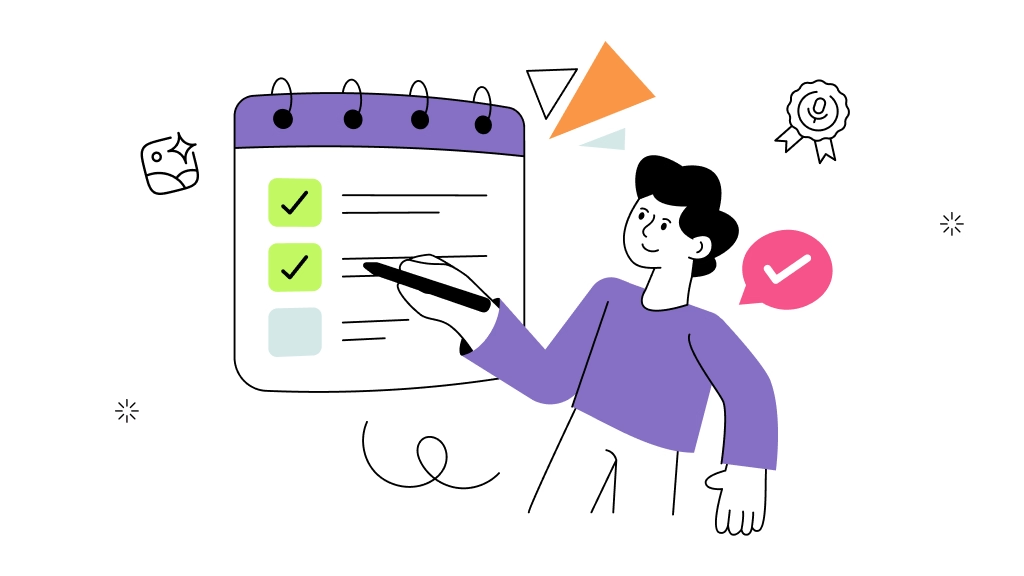
Affiliate marketing can be extremely rewarding if done right. To maximize your success with the WriteRush affiliate program, it’s important to start with a strategic approach. This first week is all about building a solid foundation for your affiliate journey.
Why This Week Matters
Starting strong means preparation. Think of Week 1 as building the groundwork for everything to come. By focusing on essentials like getting approved, learning the product, and organizing your tools, you’ll avoid confusion later and set yourself up for smooth sailing. Take your time here; a solid foundation means fewer headaches down the road.
1. Join the WriteRush Affiliate Program (if you haven’t already).
Your journey begins with the right first step. Sign up for the WriteRush affiliate program (it’s free to join) and await approval. Most applications are reviewed within a few business days, so use this time to prepare your channels. Pro tip: on your application, highlight any relevant audience or platform you have (a blog, YouTube channel, email list, etc.) – this can smooth the approval process. Once approved, you’ll be eligible for 30% lifetime recurring commissions on every referral, so this is a milestone worth reaching early!
2. Familiarize yourself with your affiliate dashboard.
After approval, log in to your affiliate dashboard to get your unique tracking links and explore the tools available. This dashboard is your mission control; it provides your referral links, banners, and performance stats. Spend some time clicking around and learning where everything is. You’ll use it often to monitor clicks, conversions, and earnings. Bookmark the dashboard for quick access. Also, set up your payment details (e.g., PayPal or bank info) so you can get paid promptly when commissions start rolling in.
Day 4-5: Study WriteRush and Your Audience
1. Know what you’re promoting.
To effectively promote WriteRush, you need to understand what it offers and why it’s valuable. WriteRush is an AI-powered content writing plugin that lives inside WordPress, helping users create authentic blog posts, social media captions, and even images without jumping between tools. It stands out by maintaining the writer’s unique voice (thanks to brand voice training) and providing a complete content workflow from research to publishing. Key features include:
2. Guided AI Blog Creator: Generates SEO-friendly blog drafts with SERP-based outlines and one-click publishing.
3. Brand Voice Training: Teaches the AI to write in your tone by learning from your writing, ensuring the output “sounds like you,” not a generic robot.
4. Social Media Assistant: Turns one blog into multiple social posts and captions, complete with AI-generated images, all within WordPress.
5. AI Image Generation: Creates custom images from text descriptions, saved directly to your media library for easy use.
By exploring the WriteRush plugin (if you have access, try the free version), you’ll gain first-hand knowledge. This authenticity will make your promotions far more persuasive. When you truly know the product’s benefits, like how it saves time by eliminating tool-switching chaos, you can convey that value to your audience confidently.
1. Identify your target audience.
Now, think about who will benefit most from WriteRush. Who are you going to target with your content? WriteRush has a diverse audience appeal, which is great news for you. Potential customers include: bloggers and niche website owners, content creators and YouTubers, digital marketers, students or educators who blog, influencers building a personal brand, freelance writers, course creators, as well as agencies and small business owners looking to scale content production. That’s a broad range! Tailor your promotions to speak to the specific needs of these groups. For example, you might highlight WriteRush’s “one-click blog” efficiency to busy entrepreneurs and agencies, while emphasizing the branding consistency (training AI on your voice) to influencers and businesses that care about voice. Knowing your audience will help you craft messages that resonate and convert.
Day 6-7: Set Up Tracking & Choose Your Channels
Before you start promoting, make sure you’re set up to track everything properly. Your unique affiliate links ensure you get credit for every sale you refer. Log in to the WriteRush affiliate program dashboard and grab your main tracking links (for example, a link to the WriteRush homepage or pricing page with your affiliate ID) and test them. Click your link and verify that it goes to the correct page and that your referral is recorded in the dashboard. With a 60-day cookie window in WriteRush’s program, you have a generous timeframe for referrals to count, but only if you use the right links! So double-check you know how to get your links for different pages or campaigns as needed.
Next, choose your promotional channels wisely. Rather than try to be everywhere at once, start with one or two platforms that play to your strengths and where your target audience hangs out. Here are some popular channel options for affiliates:
- Blog/Website: If you have a blog or niche site, this is a perfect place to post product reviews, tutorials, or case studies about WriteRush. Blogging allows in-depth content that can rank on Google and attract organic traffic over time.
- YouTube: If you’re comfortable on camera or screen-sharing, YouTube videos (or even TikTok/Instagram Reels) are fantastic for showing WriteRush in action. Many people love to see how a tool works. A video walkthrough or comparison can generate interest and clicks (place your affiliate link in the description or bio).
- Social Media: Platforms like Facebook, LinkedIn, Twitter (X), or Instagram can drive traffic if used right. You might share quick tips about content writing, then mention WriteRush as a solution. For instance, on LinkedIn, you could write about “5 Tips to Speed Up Content Creation” and include your affiliate link in a call-to-action. On Facebook, you could participate in groups for WordPress users or content marketers and share your insights (more on community sharing in Week 3).
- Email List: If you have an email list or newsletter, even a small one, use it to share and promote your content. Email often converts highly for affiliate offers because you’re speaking to an audience that already trusts you. You could send a helpful email about improving writing productivity and include your WriteRush link as a recommendation. Even if your list is tiny, those personal connections can lead to your first commissions.
Focus on a couple of channels in the beginning. For example, you might decide to start with your blog and one social platform. Quality and consistency matter more than trying to do everything at once. By the end of Week 1, you should have your affiliate links ready, a clear idea of who you’re targeting, and a decision on which channels you’ll tackle first.
Week 2: Create content that drives conversions
Goal: Publish your first promotional content and start driving traffic to your links.

Why This Week Matters
Now that you’re all set up, it’s time to shift gears into action. Content is your megaphone; it’s how you attract your audience and showcase WriteRush’s value. This week, you’ll focus on crafting content that educates, inspires, and gently nudges people to click your affiliate links.
Remember, when it comes to content, quality beats quantity. One well-crafted blog post or video can outperform a dozen rushed, low-value pieces. As a new affiliate, your credibility is on the line with every recommendation, so aim to genuinely help your audience with whatever you create.
Day 8-10: Write a Beginner-Friendly Tutorial or Blog Post
Content is king in affiliate marketing, especially for a product like WriteRush, which may need a bit of explanation for newcomers. A step-by-step tutorial or how-to guide is a great way to attract potential customers by providing value first. Think about a topic that overlaps with your audience’s needs and the solution WriteRush provides. For example, you could write a guide such as “How to Write SEO-Friendly Blog Posts 2× Faster (Step-by-Step Guide with WriteRush)”. This kind of article targets people looking to improve their writing speed or quality, and naturally lets you introduce WriteRush as the secret weapon.
Here are tips to make your tutorial effective and conversion-friendly:
- Include your affiliate link wherever you mention WriteRush. If you’re explaining how to use the tool or citing its benefits, make sure readers can click through easily. For instance, “With a tool like WriteRush – which offers guided workflows for SEO content – you can draft an article in minutes.” In that mention, hyperlink WriteRush to your referral URL.
- Use relevant keywords naturally. Think about phrases your target reader might search for. Terms like “AI writing tool for WordPress”, “content writing plugin review”, or “best affiliate programs for beginners” (since you’ll be mentioning affiliate marketing) can help your SEO. Don’t stuff keywords, but sprinkle them where they make sense, such as in your title, subheadings, and meta description. This can improve your search rankings over time.
- Optimize for readability: Use clear subheadings (H2/H3) and short paragraphs so readers (and Google) can easily scan your post. For example, include a section like “Why Choose WriteRush for Content Creation” or “WriteRush Affiliate Guide: How It Works” to address common questions. Utilize bullet points or checklists for steps (just like this roadmap does) and add images or screenshots of WriteRush in action if possible. Visuals can break up text and make your guide more engaging.
By providing real value and showcasing how WriteRush solves a problem (like “writer’s block” or “slow content production”), your tutorial can become a long-term traffic source. People searching for solutions might find your article weeks or months from now, and if it’s helpful, they’re more likely to click your recommendations, earning you commissions on autopilot.
Day 11-14: Create a Short Video or Social Media Buzz
Not everyone likes to read long blog posts; some people engage better with videos or bite-sized social content. If you’re comfortable on camera (or even just recording your screen), consider creating a short video to complement your written content. It could be a YouTube video, a TikTok, an Instagram Reel, or even a Facebook live, whatever platform your audience prefers.
YouTube/Short Video Idea: “Why I Recommend WriteRush for Content Creator.s” In this video, you can briefly introduce the problem (e.g., how hard it is to consistently churn out quality content), then demonstrate how WriteRush helps solve it. Show a quick demo of WriteRush inside WordPress: generate part of a blog post, show the brand voice training snippet, or how to create a social post with an image. Share your personal experience or results (if you’ve used it, maybe “WriteRush cut my writing time in half” or similar anecdote). End the video with a call-to-action, encouraging viewers to check out WriteRush through your link (put the affiliate link in the video description, and mention verbally that the link is below or in your bio).
Social Media Tips: Even if video isn’t your thing, you can create engaging posts on social platforms:
– Use hashtags to help more people see your post. For example, on Twitter/X or Instagram, you might use tags like #ContentWriting #AIWriting #WriteRush or #WritingTips. These can help interested people find your content. (BuddyBoss even suggested #AffiliateMarketingForBeginners, which could work if you discuss the journey of being a new affiliate.)
– Keep posts short, snappy, and value-driven. A great approach is to share a quick tip or a surprising stat. E.g., “Struggling to write blog posts consistently? You’re not alone. I found that using an AI writing assistant inside WordPress doubled my output. Here’s what happened… [link]”. This kind of teaser post can pique curiosity without sounding too “salesy.”
– Engage with your audience. If people comment or ask questions on your posts, reply to them! Building that trust is key. When someone asks, “Does this WriteRush thing really work for longer articles?”, you can respond helpfully and perhaps direct them to your in-depth blog review or video. Each genuine interaction can move a reader closer to becoming a buyer through your link.
By diversifying your content strategy this week, maybe a detailed blog post and a short video or series of social posts, you’re casting a wider net. Some folks prefer reading, others prefer watching. Covering multiple content formats ensures you tap into different audience preferences and set yourself up for long-term affiliate success.
Week 3: Promote and Get People Involved
Goal: Drive traffic to your content and engage with potential customers, while refining your approach.

Why This Week Matters
Creating great content is only half the battle; now you need eyeballs on that content. This week is about promoting what you made in Week 2 and actively engaging with communities to build your credibility. The good news is, you don’t necessarily need a big ad budget to get traffic. By tapping into online communities and forging partnerships, you can reach people for free (or at very low cost) who are likely to be interested in WriteRush.
Think of this stage as planting seeds. Some efforts (like a social post going viral) might sprout quickly, while others (like SEO traffic from your blog) may take time to grow. But every interaction and share is a seed that could eventually lead to a referral. Stay patient and persistent.
Day 15-18: Share Your Content Strategically
Rather than “build it, and they will come,” be proactive: go to where your target audience already hangs out and share your content there. Identify a few relevant communities or platforms where aspiring writers, bloggers, marketers, or WordPress users gather, and let them know about the helpful content you created.
Here are some free community promotion ideas:
- Facebook Groups: Join Facebook groups related to blogging, content marketing, WordPress plugins, or online business. Make sure to follow each group’s rules (some don’t allow promo links except on certain days or in comments). When appropriate, share your WriteRush tutorial or video. For example, in a WordPress or blogging tips group, you might post: “Has anyone tried using AI to speed up writing blog posts? I just wrote a guide on how I cut my writing time in half using a WordPress AI tool (WriteRush vs another tool). Happy to share if it helps!” and include the link. This comes off as sharing a useful resource rather than a blatant ad.
- Reddit & Quora: Find subreddits like r/Blogging, r/Wordpress, r/SideProject, or r/ContentMarketing, and look for questions or discussions about content creation or AI content writing tools. Similarly, on Quora, search for questions like “How can I write articles faster?” or “What are the best content writing tools?”. Provide a genuinely helpful answer based on your experience, and subtly mention your guide or link. For instance: “…One approach I’ve found helpful is using an AI writing assistant within WordPress. I was skeptical at first, but I tried a plugin called WriteRush, and it really streamlined my process. I even wrote a step-by-step guide about it. If you’re interested, I can share the link.” On Reddit or Quora, being too spammy will get you downvoted, so focus on helping first, and only link if it truly adds value to the discussion.
- Email Your List (if you have one): This is a perfect time to send out an email highlighting your new content. People who signed up for your emails likely trust your recommendations. Craft a compelling subject line to grab attention, for example: “The AI Tool I’m Using to Write Blog Posts 2x Faster (Free Guide)”. In the email, briefly talk about the pain point (e.g., “We all know writing quality content consistently is hard… here’s something that can help”) and then introduce WriteRush with a link to your full blog post or video. Encourage readers to check it out, and remind them that this could be a game-changer for their workflow.
The more strategic and targeted you are in distributing your content, the better your chances of converting readers into paying customers. You’re not spamming random people; you’re sharing specifically with those who are likely to care about improving their writing or marketing. This means higher engagement and a warmer reception, which ultimately leads to more clicks on your affiliate links.
Day 19-21: Collaborate with Micro-Influencers or Peers
An often overlooked but powerful strategy for beginners is partnerships. You might not have a huge audience yet, but someone out there already has the ear of your ideal customers. In the content creation and marketing niche, there are plenty of bloggers, YouTubers, or social media influencers with modest followings (say 1k-10k followers) who consistently talk to engaged audiences. These micro-influencers are usually more approachable than big celebrities, and their followers trust them because they’re seen as authentic and niche experts.
Think of a few people in your niche who fit this profile, maybe a YouTuber who reviews digital marketing tools, or a blogger who covers content writing tips. Reach out to them with a win-win collaboration idea. Here are a few ways you can partner up:
- Guest Blogging: Offer to write a guest post for their blog that provides value to their readers and naturally mentions WriteRush. For example, on a marketing blog, you could contribute an article like “5 AI Tools That Content Marketers Are Using in 2026” and include WriteRush as one of the tools (with your affiliate link, if allowed). The blog owner gets free quality content; you get exposure and affiliate clicks. Make sure your guest post is genuinely helpful and not just a sales pitch.
- Co-Host a Live Session or Webinar: If you find an influencer who does live streams (on Instagram, LinkedIn, YouTube, etc.), propose doing a joint session about content creation or blogging tips. For instance, a 30-minute Instagram Live where you discuss “How to Beat Writer’s Block with AI” can be engaging. During the chat, you can mention WriteRush as a solution you use. The key is to provide value and insight, with the affiliate mention coming naturally as part of the conversation.
- Social Media Shoutouts or Shares: Sometimes, you can simply ask a peer to share your content. If you wrote a killer tutorial or made a useful video, see if any of your connections or friendly influencers would be willing to share it with their audience. If they do share your blog link or video, make sure your affiliate link to WriteRush is included in that content (or in the post description). That way, any traffic they send can turn into your referrals.
By teaming up with others in your niche, you expand your reach beyond your own following. You’ll tap into new audiences, gain credibility by association, and increase the chances of driving more sign-ups through your affiliate link. Plus, you might build lasting relationships that can help you down the line (think future product launches or cross-promotions). Affiliate marketing doesn’t have to be a solo journey; collaboration can accelerate your growth.
Week 4: Analyze & Optimize
Goal: Track your results and double down on what works (while learning from what doesn’t).
Why This Week Matters
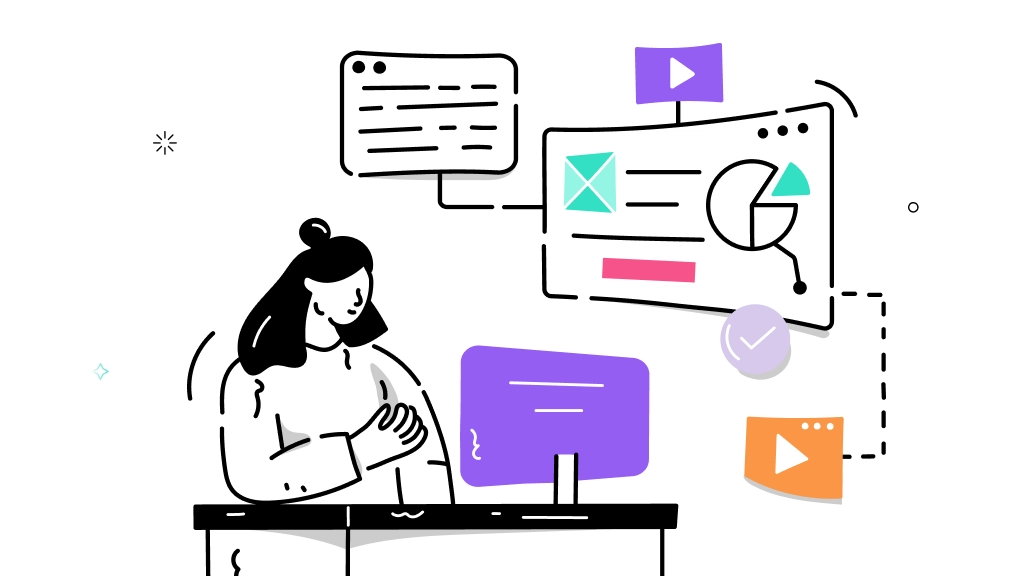
By now, you’ve put in a solid amount of work. Congratulations! But success in affiliate marketing isn’t just about effort; it’s about smart effort. Weeks 1-3 were all about laying groundwork, creating content, and spreading the word. In Week 4, it’s time to step back and analyze how those efforts are performing. Which of your strategies are bearing fruit? Which ones need tweaking? Using data to guide your decisions will help you work smarter, not just harder. This week, you’ll turn insights into action by refining your approach and possibly launching a small, focused campaign to push you over the finish line.
Day 22-25: Check Your Analytics and Learn from the Data
Tracking your performance is essential to improving it. Log in to your WriteRush affiliate dashboard and any other analytics tools you have (blog traffic stats, YouTube analytics, social media insights). Take a close look at the numbers:
- Which links are getting the most clicks? Check your affiliate dashboard for click stats on your different referral links. Did your blog post generate more clicks or your YouTube video description? Knowing this tells you where your audience is engaging most.
- Which channels are converting best? For instance, maybe you got 100 clicks from Twitter, but no sales, yet your email newsletter yielded 10 clicks and 2 sales. That suggests the email traffic is highly targeted or warmed-up, whereas social media traffic might be colder. Pay attention not just to clicks but also to conversion rates if available (i.e., clicks that turned into actual purchases).
- Where is your web traffic coming from? If you have a blog, use Google Analytics or WordPress stats to see how people are finding your content. Are they coming from Google searches (SEO working?), from social media shares, or referrals from that guest post you did? This breakdown can tell you which promotional efforts are driving the most interested visitors.
Once you have some data, make some data-driven adjustments:
- Double down on what’s working. If you discover that your YouTube video is bringing a lot of traffic that actually converts, consider making another video on a similar topic or updating that one with an even stronger call-to-action. If a particular blog post is ranking well in search, perhaps write a follow-up post or improve it further (maybe add a section comparing WriteRush’s pricing or a FAQ within the post to address reader questions).
- Tweak what’s underperforming. On the flip side, if something you tried isn’t working, don’t be afraid to change it up. For example, if your Twitter posts aren’t getting any traction, maybe your audience isn’t active there, or maybe your approach needs work. Try a different style of tweet, or shift your focus to a platform where you’ve seen more engagement. If your blog post isn’t getting traffic, consider improving its SEO (better keywords, meta description) or promoting it more actively on forums.
- Experiment with new tactics. The data might inspire new ideas. If you see lots of international clicks but few conversions, maybe your audience could use a bit more education on the product (perhaps add a quick explainer video on your landing page). Or if one particular feature of WriteRush (say the “Brand Voice” feature) seems to interest people most (you notice many click-throughs after mentioning it), emphasize that feature more in your future content.
The goal for these days is to iterate. Affiliate marketing is an ongoing learning process even seasoned pros constantly test and optimize. By the end of Day 25, you should have a clearer picture of your progress: maybe you’ve earned a commission or two by now (exciting!), or at least driven some trial sign-ups. Use that as motivation and insight for the final push.
Day 26-30: Launch a Mini-Campaign for a Final Push
With data in hand and some experience now under your belt, it’s time to go big (in a focused way) for the last stretch. A “mini campaign” means a short, concentrated marketing effort designed to boost conversions in a limited timeframe. This could be as simple as a themed series of social posts, a limited-time offer, or a sequence of emails, whatever fits your audience best.
One effective approach is an email mini-series (if you have an email list). Even if you only have a small list or can borrow a friend’s list, crafting a short campaign can create urgency and drive sales. For example:
5-Day “Level Up Your Content” Email Challenge:
– Day 1: “Why Quality Content Matters More Than Ever”:- an educational email about how high-quality content leads to better SEO, more traffic, and business success. Set the stage by creating content efficiently is important (paving the way to mention the solution).
– Day 3: “3 Common Content Creation Struggles (and How to Fix Them)”:- identify problems like writer’s block, inconsistency, time constraints. Then introduce WriteRush as the tool that addresses these issues (e.g., “I found that using an AI assistant like WriteRush can streamline outlining and drafting, basically solving these problems overnight”). Include your affiliate link when explaining how it fixes each problem.
– Day 5: “Your Content Creation Game-Changer Exclusive Bonus Inside”:- this is the pitch email. By now, readers know the problem and solution, so make it compelling to act. If you can offer any incentive, mention it here. For instance, perhaps WriteRush has a free trial or a limited-time discount (if you have a coupon code or there’s a holiday sale). You could say, “Exclusive for my subscribers: Try WriteRush free for 14 days and get 10%-20% off your first year ending this week!” (Ensure this is accurate; only promise discounts you actually have access to or that are publicly available.) If there is no discount, you can still create urgency by emphasizing the cost of inaction: “Don’t let another month of inconsistent content go by. If you’re serious about leveling up, give WriteRush a spin and see the results for yourself.” Include a strong call-to-action button or link like “Start your WriteRush free trial now” (with your affiliate tracking).
If you’re not using email, you can adapt this idea to social media or your blog: maybe a 5-day series of LinkedIn posts or tweets discussing those same points, or a timed offer shared in communities (“Hey all, WriteRush is offering a special free trial if you’ve been curious, now’s a great time to try it [affiliate link].”). The key is to create a sense of occasion or urgency so that fence-sitters feel motivated to click and sign up.
Throughout your mini-campaign, keep the tone helpful and solution-oriented rather than just salesy. You’re essentially guiding your audience through the classic marketing funnel: awareness (Day 1 email), consideration (Day 3 email), decision (Day 5 email with CTA).
This structured campaign approach helps educate your audience, build trust over a few days, and then drive them toward taking action, all while giving your affiliate earnings a nice boost at the finish line of your 30-day sprint.
Quick Wins for Early Results:
Even as you work through the weeks, here are a few bonus tips to score some quick wins:
1. Take advantage of WriteRush’s ready-to-use assets. Don’t reinvent the wheel with your promotions. WriteRush provides pre-made marketing materials to affiliates for things like banners, logos, and even copy templates. Use these! For example, adding an official WriteRush banner to your blog’s sidebar or at the end of a relevant post can catch readers’ attention and make your promotion look more professional. Likewise, you can use the provided text snippets or email templates (if available) as a starting point when writing your content, saving you time and ensuring accuracy about the product.
2. Repurpose your content across channels. Get more mileage out of everything you create. Wrote a blog post? Turn the key points into a quick infographic or a carousel of images for Instagram/LinkedIn. Made a YouTube video? Transcribe it and publish it as an article, or cut a 60-second highlight clip to share on Twitter. You can even take a few tips from your tutorial and make a short TikTok video. Repurposing content helps you appear everywhere without having to create entirely new material each time. It reinforces your message and reaches people who prefer different formats.
3. Join affiliate marketing communities for support. Connecting with fellow affiliates can accelerate your learning. Consider joining forums or groups like AffiliateFix (a popular forum for affiliate marketers), subreddits like r/AffiliateMarketing, or Facebook groups for affiliate newbies. In these communities, you can ask questions, learn what’s working for others, and stay updated on trends. For instance, you might discover a fellow affiliate’s success story promoting an AI tool and pick up tips directly applicable to WriteRush. Just remember to give back, share your experiences and wins too, no matter how small. Over time, you’ll build a network that can help troubleshoot issues and celebrate successes together.
By implementing these quick-win strategies alongside your 30-day roadmap, you’ll maximize your chances of seeing results early and often.
Final Tip: Stay Consistent!
Your first sale might happen in Week 1, or it might take 30-60 days. Every affiliate’s journey is a bit different. The key is not to get discouraged. Even if things start slowly, remember that every piece of content you create is an asset that can keep bringing in traffic and commissions down the line. Some of the top-earning affiliates out there started with zero audience and no clue what they were doing, just like all beginners. The reason they succeeded is that they kept at it, learned from their mistakes, and continuously improved.
So keep publishing helpful content, keep engaging with your community, and keep refining your approach based on what you learn. Celebrate small wins: that first 10 clicks on your link, your first email subscriber, your first commission (no matter how small). These are signs that your efforts are working, and they will compound over time. Remember, even the gurus started as beginners in affiliate marketing; the only difference is they didn’t quit.
Ready to crush your first 30 days and beyond as a WriteRush affiliate? Let’s go!
If you need any help or have questions along the way, we’re here for you. Need a specific banner size, or not sure how to best pitch WriteRush to your niche audience? Just reach out to the WriteRush team at partners@writerush.ai or connect with us on our social channels. We love helping our affiliates succeed. Now go out there and make your mark. This is just the beginning of your affiliate success story!
FAQs for New WriteRush Affiliates

Q: How long does it take to get approved as a WriteRush affiliate?
A: Most applications are reviewed and approved within a couple of business days. WriteRush’s team tries to get new affiliates on board quickly. Just ensure you provide accurate information and maybe mention how you plan to promote (to show you’re a serious partner). If you don’t hear back within a week, you can reach out to their support to check on your application status.
Q: What commission rate does WriteRush offer, and how do payouts work?
A: WriteRush offers a 30% recurring commission on every referred customer’s subscription. That means you earn 30% not just on the first sale, but on every renewal as long as that customer stays subscribed, a fantastic way to build passive income. Commissions are typically recorded in your dashboard instantly when a sale happens, but they become eligible for payout after a 14-day holding period (to account for refunds). Payouts are issued monthly, usually in the first week of the month, via PayPal or bank transfer once your balance reaches the minimum threshold (for WriteRush, that’s $100). Make sure to enter your PayPal email or bank details in the affiliate dashboard so you can get paid on time.
Q: Can I promote WriteRush on multiple channels?
A: Absolutely! You’re encouraged to share your affiliate links on any platform where you have an audience, be it a blog, YouTube, Facebook, Twitter, LinkedIn, forums, or even in-person events via QR codes. There’s no limit to where you can promote, as long as you follow some common-sense guidelines. Important: Always disclose that your links are affiliate links when posting on public channels, as required by FTC regulations. For example, in a YouTube description or a blog footer, you can add a simple note like: “Disclosure: As a WriteRush affiliate, I may earn a commission if you purchase through my link, at no extra cost to you.” Honesty builds trust with your audience. Also, to avoid any prohibited methods of promotion, for instance, WriteRush doesn’t allow running paid ads using their brand name without permission (to prevent competition on their own keywords). Stick to ethical promotion techniques (no spam, no false claims), and you’re free to be creative across channels.
This page was last edited on 3 March 2026, at 3:05 pm